The new flashcard feature is useful to memorize questions.
?Change your study mode
At any time, you can change the study mode, and alternate between the practice mode and the exam mode. In practice mode, you can configure for example the number of questions or tests, and other parameters to help you study.
Randomized | 10 Questions per Test | 20 Minutes | 70% to pass|
To re-configure your study mode again and change - for example - the number of tests, whether you have random questions and all other configuration parameters.
?Simulator Configuration
Auto-scroll: You can use the automatic scrolling of the questionnaire that occurs as soon as you answer one or all of the answers to a question correctly. Auto scrolling is activated if you answer a single answer, or as soon as you answer all the mandatory answers. Learning Mode: During learning mode you can get a real time result for your answer.
Free Test
Question: / 10
20:00Min. left
?Restart the current test
To restart the current test by clearing all your answers and the time used up to now. Warning: all answers will be lost.
Question: / 10
4.8(805 Votes)
Quiz
Question 1/101/10
Section A (1 Mark) According to the if irrational traders cause deviations from fundamental value, rational traders will often be powerless to do anything about it.
Select the answer:Select the answer
1 correct answer
A.
Theory of Limited Arbitrage
B.
Equity premium puzzle
C.
Present-biased preferences
D.
Inter Temporal Consumption
The correct answer is A. Theory of Limited Arbitrage. This question refers to a situation in financial markets where irrational traders can push prices away from their true or fundamental value. In a perfectly efficient market, rational traders would immediately step in and trade against mispricing, bringing prices back to normal. However, the Theory of Limited Arbitrage says that this does not always happen in practice. Why? - Arbitrage is not always risk-free. - Even if rational traders see that an asset is mispriced, they may not be able to correct the price quickly or fully. - Mispricing can persist because rational traders face risks, costs, funding limits, or uncertainty about when the mispricing will be corrected. - As a result, irrational trading can continue to affect prices, and rational traders may be unable to eliminate the deviation from fundamental value. Why the other options are incorrect: - B. Equity premium puzzle: This is about why stocks have historically earned much higher returns than safe assets, and standard models struggle to explain it. - C. Present-biased preferences: This describes a tendency to value immediate rewards more than future rewards. - D. Inter Temporal Consumption: This refers to choosing how much to consume now versus later, not market mispricing or arbitrage. So the best answer is A because it describes the idea that rational traders may be unable to fully correct price distortions caused by irrational traders.
Right Answer: A
Quiz
Question 2/102/10
Section C (4 Mark) Suppose you have a two-security portfolio containing Bonds A and B. The market value of Bond A is Rs. 6,000, and the market value of Bond B is Rs4,000. The duration of Bond A is 8.5, and the duration of Bond B is 4.0. Calculate the duration of the portfolio.
Select the answer:Select the answer
1 correct answer
A.
5.3
B.
8.2
C.
6.7
D.
3.56
To calculate the duration of a two-security portfolio, we use the market-value weights of each bond and take the weighted average of their durations. Step 1: Find the total portfolio value Bond A = Rs. 6,000 Bond B = Rs. 4,000 Total portfolio value = 6,000 + 4,000 = Rs. 10,000 Step 2: Calculate the weights Weight of Bond A = 6,000 / 10,000 = 0.6 Weight of Bond B = 4,000 / 10,000 = 0.4 Step 3: Compute the portfolio duration Portfolio Duration = (Weight of A x Duration of A) + (Weight of B x Duration of B) Portfolio Duration = (0.6 x 8.5) + (0.4 x 4.0) Portfolio Duration = 5.1 + 1.6 Portfolio Duration = 6.7 Therefore, the correct answer is C. 6.7 Explanation of why this works: Duration of a portfolio is not the simple average of the individual durations. It must be weighted by each bond’s market value because the larger investment has a bigger effect on the overall portfolio interest-rate sensitivity.
Right Answer: C
Quiz
Question 3/103/10
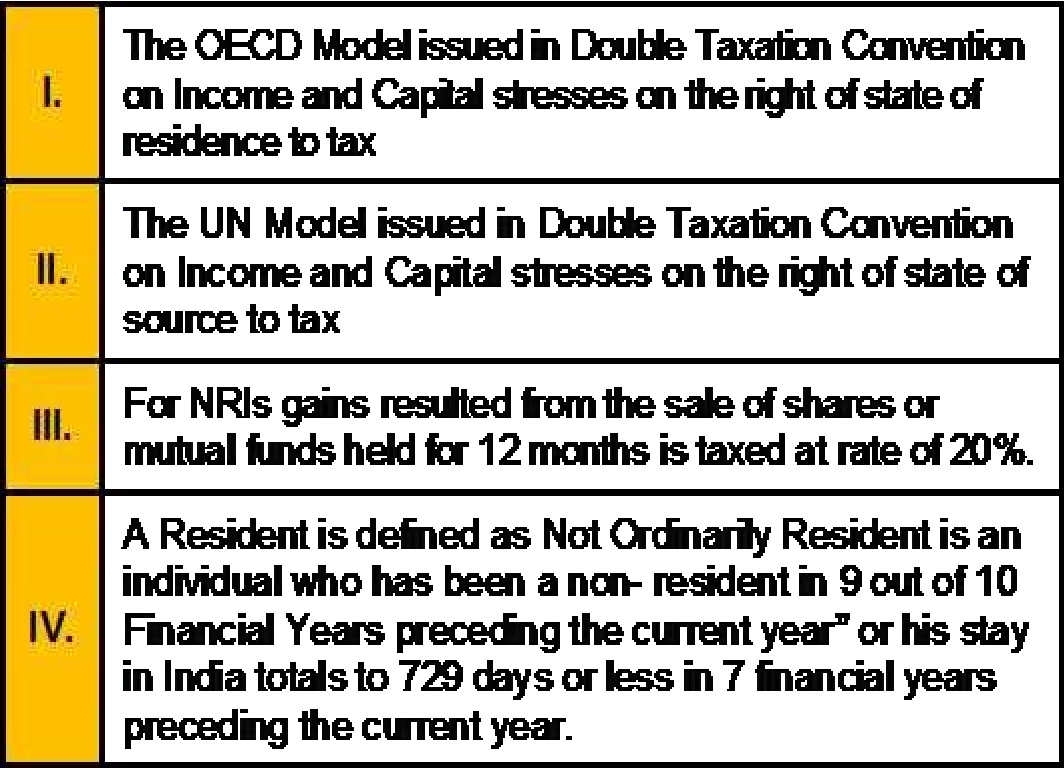
Section B (2 Mark) Which of the following statements is/are true?
Select the answer:Select the answer
1 correct answer
A.
I, II and III
B.
I, II and IV
C.
I, III and IV
D.
II, III and IV
The correct answer is B. I, II and IV. This question asks which of the given statements are true, and the correct combination is statements I, II, and IV. Why B is correct: - Statement I is true. - Statement II is true. - Statement IV is true. - Statement III is false. So the only option that includes the three true statements and excludes the false one is B. Final answer: B. I, II and IV
Right Answer: B
Quiz
Question 4/104/10
Section A (1 Mark) The best way to maintain your credit rating is to:
Select the answer:Select the answer
1 correct answer
A.
Use credit sparingly.
B.
Pay cash for your purchases.
C.
Repay your debts on time.
D.
Declare a bankruptcy.
The correct answer is C. Repay your debts on time. A credit rating is a measure of how responsibly you handle borrowed money. Lenders look at your payment history to decide whether you are likely to repay future loans. Why C is correct: - Paying your debts on time shows that you are reliable and financially responsible. - A consistent history of on-time payments has the strongest positive effect on your credit rating. - Late payments can harm your credit score and make it harder to get loans, credit cards, or favorable interest rates. Why the other options are incorrect: - A. Use credit sparingly. Using credit carefully can be helpful, but it does not by itself maintain a good credit rating as well as paying on time does. - B. Pay cash for your purchases. Paying cash avoids debt, but it does not build or maintain a credit history if you never use credit at all. - D. Declare a bankruptcy. Bankruptcy seriously damages your credit rating and stays on your credit record for years. In short, the best way to maintain your credit rating is to repay your debts on time.
Right Answer: C
Quiz
Question 5/105/10
Section B (2 Mark) Mr.Neeraj has a portfolio consisting of two stocks A & B has a standard deviation of 5% while stock B has a standard deviation of 15%. Stock A comprises 40% of the portfolio and stock B consists of 60%. If the correlation of returns of A and B is 0.5, the variance of return on the portfolio is
Select the answer:Select the answer
1 correct answer
A.
35
B.
85
C.
94
D.
103
To find the variance of a two-asset portfolio, we use: Portfolio variance = wA^2 βA^2 + wB^2 βB^2 + 2 wA wB βA βB ΰAB Given: - wA = 40% = 0.4 - wB = 60% = 0.6 - βA = 5% = 5 - βB = 15% = 15 - Correlation ΰAB = 0.5 Step 1: Compute each part 1) wA^2 βA^2 = (0.4)^2 × 5^2 = 0.16 × 25 = 4 2) wB^2 βB^2 = (0.6)^2 × 15^2 = 0.36 × 225 = 81 3) Covariance term = 2 × 0.4 × 0.6 × 5 × 15 × 0.5 = 2 × 0.24 × 75 × 0.5 = 0.48 × 75 × 0.5 = 18 Step 2: Add them up Portfolio variance = 4 + 81 + 18 = 103 Therefore, the correct answer is D. 103 Note: The result is expressed in variance units, so if standard deviations were treated as percentages, the variance is 103 percent-squared.
Right Answer: D
Quiz
Question 6/106/10
Section B (2 Mark) Reliance Ltd. has issued a preferred stock that pays Rs.10 per share. The dividend is fixed and the stock has no expiration date. What is the intrinsic value of Reliance Ltd. stock, assuming a discount rate of 14%?
Select the answer:Select the answer
1 correct answer
A.
Rs. 61.75
B.
Rs. 75.75
C.
Rs. 71.42
D.
Rs. 62.26
The stock described is a preferred stock with a fixed dividend and no maturity date, so its intrinsic value is calculated using the perpetuity formula: Intrinsic value = Dividend per share / Discount rate Given: Dividend per share = Rs. 10 Discount rate = 14% = 0.14 So, Intrinsic value = 10 / 0.14 = 71.428... = Rs. 71.42 approximately Therefore, the correct answer is: C. Rs. 71.42 A preferred stock with a fixed dividend and no expiration date is valued like a perpetuity, meaning it pays the same dividend forever. The value is the present value of all future dividends discounted at the required rate of return.
Right Answer: C
Quiz
Question 7/107/10
Section A (1 Mark) One of the tax exemption under avoidance of Double Taxation is U/S Sec 10(6)(ii) for exemption on income received by the diplomats, ambassador, etc
Select the answer:Select the answer
1 correct answer
A.
TRUE
B.
FALSE
The correct answer is A. TRUE. Section 10(6)(ii) of the Indian Income Tax Act provides exemption from tax for certain income received by diplomatic personnel such as diplomats, ambassadors, and similar officials, subject to the applicable conditions and reciprocal arrangements. This provision is related to avoidance of double taxation and gives tax relief to specified foreign representatives who are entitled to exemption under diplomatic privileges. Why this is true: - Diplomats and ambassadors are often exempt from taxation on income they receive in India under this section. - The exemption is generally granted because of international diplomatic conventions and reciprocal treatment between countries. - Therefore, the statement that Sec. 10(6)(ii) provides exemption for income received by diplomats, ambassadors, etc. is correct. Final answer: A. TRUE
Right Answer: A
Quiz
Question 8/108/10
Section A (1 Mark) In terms of the risk/return relationship
Select the answer:Select the answer
1 correct answer
A.
Only factor risk commands a risk premium in market equilibrium.
B.
Only systematic risk is related to expected returns.
C.
Only nonsystematic risk is related to expected returns.
D.
A and B.
The correct answer is D. A and B. In finance, the risk/return relationship says that investors require higher expected returns for taking on greater risk. However, not all kinds of risk are rewarded in the market. Let’s look at the options: A. Only factor risk commands a risk premium in market equilibrium. This is true. In equilibrium, only the risk that cannot be fully diversified away by holding a broad portfolio earns a risk premium. This is often called factor risk or systematic risk. B. Only systematic risk is related to expected returns. This is also true. Systematic risk affects the entire market and cannot be eliminated through diversification, so investors must be compensated for bearing it. Assets with higher systematic risk tend to have higher expected returns. C. Only nonsystematic risk is related to expected returns. This is false. Nonsystematic risk, also called idiosyncratic or diversifiable risk, can be reduced by diversification. Because investors can avoid it, it does not usually command a risk premium. Why D is correct: Since both A and B are correct statements, the best answer is D. Key idea: - Systematic/factor risk: rewarded with higher expected return - Nonsystematic risk: not rewarded, because it can be diversified away So, in the risk/return relationship, only systematic or factor risk matters for expected return.
Right Answer: D
Quiz
Question 9/109/10
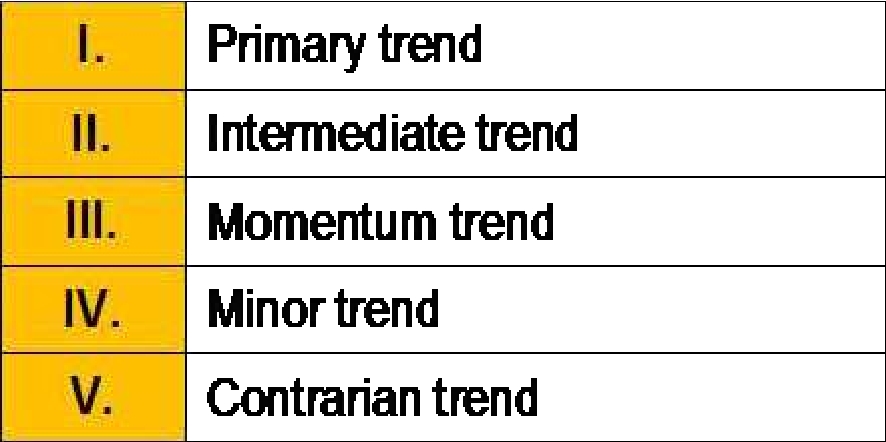
Section B (2 Mark) The Dow theory illustrates that the three forces that simultaneously affect stock prices are .
Select the answer:Select the answer
1 correct answer
A.
I, II, and III
B.
II, III, and IV
C.
III, IV and V
D.
I, II, and IV
Dow Theory says that stock prices are influenced by three simultaneous forces: 1. Primary trend 2. Secondary trend 3. Minor trend These three trends work together to move stock prices over time. The theory explains that market prices do not move in a straight line; instead, they fluctuate because of these different forces operating at the same time. Since the question asks for the three forces that simultaneously affect stock prices, the correct option is the one that includes all three trends. According to the given answer, that is: D. I, II, and IV If you want, I can also explain what primary, secondary, and minor trends mean in simple terms.
Right Answer: D
Quiz
Question 10/1010/10
Section B (2 Mark) The current market price of a share of CAT stock is Rs76. If a call option on this stock has a strike price of Rs76, the call
Select the answer:Select the answer
1 correct answer
A.
Is out of the money.
B.
Is in the money.
C.
Is at the money.
D.
A and C.
The correct answer is C. Is at the money. A call option gives the holder the right to buy the stock at the strike price. To determine whether the option is in, out of, or at the money, we compare the current market price of the stock with the strike price. Given: Current market price of CAT stock = Rs76 Strike price of the call option = Rs76 Since the stock price is exactly equal to the strike price, the call option is at the money. Why the other options are incorrect: A. Out of the money means the stock price is below the strike price for a call option. That is not the case here. B. In the money means the stock price is above the strike price for a call option. That is also not the case here. D. A and C is incorrect because the option cannot be both out of the money and at the money at the same time. Therefore, the correct answer is C.
CWM_LEVEL_2: AAFM Chartered Wealth Manager (CWM) Certification Level II Examination Practice test unlocks all online simulator questions
Thank you for choosing the free version of the CWM_LEVEL_2: AAFM Chartered Wealth Manager (CWM) Certification Level II Examination practice test! Further deepen your knowledge on AAFM Simulator; by unlocking the full version of our CWM_LEVEL_2: AAFM Chartered Wealth Manager (CWM) Certification Level II Examination Simulator you will be able to take tests with over 1259 constantly updated questions and easily pass your exam. 98% of people pass the exam in the first attempt after preparing with our 1259 questions.
What to expect from our CWM_LEVEL_2: AAFM Chartered Wealth Manager (CWM) Certification Level II Examination practice tests and how to prepare for any exam?
The CWM_LEVEL_2: AAFM Chartered Wealth Manager (CWM) Certification Level II Examination Simulator Practice Tests are part of the AAFM Database and are the best way to prepare for any CWM_LEVEL_2: AAFM Chartered Wealth Manager (CWM) Certification Level II Examination exam. The CWM_LEVEL_2: AAFM Chartered Wealth Manager (CWM) Certification Level II Examination practice tests consist of 1259 questions and are written by experts to help you and prepare you to pass the exam on the first attempt. The CWM_LEVEL_2: AAFM Chartered Wealth Manager (CWM) Certification Level II Examination database includes questions from previous and other exams, which means you will be able to practice simulating past and future questions. Preparation with CWM_LEVEL_2: AAFM Chartered Wealth Manager (CWM) Certification Level II Examination Simulator will also give you an idea of the time it will take to complete each section of the CWM_LEVEL_2: AAFM Chartered Wealth Manager (CWM) Certification Level II Examination practice test . It is important to note that the CWM_LEVEL_2: AAFM Chartered Wealth Manager (CWM) Certification Level II Examination Simulator does not replace the classic CWM_LEVEL_2: AAFM Chartered Wealth Manager (CWM) Certification Level II Examination study guides; however, the Simulator provides valuable insights into what to expect and how much work needs to be done to prepare for the CWM_LEVEL_2: AAFM Chartered Wealth Manager (CWM) Certification Level II Examination exam.
CWM_LEVEL_2: AAFM Chartered Wealth Manager (CWM) Certification Level II Examination Practice test therefore represents an excellent tool to prepare for the actual exam together with our AAFM practice test . Our CWM_LEVEL_2: AAFM Chartered Wealth Manager (CWM) Certification Level II Examination Simulator will help you assess your level of preparation and understand your strengths and weaknesses. Below you can read all the quizzes you will find in our CWM_LEVEL_2: AAFM Chartered Wealth Manager (CWM) Certification Level II Examination Simulator and how our unique CWM_LEVEL_2: AAFM Chartered Wealth Manager (CWM) Certification Level II Examination Database made up of real questions:
You can prepare for the CWM_LEVEL_2: AAFM Chartered Wealth Manager (CWM) Certification Level II Examination exams with our mobile app. It is very easy to use and even works offline in case of network failure, with all the functions you need to study and practice with our CWM_LEVEL_2: AAFM Chartered Wealth Manager (CWM) Certification Level II Examination Simulator.
Use our Mobile App, available for both Android and iOS devices, with our CWM_LEVEL_2: AAFM Chartered Wealth Manager (CWM) Certification Level II Examination Simulator . You can use it anywhere and always remember that our mobile app is free and available on all stores.
Our Mobile App contains all CWM_LEVEL_2: AAFM Chartered Wealth Manager (CWM) Certification Level II Examination practice tests which consist of 1259 questions and also provide study material to pass the final CWM_LEVEL_2: AAFM Chartered Wealth Manager (CWM) Certification Level II Examination exam with guaranteed success.
Our CWM_LEVEL_2: AAFM Chartered Wealth Manager (CWM) Certification Level II Examination database contain hundreds of questions and AAFM Tests related to CWM_LEVEL_2: AAFM Chartered Wealth Manager (CWM) Certification Level II Examination Exam. This way you can practice anywhere you want, even offline without the internet.