The new flashcard feature is useful to memorize questions.
?Change your study mode
At any time, you can change the study mode, and alternate between the practice mode and the exam mode. In practice mode, you can configure for example the number of questions or tests, and other parameters to help you study.
Randomized | 10 Questions per Test | 20 Minutes | 70% to pass|
To re-configure your study mode again and change - for example - the number of tests, whether you have random questions and all other configuration parameters.
?Simulator Configuration
Auto-scroll: You can use the automatic scrolling of the questionnaire that occurs as soon as you answer one or all of the answers to a question correctly. Auto scrolling is activated if you answer a single answer, or as soon as you answer all the mandatory answers. Learning Mode: During learning mode you can get a real time result for your answer.
Free Test
Question: / 10
20:00Min. left
?Restart the current test
To restart the current test by clearing all your answers and the time used up to now. Warning: all answers will be lost.
Question: / 10
5.0(131 Votes)
Quiz
Question 1/101/10
Which implementation is most suited for a deployment that must meet PCI DSS compliance criteria?
Select the answer:Select the answer
1 correct answer
A.
SSL ofloading with FortiWeb in reverse proxy mode
B.
SSL ofloading with FortiWeb in PCI DSS mode
C.
SSL ofloading with FortiWeb in transparency mode
D.
SSL ofloading with FortiWeb in full transparent proxy mode
The Payment Card Industry Data Security Standard (PCI DSS) sets forth security requirements to protect cardholder data. Requirement 6.6 specifically mandates that public-facing web applications be protected against known attacks by either:Exclusive Networks+3Gordion+3layer7solutions.com+3 Reviewing applications via manual or automated vulnerability security assessment tools or methods, at least annually and after any changes. Installing an automated technical solution that detects and prevents web-based attacks, such as a web application firewall (WAF), in front of public-facing web applications to continually inspect all traffic. FortiWeb, Fortinet's web application firewall, offers various deployment modes to protect web applications: Reverse Proxy Mode: FortiWeb acts as an intermediary, terminating client sessions and initiating sessions to the backend servers. This mode provides comprehensive protection and allows for features like SSL ofloading, URL rewriting, and advanced routing capabilities. Transparent Mode: FortiWeb operates at Layer 2, inspecting traffic without modifying it, making it invisible to both clients and servers. This mode simplifies deployment as it doesn't require changes to the existing network topology. Full Transparent Proxy Mode: Combines aspects of both reverse proxy and transparent modes, providing inspection and modification capabilities while remaining transparent to network devices. PCI DSS Mode: A specialized deployment tailored to meet PCI DSS compliance requirements. This mode ensures that FortiWeb is configured with security policies and features aligned with PCI DSS standards, offering robust protection against threats targeting cardholder data. Given the need to meet PCI DSS compliance criteria, deploying FortiWeb in PCI DSS mode is the most appropriate choice. This mode is specifically designed to align with PCI DSS requirements, ensuring that all necessary security measures are in place to protect cardholder data
Right Answer: B
Quiz
Question 2/102/10
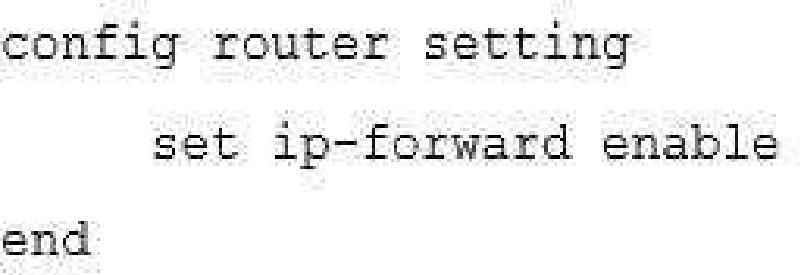
Review the following configuration:
What are two routing behaviors that you can expect on FortiWeb after this configuration change? (Choose two.)
Select multiple answer: (Choose 2)Select the answer
2 correct answers
A.
Non-HTTP traffic routed through the FortiWeb is allowed.
B.
IPv6 routing is enabled.
C.
Non-HTTP traffic destined to the FortiWeb virtual server IP address is dropped.
D.
Only ICMP traffic is allowed. All other traffic is dropped.
FortiWeb is primarily designed to handle HTTP and HTTPS traffic, protecting web applications from various threats. By default, when operating in reverse proxy mode, FortiWeb does not forward non- HTTP/HTTPS protocols to protected servers. However, administrators can configure FortiWeb to handle non-HTTP/HTTPS traffic differently using the config router setting command. This command allows enabling IP-based forwarding (routing) for non-HTTP/HTTPS traffic. When enabled, FortiWeb can route non-HTTP traffic through itself to the appropriate backend servers. Despite this capability, any non-HTTP/HTTPS traffic that is destined directly for a FortiWeb virtual server IP address is dropped. This means that while FortiWeb can be configured to forward non- HTTP/HTTPS traffic to backend servers, it will not process non-HTTP/HTTPS traffic targeted at its own virtual server IPs. Regarding IPv6 routing, FortiWeb does support IPv6 in various operation modes, including reverse proxy, ofline inspection, and transparent inspection. However, enabling IPv6 routing requires specific configurations and is not automatically enabled by default.
Right Answer: A, C
Quiz
Question 3/103/10
An attacker attempts to send an SQL injection attack containing the known attack string 'root'; -- through an API call. Which FortiWeb inspection feature will be able to detect this attack the quickest?
Select the answer:Select the answer
1 correct answer
A.
API gateway rule
B.
Known signatures
C.
Machine learning (ML)-based API protection—anomaly detection
D.
ML-based API protection—threat detection
The quickest detection for an SQL injection attack like the one described ('root'; --) would be through known signatures. FortiWeb utilizes signature-based detection to match incoming traffic against predefined attack patterns. Since SQL injection attacks are commonly known and have specific patterns (such as 'root'; --), known signatures would immediately recognize and flag this type of attack.
Right Answer: B
Quiz
Question 4/104/10
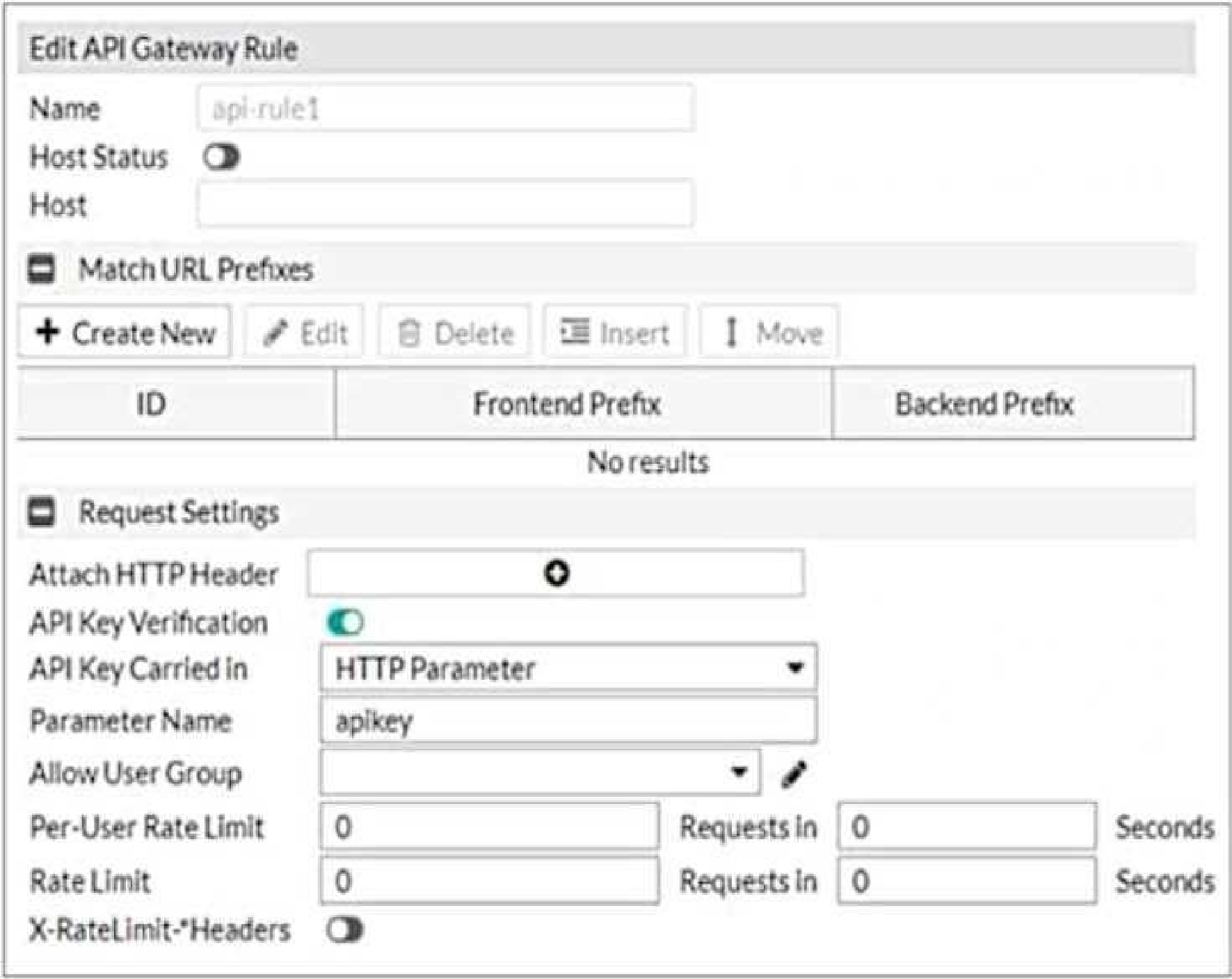
Refer to the exhibit.
What are two additional configuration elements that you must be configure for this API gateway? (Choose two.)
Select multiple answer: (Choose 2)Select the answer
2 correct answers
A.
You must define rate limits.
B.
You must define URL prefixes.
C.
You must select a setting in the Allow User Group field.
D.
You must enable and configure Host Status.
When configuring an API Gateway on a FortiWeb appliance, it's essential to include specific elements to ensure proper functionality and security. Two critical configuration elements are: Defining Rate Limits: Implementing rate limits is crucial to control the number of requests a client can make to the API within a specified timeframe. This helps prevent abuse, such as denial-of-service attacks, by limiting excessive requests from clients. Defining URL Prefixes: Specifying URL prefixes allows the FortiWeb appliance to identify and manage API requests accurately. By defining these prefixes, the appliance can route and process API calls correctly, ensuring that only legitimate traffic reaches the backend services. These configurations align with Fortinet's best practices for setting up an API Gateway policy. While the exact steps may vary depending on the FortiWeb firmware version, the general process involves navigating to the Web Application Firewall section, selecting the API Gateway Policy tab, and configuring the necessary parameters, including rate limits and URL prefixes.
Right Answer: A, B
Quiz
Question 5/105/10
Which would be a reason to implement HTTP rewriting?
Select the answer:Select the answer
1 correct answer
A.
To redirect HTTP to HTTPS.
B.
To implement load balancing.
C.
To replace a vulnerable element in a requested URL.
D.
The original page has moved to a new URL.
HTTP rewriting is a feature in FortiWeb that allows administrators to modify HTTP requests and responses for various purposes, including security enhancements, user experience improvements, and application functionality. One common use case for HTTP rewriting is to redirect HTTP traffic to HTTPS, ensuring that all communications between clients and the server are encrypted and secure. Explanation of Options: A . To redirect HTTP to HTTPS: This is a valid reason to implement HTTP rewriting. By rewriting incoming HTTP requests to HTTPS, administrators can enforce secure connections, protecting data integrity and confidentiality. FortiWeb supports this functionality, allowing seamless redirection from HTTP to HTTPS. B . To implement load balancing: Load balancing is not typically achieved through HTTP rewriting. Instead, it involves distributing network traffic across multiple servers to ensure availability and reliability. FortiWeb provides load balancing features, but these are separate from HTTP rewriting capabilities. C . To replace a vulnerable element in a requested URL: While HTTP rewriting can modify URLs, its primary purpose is not to replace vulnerable elements within URLs. Addressing vulnerabilities typically involves input validation, sanitization, and other security measures rather than rewriting URLs. D . The original page has moved to a new URL: This is another valid reason to implement HTTP rewriting. When a webpage's URL changes, rewriting rules can redirect requests from the old URL to the new one, ensuring users can still access the content without encountering errors. In summary, both options A and D are correct reasons to implement HTTP rewriting. However, in the context of FortiWeb's functionalities, redirecting HTTP to HTTPS (option A) is a common and significant use case, as it enhances security by ensuring encrypted connections.
Right Answer: A
Quiz
Question 6/106/10
What is the difference between an API gateway protection schema and a machine learning (ML) API protection schema?
Select the answer:Select the answer
1 correct answer
A.
An API gateway protection schema does not allow authentication.
B.
An API gateway protection schema handles response bodies.
C.
An API gateway protection schema supports data types other than string.
D.
An API gateway protection schema cannot change without administrator intervention.
In FortiWeb's API protection mechanisms, there are distinctions between the traditional API gateway protection schema and the machine learning (ML) based API protection schema: Data Type Support: The API gateway protection schema has the capability to support various data types beyond just strings, allowing for more comprehensive validation and enforcement of API schemas. Schema Adaptability: The ML-based API protection schema is designed to automatically learn and adapt to changes in the API structure without requiring manual intervention from administrators. This dynamic learning process enables FortiWeb to identify and protect against anomalies and potential threats in real-time.
Which high availability mode is commonly used to integrate with a traffic distributer like FortiADC?
Select the answer:Select the answer
1 correct answer
A.
Cold standby
B.
Load sharing
C.
Active-Active
D.
Active-Passive
In Fortinet's high availability (HA) configurations, integrating FortiWeb with a traffic distributor like FortiADC is best achieved using the Active-Active HA mode. This mode allows multiple FortiWeb appliances to operate simultaneously, distributing traffic loads and enhancing both performance and redundancy. FortiWeb supports several HA modes: Active-Passive: One appliance actively handles all traffic, while the other remains on standby, ready to take over if the active unit fails. Active-Active: Multiple appliances actively process traffic concurrently, sharing the load and providing redundancy. High Volume Active-Active: An enhanced version of Active-Active, designed for environments with exceptionally high traffic volumes. When integrating with a traffic distributor like FortiADC, the Active-Active mode is particularly advantageous. FortiADC can intelligently distribute incoming traffic across multiple active FortiWeb appliances, optimizing resource utilization and ensuring high availability. This setup not only balances the load but also provides fault tolerance; if one appliance becomes unavailable, FortiADC can redirect traffic to the remaining active units without service interruption. This collaborative approach between FortiWeb and FortiADC ensures that web applications remain secure, performant, and resilient against failures.
Right Answer: C
Quiz
Question 9/109/10
A customer wants to be able to index your websites for search and advertisement purposes. What is the easiest way to allow this on a FortiWeb?
Select the answer:Select the answer
1 correct answer
A.
Add the indexer IP address to the trusted IP list on the FortiWeb.
B.
Add the indexer IP address to the FortiGuard "Known Search Engines" category.
C.
Create a firewall rule to bypass the FortiWeb entirely for the indexer IP address.
D.
Do not allow any external sites to index your websites.
The easiest way to allow a search engine indexer (such as Googlebot or Bingbot) to index your website on a FortiWeb is to add the indexer's IP address to the trusted IP list. This ensures that traffic from trusted indexers is allowed through without being blocked or interfered with by FortiWeb's security features like bot protection.
Right Answer: A
Quiz
Question 10/1010/10
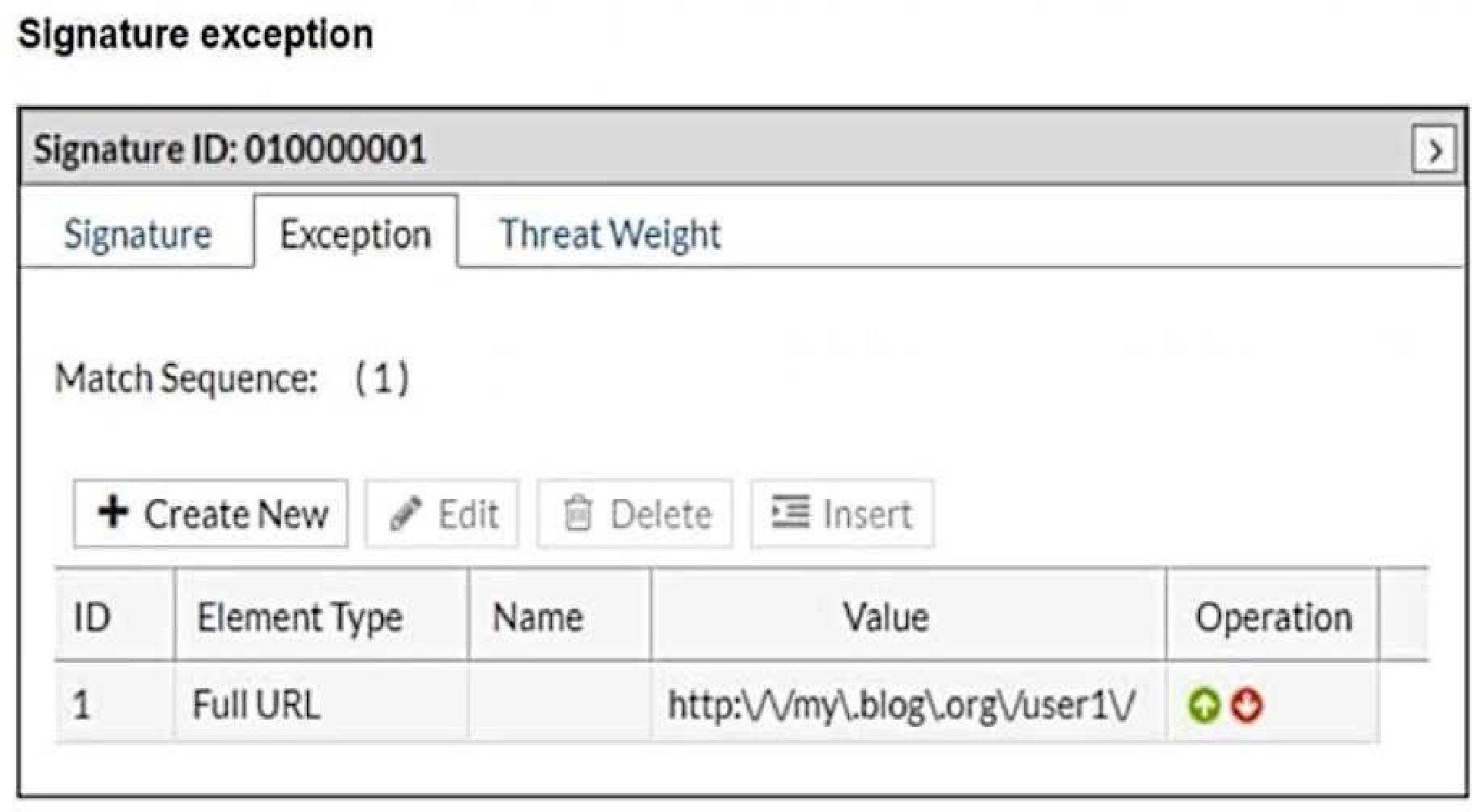
Refer to the exhibit.
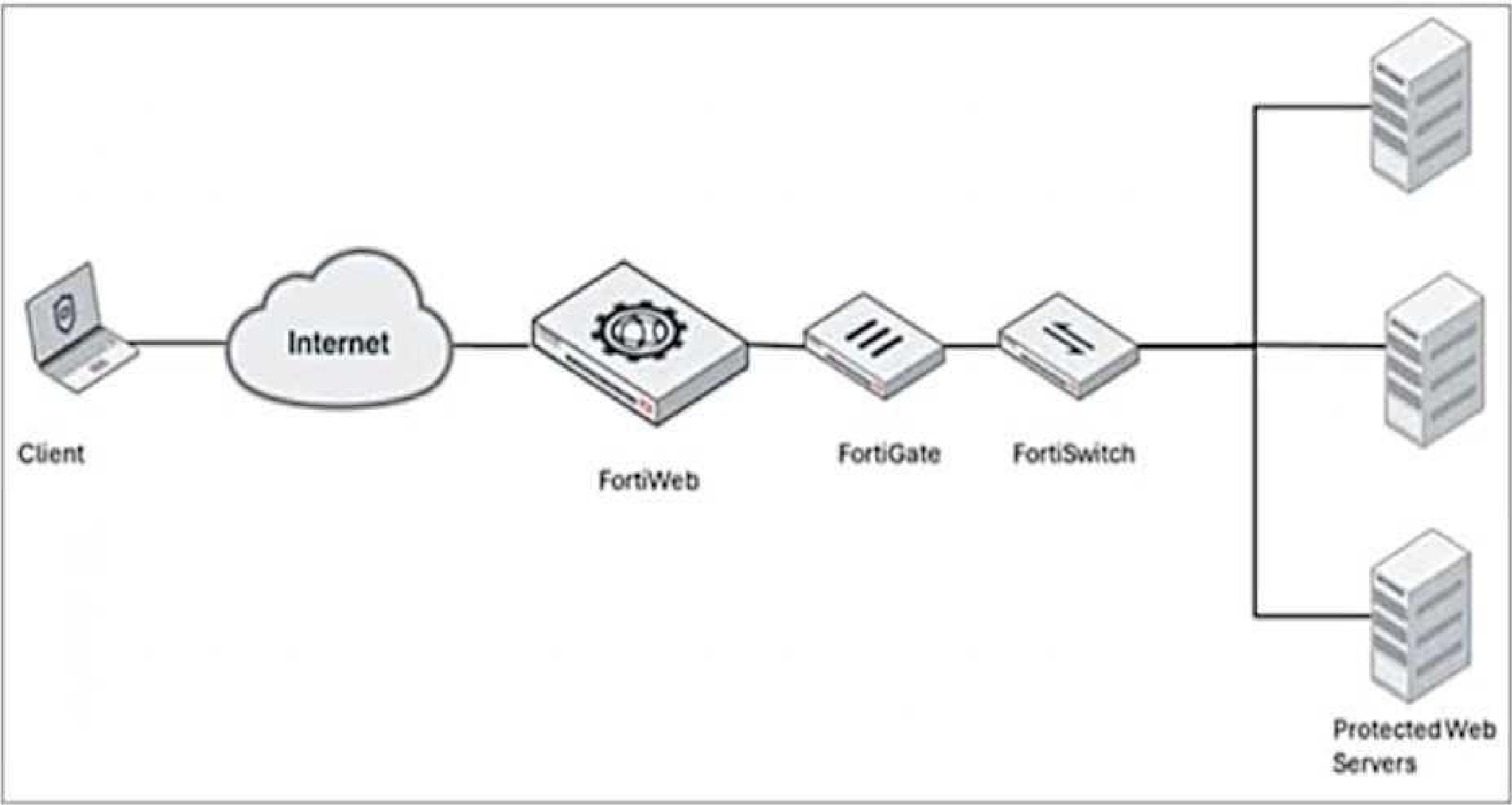
A FortiWeb device is deployed upstream of a device performing source network address translation (SNAT) or load balancing. What configuration must you perform on FortiWeb to preserve the original IP address of the client?
Select the answer:Select the answer
1 correct answer
A.
Enable and configure the Preserve Client IP setting.
B.
Use a transparent operating mode on FortiWeb.
C.
Enable and configure the Add X-Forwarded-For setting.
D.
Turn off NAT on the FortiWeb.
When FortiWeb is deployed upstream of a device performing source network address translation (SNAT) or load balancing, the original client IP address may be lost. To preserve the original client IP address, you must enable and configure the Preserve Client IP setting on FortiWeb. This allows FortiWeb to retain and pass the client's original IP address to the backend servers for accurate logging and processing.
FCP_FWB_AD-7.4: FCP - FortiWeb 7.4 Administrator Practice test unlocks all online simulator questions
Thank you for choosing the free version of the FCP_FWB_AD-7.4: FCP - FortiWeb 7.4 Administrator practice test! Further deepen your knowledge on Fortinet Simulator; by unlocking the full version of our FCP_FWB_AD-7.4: FCP - FortiWeb 7.4 Administrator Simulator you will be able to take tests with over 36 constantly updated questions and easily pass your exam. 98% of people pass the exam in the first attempt after preparing with our 36 questions.
What to expect from our FCP_FWB_AD-7.4: FCP - FortiWeb 7.4 Administrator practice tests and how to prepare for any exam?
The FCP_FWB_AD-7.4: FCP - FortiWeb 7.4 Administrator Simulator Practice Tests are part of the Fortinet Database and are the best way to prepare for any FCP_FWB_AD-7.4: FCP - FortiWeb 7.4 Administrator exam. The FCP_FWB_AD-7.4: FCP - FortiWeb 7.4 Administrator practice tests consist of 36 questions and are written by experts to help you and prepare you to pass the exam on the first attempt. The FCP_FWB_AD-7.4: FCP - FortiWeb 7.4 Administrator database includes questions from previous and other exams, which means you will be able to practice simulating past and future questions. Preparation with FCP_FWB_AD-7.4: FCP - FortiWeb 7.4 Administrator Simulator will also give you an idea of the time it will take to complete each section of the FCP_FWB_AD-7.4: FCP - FortiWeb 7.4 Administrator practice test . It is important to note that the FCP_FWB_AD-7.4: FCP - FortiWeb 7.4 Administrator Simulator does not replace the classic FCP_FWB_AD-7.4: FCP - FortiWeb 7.4 Administrator study guides; however, the Simulator provides valuable insights into what to expect and how much work needs to be done to prepare for the FCP_FWB_AD-7.4: FCP - FortiWeb 7.4 Administrator exam.
FCP_FWB_AD-7.4: FCP - FortiWeb 7.4 Administrator Practice test therefore represents an excellent tool to prepare for the actual exam together with our Fortinet practice test . Our FCP_FWB_AD-7.4: FCP - FortiWeb 7.4 Administrator Simulator will help you assess your level of preparation and understand your strengths and weaknesses. Below you can read all the quizzes you will find in our FCP_FWB_AD-7.4: FCP - FortiWeb 7.4 Administrator Simulator and how our unique FCP_FWB_AD-7.4: FCP - FortiWeb 7.4 Administrator Database made up of real questions:
You can prepare for the FCP_FWB_AD-7.4: FCP - FortiWeb 7.4 Administrator exams with our mobile app. It is very easy to use and even works offline in case of network failure, with all the functions you need to study and practice with our FCP_FWB_AD-7.4: FCP - FortiWeb 7.4 Administrator Simulator.
Use our Mobile App, available for both Android and iOS devices, with our FCP_FWB_AD-7.4: FCP - FortiWeb 7.4 Administrator Simulator . You can use it anywhere and always remember that our mobile app is free and available on all stores.
Our Mobile App contains all FCP_FWB_AD-7.4: FCP - FortiWeb 7.4 Administrator practice tests which consist of 36 questions and also provide study material to pass the final FCP_FWB_AD-7.4: FCP - FortiWeb 7.4 Administrator exam with guaranteed success.
Our FCP_FWB_AD-7.4: FCP - FortiWeb 7.4 Administrator database contain hundreds of questions and Fortinet Tests related to FCP_FWB_AD-7.4: FCP - FortiWeb 7.4 Administrator Exam. This way you can practice anywhere you want, even offline without the internet.