Quiz AZ-140: Configuring and Operating Windows Virtual Desktop on Microsoft Azure
Quiz
Case study
Overview
This is a case study. Case studies are not timed separately. You can use as much exam time as you
would like to complete each case. However, there may be additional case studies and sections on
this exam. You must manage your time to ensure that you are able to complete all questions included
on this exam in the time provided.
To answer the questions included in a case study, you will need to reference information that is
provided in the case study. Case studies might contain exhibits and other resources that provide
more information about the scenario that is described in the case study. Each question is
independent of the other questions in this case study.
At the end of this case study, a review screen will appear. This screen allows you to review your
answers and to make changes before you move to the next section of the exam. After you begin a
new section, you cannot return to this section.
To start the case study
To display the first question in this case study, click the Next button. Use the buttons in the left pane
to explore the content of the case study before you answer the questions. Clicking these buttons
displays information such as business requirements, existing environment, and problem statements.
If the case study has an All Information tab, note that the information displayed is identical to the
information displayed on the subsequent tabs. When you are ready to answer a question, click the
Question button to return to the question.
Overview
Contoso, Ltd. is a law firm that has a main office in Montreal and branch offices in Paris and Seattle.
The Seattle branch office opened recently.
Contoso has an Azure subscription and uses Microsoft 365.
Existing Infrastructure. Active Directory
The network contains an on-premises Active Directory domain named contoso.com and an Azure
Active Directory (Azure AD) tenant. One of the domain controllers runs as an Azure virtual machine
and connects to a virtual network named VNET1. All internal name resolution is provided by DNS
server that run on the domain controllers.
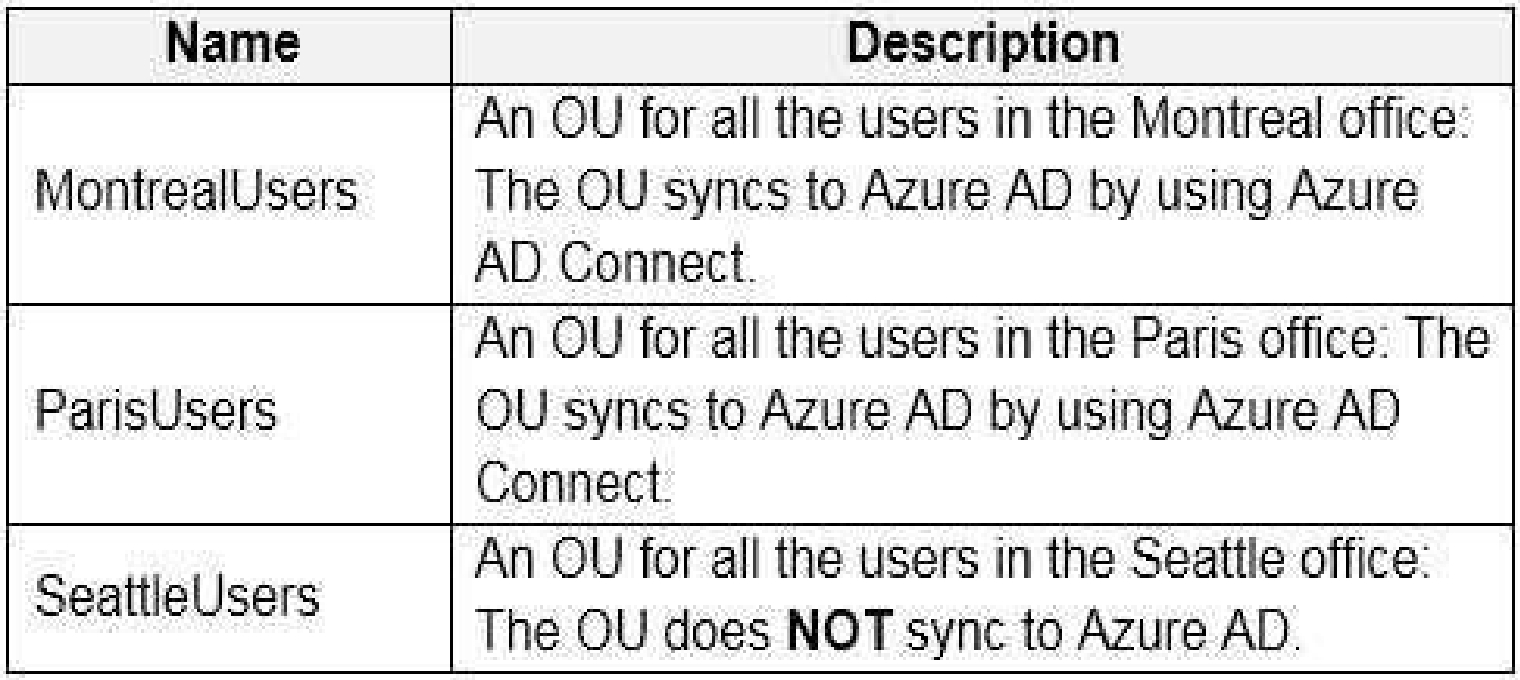
The on-premises Active Directory domain contains the organizational units (OUs) shown in the
following table.
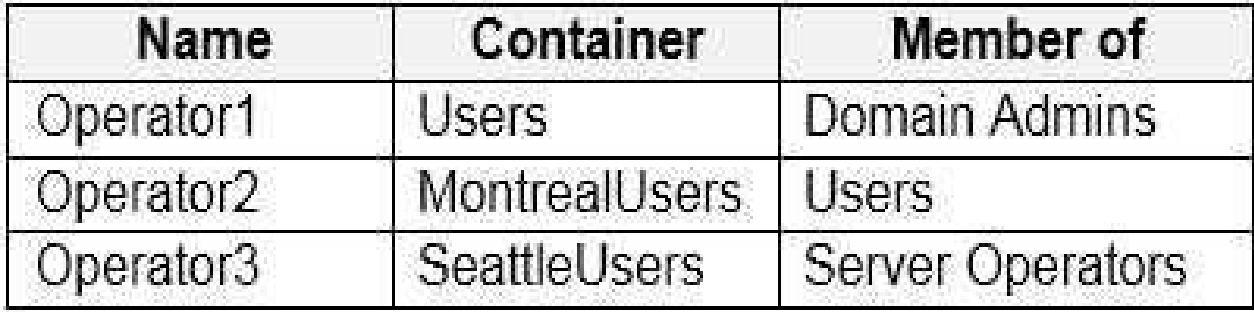
The on-premises Active Directory domain contains the users shown in the following table.
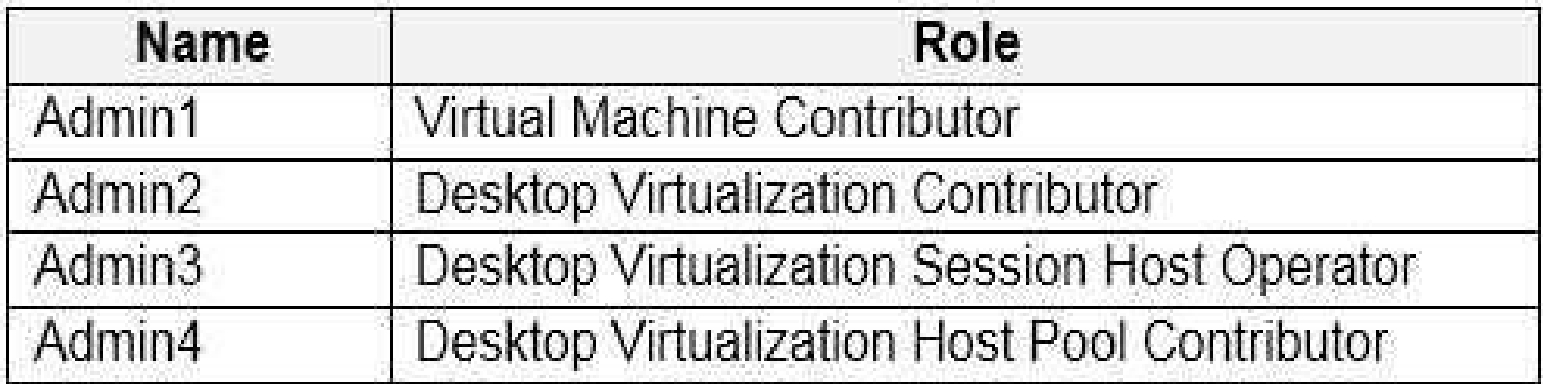
The Azure AD tenant contains the cloud-only users shown in the following table.
Existing Infrastructure. Network Infrastructure
All the Azure virtual networks are peered. The on-premises network connects to the virtual
networks.
All servers run Windows Server 2019. All laptops and desktop computers run Windows 10
Enterprise.
Since users often work on confidential documents, all the users use their computer as a client for
connecting to Remote Desktop Services (RDS).
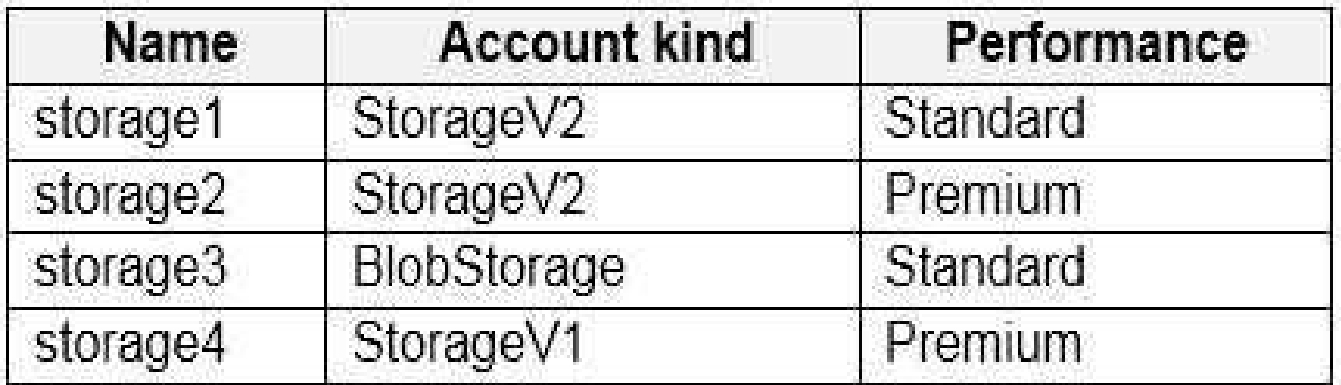
In the West US Azure region, you have the storage accounts shown in the following table.
Existing Infrastructure. Remote Desktop Infrastructure
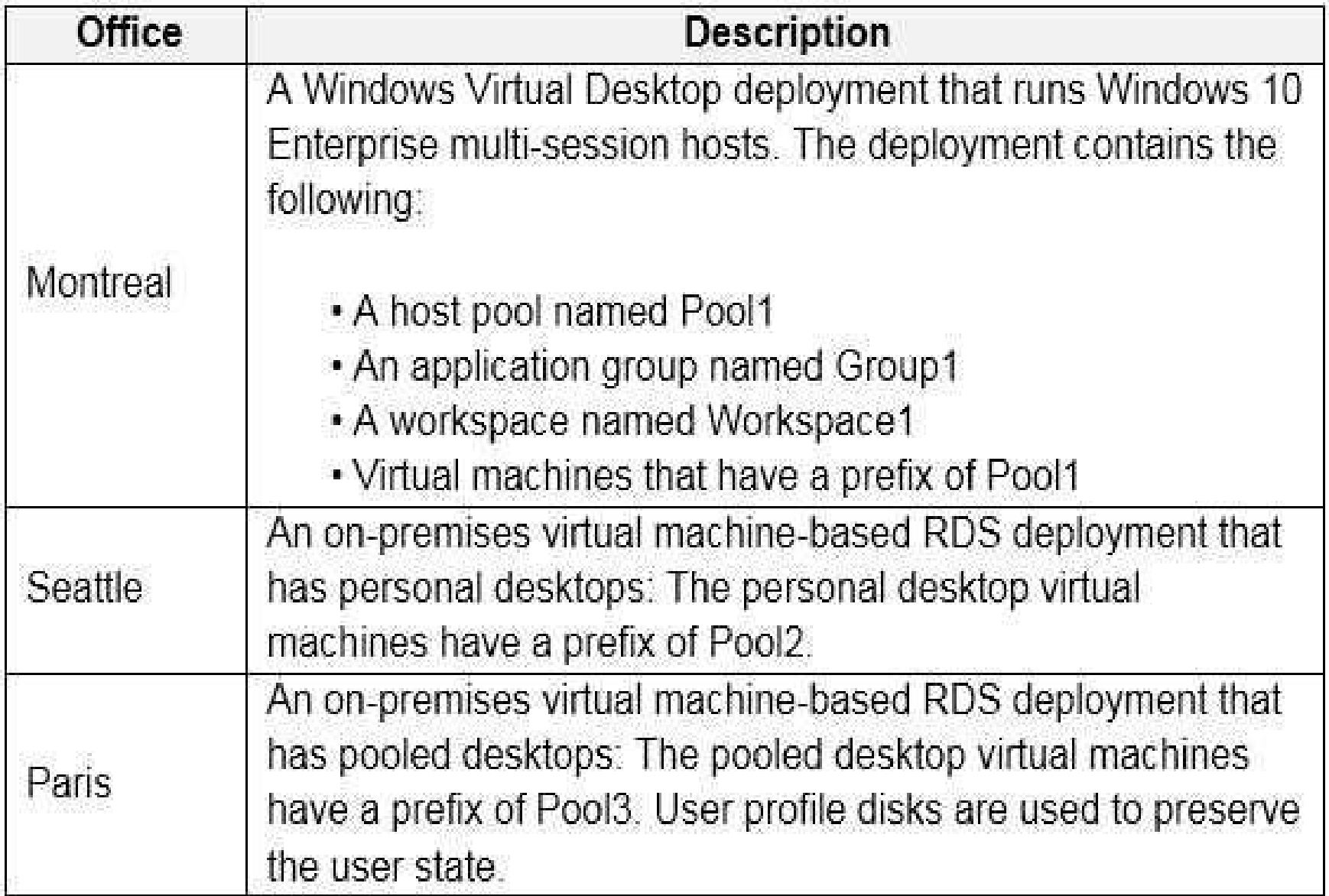
Contoso has a Remote Desktop infrastructure shown in the following table.
Requirements. Planned Changes
Contoso plans to implement the following changes:
Implement FSLogix profile containers for the Paris offices.
Deploy a Windows Virtual Desktop host pool named Pool4.
Migrate the RDS deployment in the Seattle office to Windows Virtual Desktop in the West US Azure
region.
Requirements. Pool4 Configuration
Pool4 will have the following settings:
Host pool type: Pooled
Max session limit: 7
Load balancing algorithm: Depth-first
Images: Windows 10 Enterprise multi-session
Virtual machine size: Standard D2s v3
Name prefix: Pool4
Number of VMs: 5
Virtual network: VNET4
Requirements. Technical Requirements
Contoso identifies the following technical requirements:
Before migrating the RDS deployment in the Seattle office, obtain the recommended deployment
configuration based on the current RDS utilization.
For the Windows Virtual Desktop deployment in the Montreal office, disable audio output in the
device redirection settings.
For the Windows Virtual Desktop deployment in the Seattle office, store the FSLogix profile
containers in Azure Storage.
Enable Operator2 to modify the RDP Properties of the Windows Virtual Desktop deployment in the
Montreal office.
From a server named Server1, convert the user profile clicks to the FSLogix profile containers.
Ensure that the Pool1 virtual machines only run during business hours.
Use the principle of least privilege.
Which storage account should you use?
Quiz
Case study
Overview
This is a case study. Case studies are not timed separately. You can use as much exam time as you
would like to complete each case. However, there may be additional case studies and sections on
this exam. You must manage your time to ensure that you are able to complete all questions included
on this exam in the time provided.
To answer the questions included in a case study, you will need to reference information that is
provided in the case study. Case studies might contain exhibits and other resources that provide
more information about the scenario that is described in the case study. Each question is
independent of the other questions in this case study.
At the end of this case study, a review screen will appear. This screen allows you to review your
answers and to make changes before you move to the next section of the exam. After you begin a
new section, you cannot return to this section.
To start the case study
To display the first question in this case study, click the Next button. Use the buttons in the left pane
to explore the content of the case study before you answer the questions. Clicking these buttons
displays information such as business requirements, existing environment, and problem statements.
If the case study has an All Information tab, note that the information displayed is identical to the
information displayed on the subsequent tabs. When you are ready to answer a question, click the
Question button to return to the question.
Overview
Contoso, Ltd. is a law firm that has a main office in Montreal and branch offices in Paris and Seattle.
The Seattle branch office opened recently.
Contoso has an Azure subscription and uses Microsoft 365.
Existing Infrastructure. Active Directory
The network contains an on-premises Active Directory domain named contoso.com and an Azure
Active Directory (Azure AD) tenant. One of the domain controllers runs as an Azure virtual machine
and connects to a virtual network named VNET1. All internal name resolution is provided by DNS
server that run on the domain controllers.
The on-premises Active Directory domain contains the organizational units (OUs) shown in the
following table.
The on-premises Active Directory domain contains the users shown in the following table.
The Azure AD tenant contains the cloud-only users shown in the following table.
Existing Infrastructure. Network Infrastructure
All the Azure virtual networks are peered. The on-premises network connects to the virtual
networks.
All servers run Windows Server 2019. All laptops and desktop computers run Windows 10
Enterprise.
Since users often work on confidential documents, all the users use their computer as a client for
connecting to Remote Desktop Services (RDS).
In the West US Azure region, you have the storage accounts shown in the following table.
Existing Infrastructure. Remote Desktop Infrastructure
Contoso has a Remote Desktop infrastructure shown in the following table.
Requirements. Planned Changes
Contoso plans to implement the following changes:
Implement FSLogix profile containers for the Paris offices.
Deploy a Windows Virtual Desktop host pool named Pool4.
Migrate the RDS deployment in the Seattle office to Windows Virtual Desktop in the West US Azure
region.
Requirements. Pool4 Configuration
Pool4 will have the following settings:
Host pool type: Pooled
Max session limit: 7
Load balancing algorithm: Depth-first
Images: Windows 10 Enterprise multi-session
Virtual machine size: Standard D2s v3
Name prefix: Pool4
Number of VMs: 5
Virtual network: VNET4
Requirements. Technical Requirements
Contoso identifies the following technical requirements:
Before migrating the RDS deployment in the Seattle office, obtain the recommended deployment
configuration based on the current RDS utilization.
For the Windows Virtual Desktop deployment in the Montreal office, disable audio output in the
device redirection settings.
For the Windows Virtual Desktop deployment in the Seattle office, store the FSLogix profile
containers in Azure Storage.
Enable Operator2 to modify the RDP Properties of the Windows Virtual Desktop deployment in the
Montreal office.
From a server named Server1, convert the user profile clicks to the FSLogix profile containers.
Ensure that the Pool1 virtual machines only run during business hours.
Use the principle of least privilege.
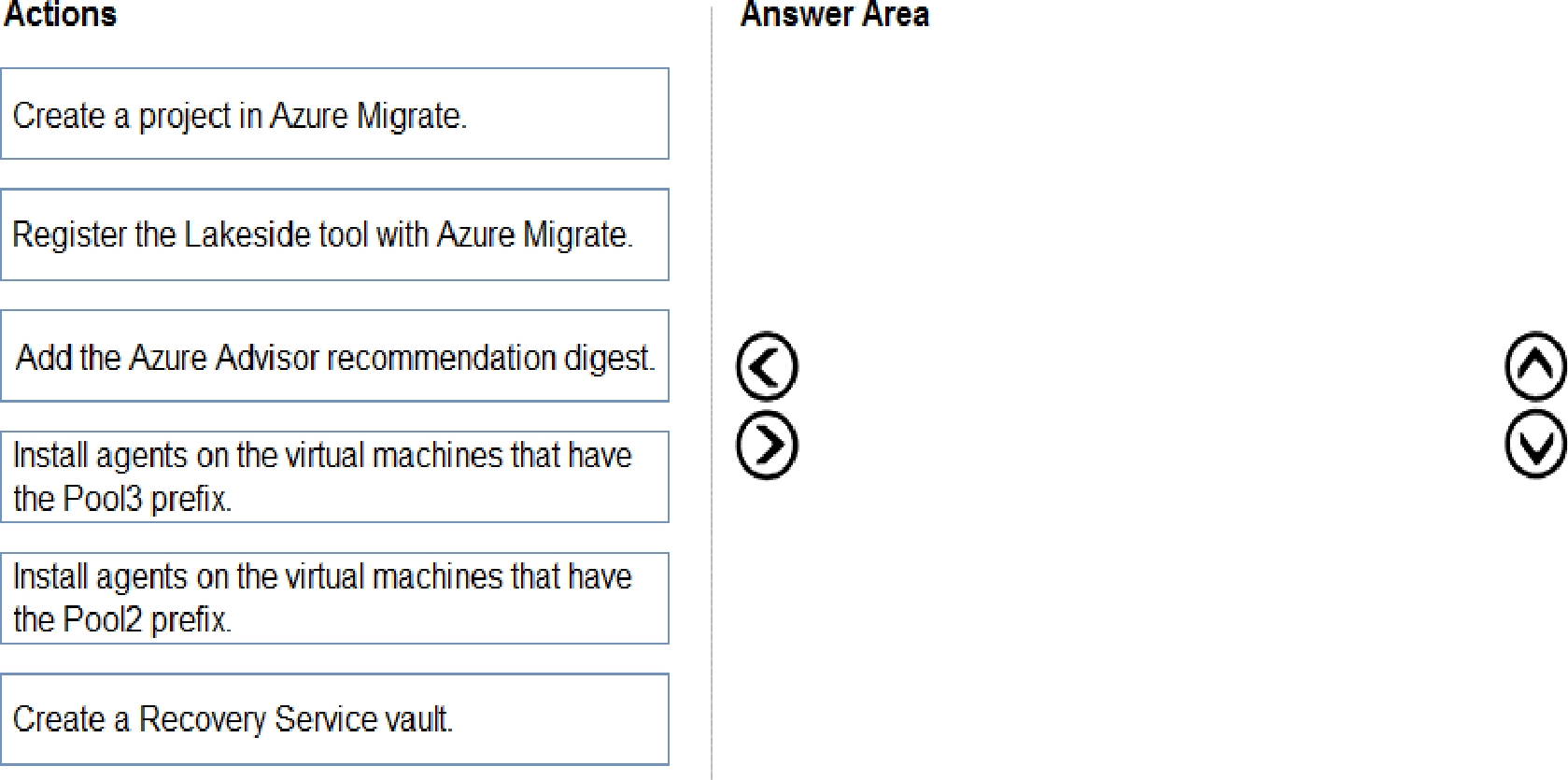
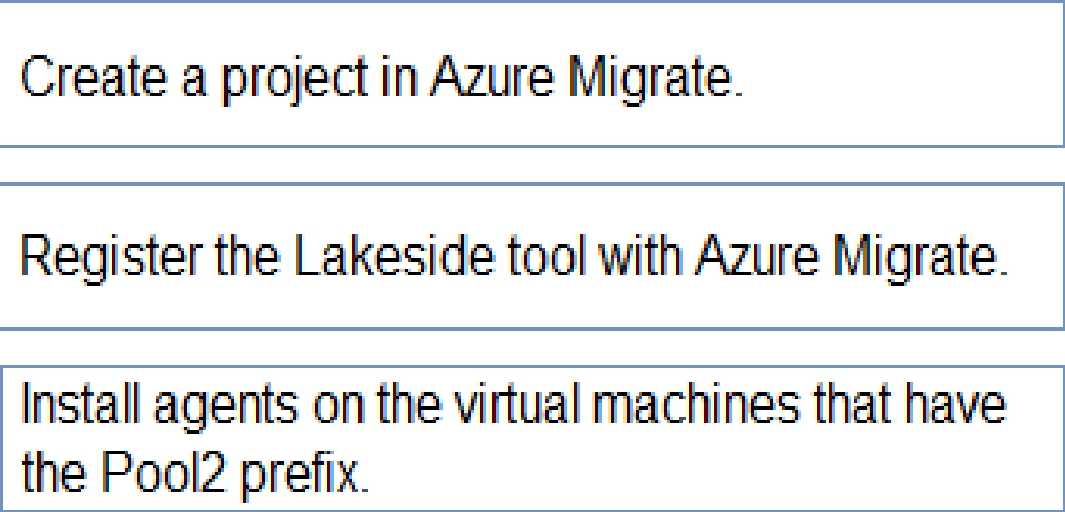
You need to evaluate the RDS deployment in the Seattle office. The solution must meet the technical
requirements.
Which three actions should you perform in sequence? To answer, move the appropriate actions from
the list of actions to the answer area and arrange them in the correct order.
Reference:
[https://docs.microsoft.com/en-us/azure/cloud-adoption-framework/migrate/azure-best-](https://docs.microsoft.com/en-us/azure/cloud-adoption-framework/migrate/azure-best-)
practices/contoso-migration-rds-to-wvd
Quiz
Case study
Overview
This is a case study. Case studies are not timed separately. You can use as much exam time as you
would like to complete each case. However, there may be additional case studies and sections on
this exam. You must manage your time to ensure that you are able to complete all questions included
on this exam in the time provided.
To answer the questions included in a case study, you will need to reference information that is
provided in the case study. Case studies might contain exhibits and other resources that provide
more information about the scenario that is described in the case study. Each question is
independent of the other questions in this case study.
At the end of this case study, a review screen will appear. This screen allows you to review your
answers and to make changes before you move to the next section of the exam. After you begin a
new section, you cannot return to this section.
To start the case study
To display the first question in this case study, click the Next button. Use the buttons in the left pane
to explore the content of the case study before you answer the questions. Clicking these buttons
displays information such as business requirements, existing environment, and problem statements.
If the case study has an All Information tab, note that the information displayed is identical to the
information displayed on the subsequent tabs. When you are ready to answer a question, click the
Question button to return to the question.
Overview
Contoso, Ltd. is a law firm that has a main office in Montreal and branch offices in Paris and Seattle.
The Seattle branch office opened recently.
Contoso has an Azure subscription and uses Microsoft 365.
Existing Infrastructure. Active Directory
The network contains an on-premises Active Directory domain named contoso.com and an Azure
Active Directory (Azure AD) tenant. One of the domain controllers runs as an Azure virtual machine
and connects to a virtual network named VNET1. All internal name resolution is provided by DNS
server that run on the domain controllers.
The on-premises Active Directory domain contains the organizational units (OUs) shown in the
following table.
The on-premises Active Directory domain contains the users shown in the following table.
The Azure AD tenant contains the cloud-only users shown in the following table.
Existing Infrastructure. Network Infrastructure
All the Azure virtual networks are peered. The on-premises network connects to the virtual
networks.
All servers run Windows Server 2019. All laptops and desktop computers run Windows 10
Enterprise.
Since users often work on confidential documents, all the users use their computer as a client for
connecting to Remote Desktop Services (RDS).
In the West US Azure region, you have the storage accounts shown in the following table.
Existing Infrastructure. Remote Desktop Infrastructure
Contoso has a Remote Desktop infrastructure shown in the following table.
Requirements. Planned Changes
Contoso plans to implement the following changes:
Implement FSLogix profile containers for the Paris offices.
Deploy a Windows Virtual Desktop host pool named Pool4.
Migrate the RDS deployment in the Seattle office to Windows Virtual Desktop in the West US Azure
region.
Requirements. Pool4 Configuration
Pool4 will have the following settings:
Host pool type: Pooled
Max session limit: 7
Load balancing algorithm: Depth-first
Images: Windows 10 Enterprise multi-session
Virtual machine size: Standard D2s v3
Name prefix: Pool4
Number of VMs: 5
Virtual network: VNET4
Requirements. Technical Requirements
Contoso identifies the following technical requirements:
Before migrating the RDS deployment in the Seattle office, obtain the recommended deployment
configuration based on the current RDS utilization.
For the Windows Virtual Desktop deployment in the Montreal office, disable audio output in the
device redirection settings.
For the Windows Virtual Desktop deployment in the Seattle office, store the FSLogix profile
containers in Azure Storage.
Enable Operator2 to modify the RDP Properties of the Windows Virtual Desktop deployment in the
Montreal office.
From a server named Server1, convert the user profile clicks to the FSLogix profile containers.
Ensure that the Pool1 virtual machines only run during business hours.
Use the principle of least privilege.
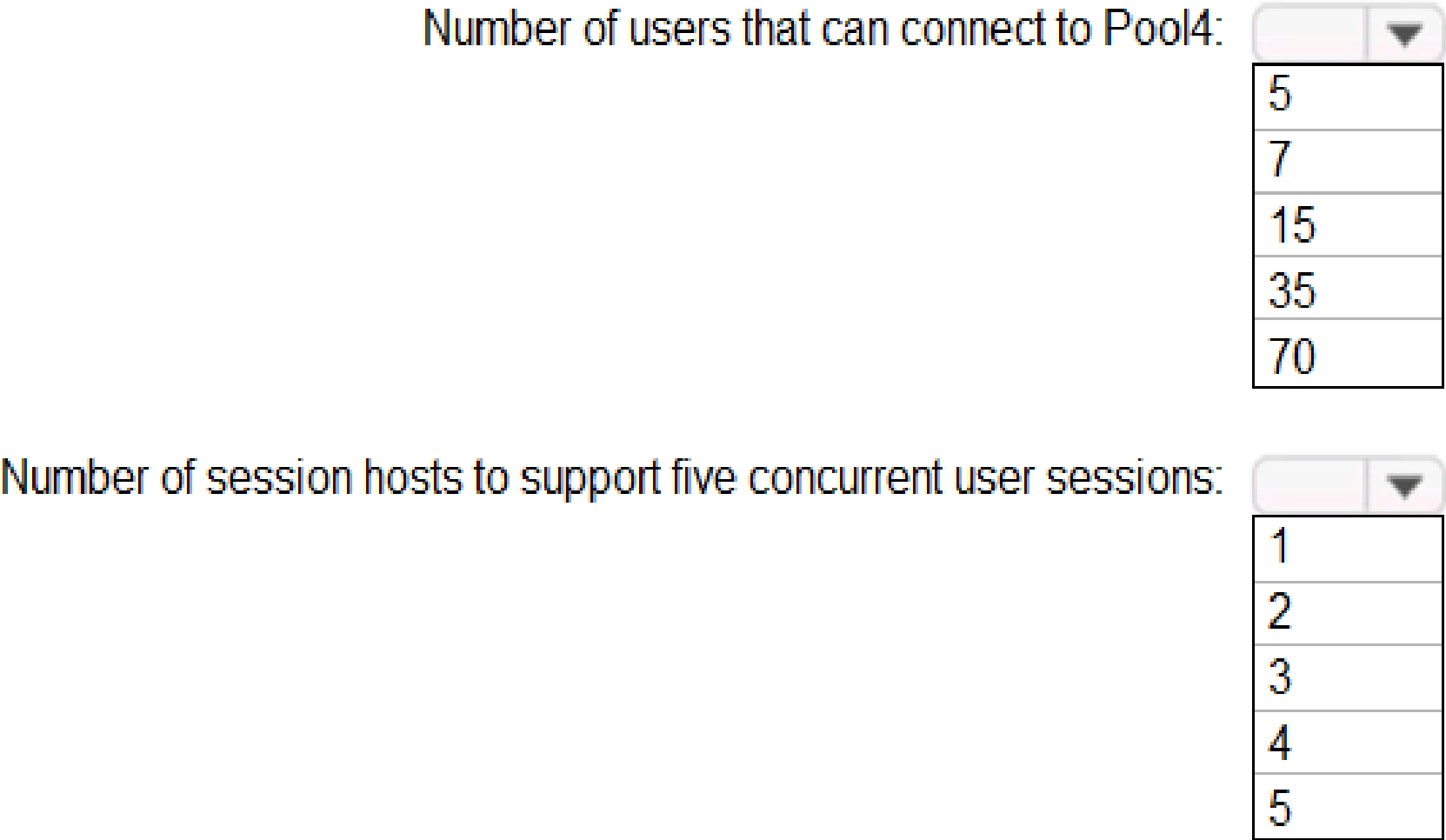
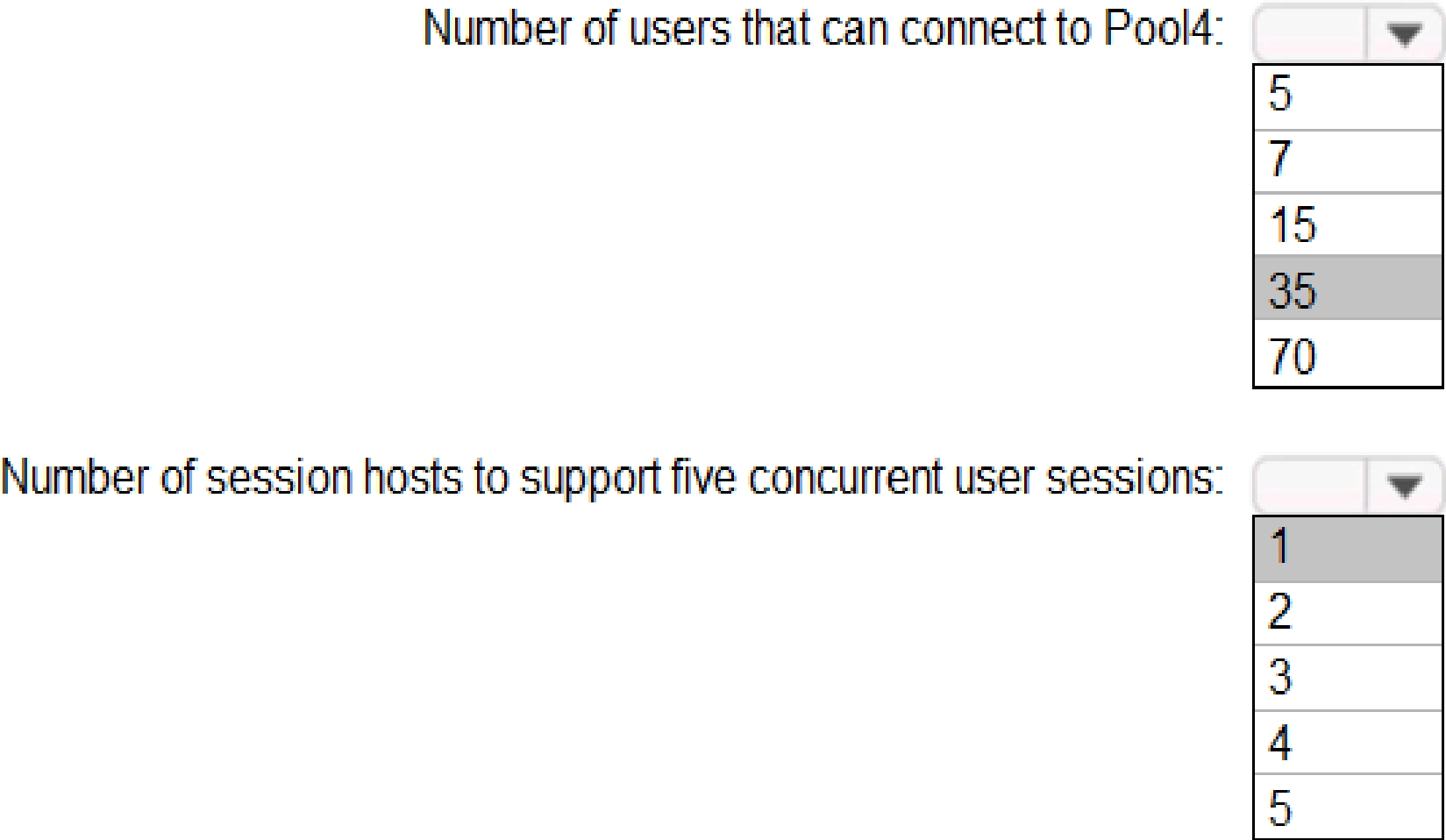
What will be the maximum number of users that can connect to Pool4, and how many session hosts
are needed to support five concurrent user sessions? To answer, select the appropriate options in the
answer area.
NOTE: Each correct selection is worth one point.
Quiz
Case study
Overview
This is a case study. Case studies are not timed separately. You can use as much exam time as you
would like to complete each case. However, there may be additional case studies and sections on
this exam. You must manage your time to ensure that you are able to complete all questions included
on this exam in the time provided.
To answer the questions included in a case study, you will need to reference information that is
provided in the case study. Case studies might contain exhibits and other resources that provide
more information about the scenario that is described in the case study. Each question is
independent of the other questions in this case study.
At the end of this case study, a review screen will appear. This screen allows you to review your
answers and to make changes before you move to the next section of the exam. After you begin a
new section, you cannot return to this section.
To start the case study
To display the first question in this case study, click the Next button. Use the buttons in the left pane
to explore the content of the case study before you answer the questions. Clicking these buttons
displays information such as business requirements, existing environment, and problem statements.
If the case study has an All Information tab, note that the information displayed is identical to the
information displayed on the subsequent tabs. When you are ready to answer a question, click the
Question button to return to the question.
Overview
Contoso, Ltd. is a law firm that has a main office in Montreal and branch offices in Paris and Seattle.
The Seattle branch office opened recently.
Contoso has an Azure subscription and uses Microsoft 365.
Existing Infrastructure. Active Directory
The network contains an on-premises Active Directory domain named contoso.com and an Azure
Active Directory (Azure AD) tenant. One of the domain controllers runs as an Azure virtual machine
and connects to a virtual network named VNET1. All internal name resolution is provided by DNS
server that run on the domain controllers.
The on-premises Active Directory domain contains the organizational units (OUs) shown in the
following table.
The on-premises Active Directory domain contains the users shown in the following table.
The Azure AD tenant contains the cloud-only users shown in the following table.
Existing Infrastructure. Network Infrastructure
All the Azure virtual networks are peered. The on-premises network connects to the virtual
networks.
All servers run Windows Server 2019. All laptops and desktop computers run Windows 10
Enterprise.
Since users often work on confidential documents, all the users use their computer as a client for
connecting to Remote Desktop Services (RDS).
In the West US Azure region, you have the storage accounts shown in the following table.
Existing Infrastructure. Remote Desktop Infrastructure
Contoso has a Remote Desktop infrastructure shown in the following table.
Requirements. Planned Changes
Contoso plans to implement the following changes:
Implement FSLogix profile containers for the Paris offices.
Deploy a Windows Virtual Desktop host pool named Pool4.
Migrate the RDS deployment in the Seattle office to Windows Virtual Desktop in the West US Azure
region.
Requirements. Pool4 Configuration
Pool4 will have the following settings:
Host pool type: Pooled
Max session limit: 7
Load balancing algorithm: Depth-first
Images: Windows 10 Enterprise multi-session
Virtual machine size: Standard D2s v3
Name prefix: Pool4
Number of VMs: 5
Virtual network: VNET4
Requirements. Technical Requirements
Contoso identifies the following technical requirements:
Before migrating the RDS deployment in the Seattle office, obtain the recommended deployment
configuration based on the current RDS utilization.
For the Windows Virtual Desktop deployment in the Montreal office, disable audio output in the
device redirection settings.
For the Windows Virtual Desktop deployment in the Seattle office, store the FSLogix profile
containers in Azure Storage.
Enable Operator2 to modify the RDP Properties of the Windows Virtual Desktop deployment in the
Montreal office.
From a server named Server1, convert the user profile clicks to the FSLogix profile containers.
Ensure that the Pool1 virtual machines only run during business hours.
Use the principle of least privilege.
Quiz
Case study
Overview
This is a case study. Case studies are not timed separately. You can use as much exam time as you
would like to complete each case. However, there may be additional case studies and sections on
this exam. You must manage your time to ensure that you are able to complete all questions included
on this exam in the time provided.
To answer the questions included in a case study, you will need to reference information that is
provided in the case study. Case studies might contain exhibits and other resources that provide
more information about the scenario that is described in the case study. Each question is
independent of the other questions in this case study.
At the end of this case study, a review screen will appear. This screen allows you to review your
answers and to make changes before you move to the next section of the exam. After you begin a
new section, you cannot return to this section.
To start the case study
To display the first question in this case study, click the Next button. Use the buttons in the left pane
to explore the content of the case study before you answer the questions. Clicking these buttons
displays information such as business requirements, existing environment, and problem statements.
If the case study has an All Information tab, note that the information displayed is identical to the
information displayed on the subsequent tabs. When you are ready to answer a question, click the
Question button to return to the question.
Overview
Contoso, Ltd. is a law firm that has a main office in Montreal and branch offices in Paris and Seattle.
The Seattle branch office opened recently.
Contoso has an Azure subscription and uses Microsoft 365.
Existing Infrastructure. Active Directory
The network contains an on-premises Active Directory domain named contoso.com and an Azure
Active Directory (Azure AD) tenant. One of the domain controllers runs as an Azure virtual machine
and connects to a virtual network named VNET1. All internal name resolution is provided by DNS
server that run on the domain controllers.
The on-premises Active Directory domain contains the organizational units (OUs) shown in the
following table.
The on-premises Active Directory domain contains the users shown in the following table.
The Azure AD tenant contains the cloud-only users shown in the following table.
Existing Infrastructure. Network Infrastructure
All the Azure virtual networks are peered. The on-premises network connects to the virtual
networks.
All servers run Windows Server 2019. All laptops and desktop computers run Windows 10
Enterprise.
Since users often work on confidential documents, all the users use their computer as a client for
connecting to Remote Desktop Services (RDS).
In the West US Azure region, you have the storage accounts shown in the following table.
Existing Infrastructure. Remote Desktop Infrastructure
Contoso has a Remote Desktop infrastructure shown in the following table.
Requirements. Planned Changes
Contoso plans to implement the following changes:
Implement FSLogix profile containers for the Paris offices.
Deploy a Windows Virtual Desktop host pool named Pool4.
Migrate the RDS deployment in the Seattle office to Windows Virtual Desktop in the West US Azure
region.
Requirements. Pool4 Configuration
Pool4 will have the following settings:
Host pool type: Pooled
Max session limit: 7
Load balancing algorithm: Depth-first
Images: Windows 10 Enterprise multi-session
Virtual machine size: Standard D2s v3
Name prefix: Pool4
Number of VMs: 5
Virtual network: VNET4
Requirements. Technical Requirements
Contoso identifies the following technical requirements:
Before migrating the RDS deployment in the Seattle office, obtain the recommended deployment
configuration based on the current RDS utilization.
For the Windows Virtual Desktop deployment in the Montreal office, disable audio output in the
device redirection settings.
For the Windows Virtual Desktop deployment in the Seattle office, store the FSLogix profile
containers in Azure Storage.
Enable Operator2 to modify the RDP Properties of the Windows Virtual Desktop deployment in the
Montreal office.
From a server named Server1, convert the user profile clicks to the FSLogix profile containers.
Ensure that the Pool1 virtual machines only run during business hours.
Use the principle of least privilege.
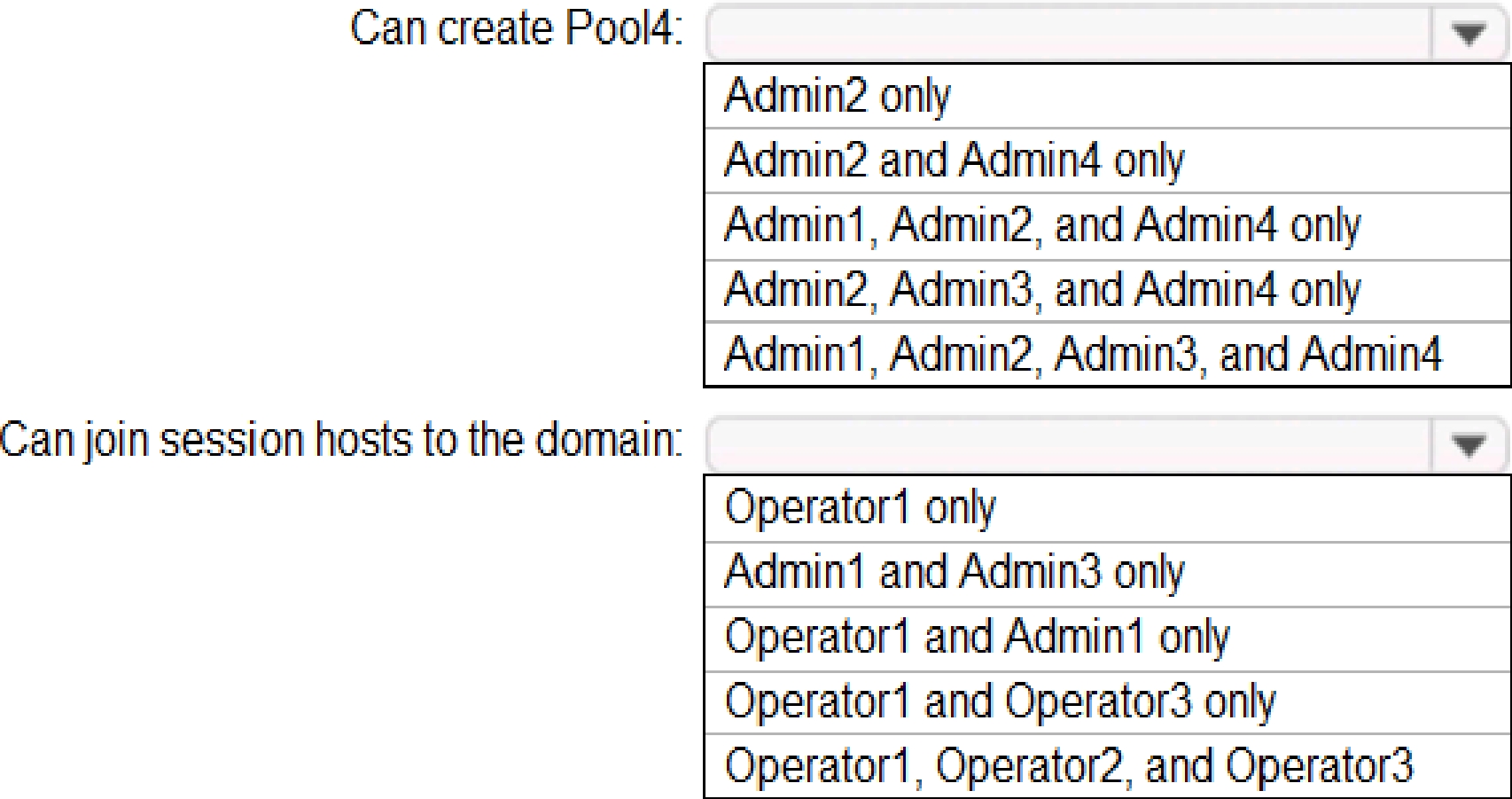
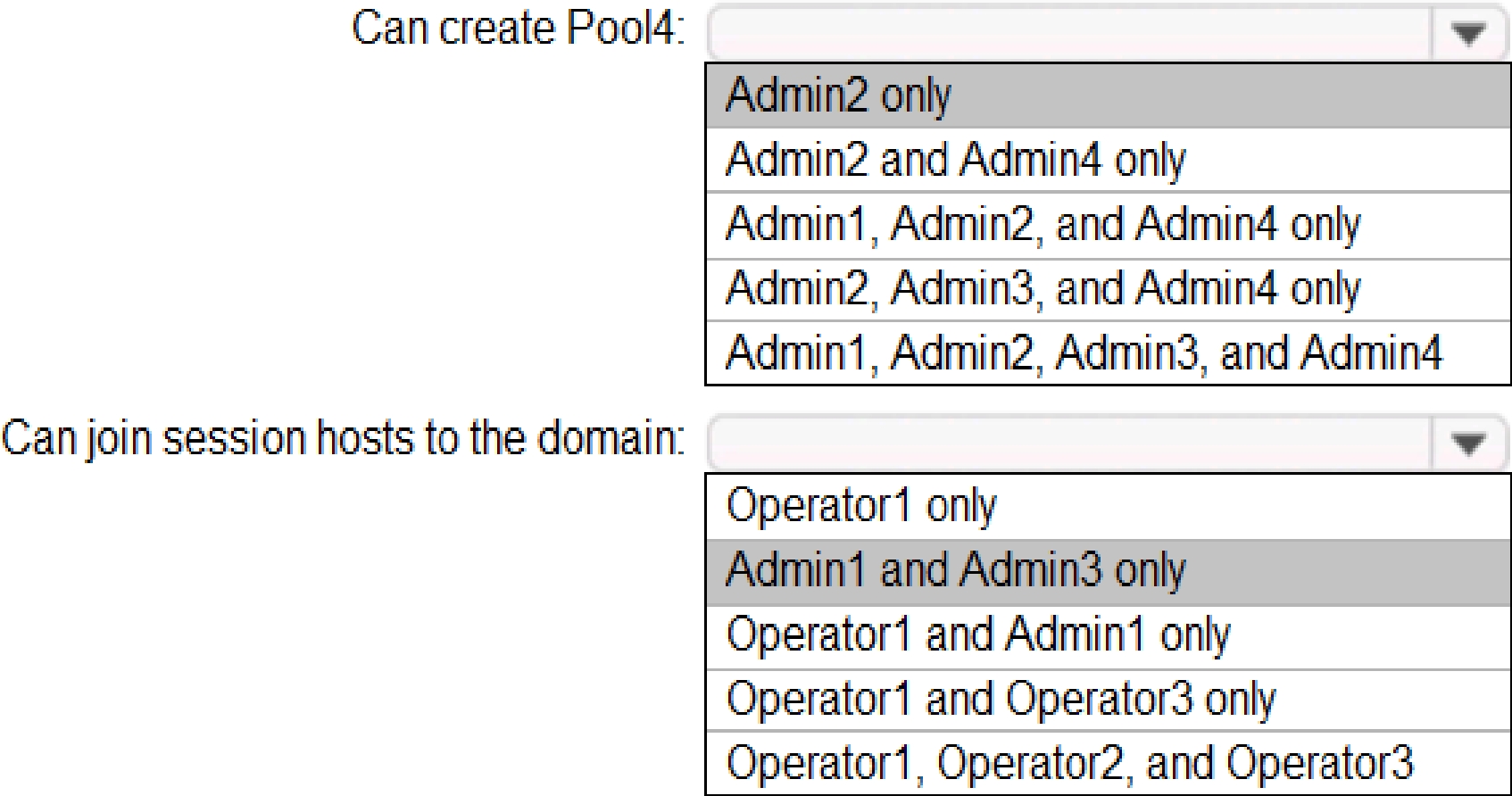
select the appropriate options in the answer area.
NOTE: Each correct selection is worth one point.
Quiz
Case study
Overview
This is a case study. Case studies are not timed separately. You can use as much exam time as you
would like to complete each case. However, there may be additional case studies and sections on
this exam. You must manage your time to ensure that you are able to complete all questions included
on this exam in the time provided.
To answer the questions included in a case study, you will need to reference information that is
provided in the case study. Case studies might contain exhibits and other resources that provide
more information about the scenario that is described in the case study. Each question is
independent of the other questions in this case study.
At the end of this case study, a review screen will appear. This screen allows you to review your
answers and to make changes before you move to the next section of the exam. After you begin a
new section, you cannot return to this section.
To start the case study
To display the first question in this case study, click the Next button. Use the buttons in the left pane
to explore the content of the case study before you answer the questions. Clicking these buttons
displays information such as business requirements, existing environment, and problem statements.
If the case study has an All Information tab, note that the information displayed is identical to the
information displayed on the subsequent tabs. When you are ready to answer a question, click the
Question button to return to the question.
Overview
Contoso, Ltd. is a law firm that has a main office in Montreal and branch offices in Paris and Seattle.
The Seattle branch office opened recently.
Contoso has an Azure subscription and uses Microsoft 365.
Existing Infrastructure. Active Directory
The network contains an on-premises Active Directory domain named contoso.com and an Azure
Active Directory (Azure AD) tenant. One of the domain controllers runs as an Azure virtual machine
and connects to a virtual network named VNET1. All internal name resolution is provided by DNS
server that run on the domain controllers.
The on-premises Active Directory domain contains the organizational units (OUs) shown in the
following table.
The on-premises Active Directory domain contains the users shown in the following table.
The Azure AD tenant contains the cloud-only users shown in the following table.
Existing Infrastructure. Network Infrastructure
All the Azure virtual networks are peered. The on-premises network connects to the virtual
networks.
All servers run Windows Server 2019. All laptops and desktop computers run Windows 10
Enterprise.
Since users often work on confidential documents, all the users use their computer as a client for
connecting to Remote Desktop Services (RDS).
In the West US Azure region, you have the storage accounts shown in the following table.
Existing Infrastructure. Remote Desktop Infrastructure
Contoso has a Remote Desktop infrastructure shown in the following table.
Requirements. Planned Changes
Contoso plans to implement the following changes:
Implement FSLogix profile containers for the Paris offices.
Deploy a Windows Virtual Desktop host pool named Pool4.
Migrate the RDS deployment in the Seattle office to Windows Virtual Desktop in the West US Azure
region.
Requirements. Pool4 Configuration
Pool4 will have the following settings:
Host pool type: Pooled
Max session limit: 7
Load balancing algorithm: Depth-first
Images: Windows 10 Enterprise multi-session
Virtual machine size: Standard D2s v3
Name prefix: Pool4
Number of VMs: 5
Virtual network: VNET4
Requirements. Technical Requirements
Contoso identifies the following technical requirements:
Before migrating the RDS deployment in the Seattle office, obtain the recommended deployment
configuration based on the current RDS utilization.
For the Windows Virtual Desktop deployment in the Montreal office, disable audio output in the
device redirection settings.
For the Windows Virtual Desktop deployment in the Seattle office, store the FSLogix profile
containers in Azure Storage.
Enable Operator2 to modify the RDP Properties of the Windows Virtual Desktop deployment in the
Montreal office.
From a server named Server1, convert the user profile clicks to the FSLogix profile containers.
Ensure that the Pool1 virtual machines only run during business hours.
Use the principle of least privilege.
requirements.
Where should you configure the settings?
Quiz
Case study
Overview
This is a case study. Case studies are not timed separately. You can use as much exam time as you
would like to complete each case. However, there may be additional case studies and sections on
this exam. You must manage your time to ensure that you are able to complete all questions included
on this exam in the time provided.
To answer the questions included in a case study, you will need to reference information that is
provided in the case study. Case studies might contain exhibits and other resources that provide
more information about the scenario that is described in the case study. Each question is
independent of the other questions in this case study.
At the end of this case study, a review screen will appear. This screen allows you to review your
answers and to make changes before you move to the next section of the exam. After you begin a
new section, you cannot return to this section.
To start the case study
To display the first question in this case study, click the Next button. Use the buttons in the left pane
to explore the content of the case study before you answer the questions. Clicking these buttons
displays information such as business requirements, existing environment, and problem statements.
If the case study has an All Information tab, note that the information displayed is identical to the
information displayed on the subsequent tabs. When you are ready to answer a question, click the
Question button to return to the question.
Overview
Contoso, Ltd. is a law firm that has a main office in Montreal and branch offices in Paris and Seattle.
The Seattle branch office opened recently.
Contoso has an Azure subscription and uses Microsoft 365.
Existing Infrastructure. Active Directory
The network contains an on-premises Active Directory domain named contoso.com and an Azure
Active Directory (Azure AD) tenant. One of the domain controllers runs as an Azure virtual machine
and connects to a virtual network named VNET1. All internal name resolution is provided by DNS
server that run on the domain controllers.
The on-premises Active Directory domain contains the organizational units (OUs) shown in the
following table.
The on-premises Active Directory domain contains the users shown in the following table.
The Azure AD tenant contains the cloud-only users shown in the following table.
Existing Infrastructure. Network Infrastructure
All the Azure virtual networks are peered. The on-premises network connects to the virtual
networks.
All servers run Windows Server 2019. All laptops and desktop computers run Windows 10
Enterprise.
Since users often work on confidential documents, all the users use their computer as a client for
connecting to Remote Desktop Services (RDS).
In the West US Azure region, you have the storage accounts shown in the following table.
Existing Infrastructure. Remote Desktop Infrastructure
Contoso has a Remote Desktop infrastructure shown in the following table.
Requirements. Planned Changes
Contoso plans to implement the following changes:
Implement FSLogix profile containers for the Paris offices.
Deploy a Windows Virtual Desktop host pool named Pool4.
Migrate the RDS deployment in the Seattle office to Windows Virtual Desktop in the West US Azure
region.
Requirements. Pool4 Configuration
Pool4 will have the following settings:
Host pool type: Pooled
Max session limit: 7
Load balancing algorithm: Depth-first
Images: Windows 10 Enterprise multi-session
Virtual machine size: Standard D2s v3
Name prefix: Pool4
Number of VMs: 5
Virtual network: VNET4
Requirements. Technical Requirements
Contoso identifies the following technical requirements:
Before migrating the RDS deployment in the Seattle office, obtain the recommended deployment
configuration based on the current RDS utilization.
For the Windows Virtual Desktop deployment in the Montreal office, disable audio output in the
device redirection settings.
For the Windows Virtual Desktop deployment in the Seattle office, store the FSLogix profile
containers in Azure Storage.
Enable Operator2 to modify the RDP Properties of the Windows Virtual Desktop deployment in the
Montreal office.
From a server named Server1, convert the user profile clicks to the FSLogix profile containers.
Ensure that the Pool1 virtual machines only run during business hours.
Use the principle of least privilege.
technical requirements.
What should you use?
Quiz
Case study
Overview
This is a case study. Case studies are not timed separately. You can use as much exam time as you
would like to complete each case. However, there may be additional case studies and sections on
this exam. You must manage your time to ensure that you are able to complete all questions included
on this exam in the time provided.
To answer the questions included in a case study, you will need to reference information that is
provided in the case study. Case studies might contain exhibits and other resources that provide
more information about the scenario that is described in the case study. Each question is
independent of the other questions in this case study.
At the end of this case study, a review screen will appear. This screen allows you to review your
answers and to make changes before you move to the next section of the exam. After you begin a
new section, you cannot return to this section.
To start the case study
To display the first question in this case study, click the Next button. Use the buttons in the left pane
to explore the content of the case study before you answer the questions. Clicking these buttons
displays information such as business requirements, existing environment, and problem statements.
If the case study has an All Information tab, note that the information displayed is identical to the
information displayed on the subsequent tabs. When you are ready to answer a question, click the
Question button to return to the question.
Overview
Contoso, Ltd. is a law firm that has a main office in Montreal and branch offices in Paris and Seattle.
The Seattle branch office opened recently.
Contoso has an Azure subscription and uses Microsoft 365.
Existing Infrastructure. Active Directory
The network contains an on-premises Active Directory domain named contoso.com and an Azure
Active Directory (Azure AD) tenant. One of the domain controllers runs as an Azure virtual machine
and connects to a virtual network named VNET1. All internal name resolution is provided by DNS
server that run on the domain controllers.
The on-premises Active Directory domain contains the organizational units (OUs) shown in the
following table.
The on-premises Active Directory domain contains the users shown in the following table.
The Azure AD tenant contains the cloud-only users shown in the following table.
Existing Infrastructure. Network Infrastructure
All the Azure virtual networks are peered. The on-premises network connects to the virtual
networks.
All servers run Windows Server 2019. All laptops and desktop computers run Windows 10
Enterprise.
Since users often work on confidential documents, all the users use their computer as a client for
connecting to Remote Desktop Services (RDS).
In the West US Azure region, you have the storage accounts shown in the following table.
Existing Infrastructure. Remote Desktop Infrastructure
Contoso has a Remote Desktop infrastructure shown in the following table.
Requirements. Planned Changes
Contoso plans to implement the following changes:
Implement FSLogix profile containers for the Paris offices.
Deploy a Windows Virtual Desktop host pool named Pool4.
Migrate the RDS deployment in the Seattle office to Windows Virtual Desktop in the West US Azure
region.
Requirements. Pool4 Configuration
Pool4 will have the following settings:
Host pool type: Pooled
Max session limit: 7
Load balancing algorithm: Depth-first
Images: Windows 10 Enterprise multi-session
Virtual machine size: Standard D2s v3
Name prefix: Pool4
Number of VMs: 5
Virtual network: VNET4
Requirements. Technical Requirements
Contoso identifies the following technical requirements:
Before migrating the RDS deployment in the Seattle office, obtain the recommended deployment
configuration based on the current RDS utilization.
For the Windows Virtual Desktop deployment in the Montreal office, disable audio output in the
device redirection settings.
For the Windows Virtual Desktop deployment in the Seattle office, store the FSLogix profile
containers in Azure Storage.
Enable Operator2 to modify the RDP Properties of the Windows Virtual Desktop deployment in the
Montreal office.
From a server named Server1, convert the user profile clicks to the FSLogix profile containers.
Ensure that the Pool1 virtual machines only run during business hours.
Use the principle of least privilege.
Quiz
Case study
Overview
This is a case study. Case studies are not timed separately. You can use as much exam time as you
would like to complete each case. However, there may be additional case studies and sections on
this exam. You must manage your time to ensure that you are able to complete all questions included
on this exam in the time provided.
To answer the questions included in a case study, you will need to reference information that is
provided in the case study. Case studies might contain exhibits and other resources that provide
more information about the scenario that is described in the case study. Each question is
independent of the other questions in this case study.
At the end of this case study, a review screen will appear. This screen allows you to review your
answers and to make changes before you move to the next section of the exam. After you begin a
new section, you cannot return to this section.
To start the case study
To display the first question in this case study, click the Next button. Use the buttons in the left pane
to explore the content of the case study before you answer the questions. Clicking these buttons
displays information such as business requirements, existing environment, and problem statements.
If the case study has an All Information tab, note that the information displayed is identical to the
information displayed on the subsequent tabs. When you are ready to answer a question, click the
Question button to return to the question.
Overview
Contoso, Ltd. is a law firm that has a main office in Montreal and branch offices in Paris and Seattle.
The Seattle branch office opened recently.
Contoso has an Azure subscription and uses Microsoft 365.
Existing Infrastructure. Active Directory
The network contains an on-premises Active Directory domain named contoso.com and an Azure
Active Directory (Azure AD) tenant. One of the domain controllers runs as an Azure virtual machine
and connects to a virtual network named VNET1. All internal name resolution is provided by DNS
server that run on the domain controllers.
The on-premises Active Directory domain contains the organizational units (OUs) shown in the
following table.
The on-premises Active Directory domain contains the users shown in the following table.
The Azure AD tenant contains the cloud-only users shown in the following table.
Existing Infrastructure. Network Infrastructure
All the Azure virtual networks are peered. The on-premises network connects to the virtual
networks.
All servers run Windows Server 2019. All laptops and desktop computers run Windows 10
Enterprise.
Since users often work on confidential documents, all the users use their computer as a client for
connecting to Remote Desktop Services (RDS).
In the West US Azure region, you have the storage accounts shown in the following table.
Existing Infrastructure. Remote Desktop Infrastructure
Contoso has a Remote Desktop infrastructure shown in the following table.
Requirements. Planned Changes
Contoso plans to implement the following changes:
Implement FSLogix profile containers for the Paris offices.
Deploy a Windows Virtual Desktop host pool named Pool4.
Migrate the RDS deployment in the Seattle office to Windows Virtual Desktop in the West US Azure
region.
Requirements. Pool4 Configuration
Pool4 will have the following settings:
Host pool type: Pooled
Max session limit: 7
Load balancing algorithm: Depth-first
Images: Windows 10 Enterprise multi-session
Virtual machine size: Standard D2s v3
Name prefix: Pool4
Number of VMs: 5
Virtual network: VNET4
Requirements. Technical Requirements
Contoso identifies the following technical requirements:
Before migrating the RDS deployment in the Seattle office, obtain the recommended deployment
configuration based on the current RDS utilization.
For the Windows Virtual Desktop deployment in the Montreal office, disable audio output in the
device redirection settings.
For the Windows Virtual Desktop deployment in the Seattle office, store the FSLogix profile
containers in Azure Storage.
Enable Operator2 to modify the RDP Properties of the Windows Virtual Desktop deployment in the
Montreal office.
From a server named Server1, convert the user profile clicks to the FSLogix profile containers.
Ensure that the Pool1 virtual machines only run during business hours.
Use the principle of least privilege.
Each correct answer presents part of the solution.
NOTE: Each correct selection is worth one point.
Quiz
Case study
Overview
This is a case study. Case studies are not timed separately. You can use as much exam time as you
would like to complete each case. However, there may be additional case studies and sections on
this exam. You must manage your time to ensure that you are able to complete all questions included
on this exam in the time provided.
To answer the questions included in a case study, you will need to reference information that is
provided in the case study. Case studies might contain exhibits and other resources that provide
more information about the scenario that is described in the case study. Each question is
independent of the other questions in this case study.
At the end of this case study, a review screen will appear. This screen allows you to review your
answers and to make changes before you move to the next section of the exam. After you begin a
new section, you cannot return to this section.
To start the case study
To display the first question in this case study, click the Next button. Use the buttons in the left pane
to explore the content of the case study before you answer the questions. Clicking these buttons
displays information such as business requirements, existing environment, and problem statements.
If the case study has an All Information tab, note that the information displayed is identical to the
information displayed on the subsequent tabs. When you are ready to answer a question, click the
Question button to return to the question.
Overview
Litware, Inc. is a pharmaceutical company that has a main office in Boston, United States, and a
remote office in Chennai, India.
Existing Environment. Identity Environment
The network contains an on-premises Active Directory domain named litware.com that syncs to an
Azure Active Directory (Azure AD) tenant named litware.com.
The Azure AD tenant contains the users shown in the following table.

All users are registered for Azure Multi-Factor Authentication (MFA).
Existing Environment. Cloud Services
Litware has a Microsoft 365 E5 subscription associated to the Azure AD tenant. All users are assigned
Microsoft 365 Enterprise E5 licenses.
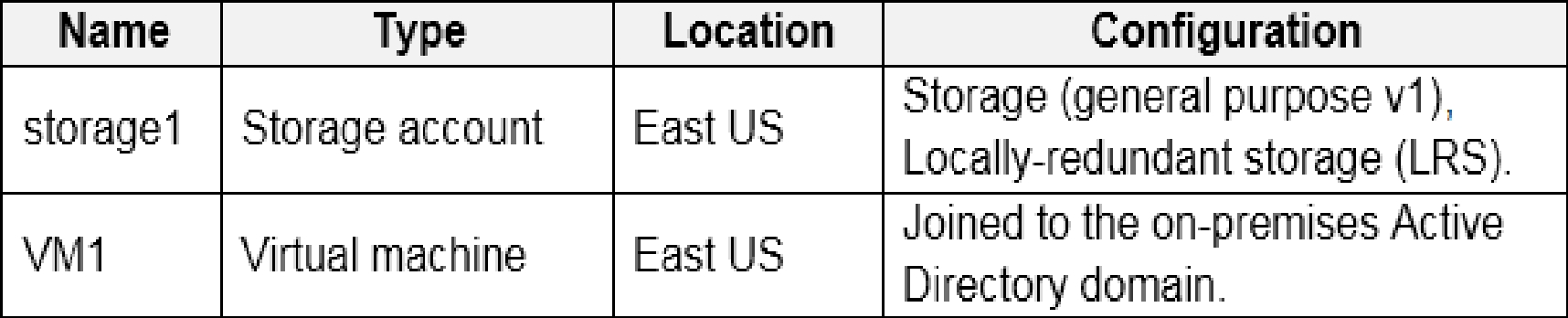
Litware has an Azure subscription associated to the Azure AD tenant. The subscription contains the
resources shown in the following table.
Litware uses custom virtual machine images and custom scripts to automatically provision Azure
virtual machines and join the virtual machines to the on-premises Active Directory domain.
Network and DNS
The offices connect to each other by using a WAN link. Each office connects directly to the internet.
All DNS queries for internet hosts are resolved by using DNS servers in the Boston office, which point
to root servers on the internet. The Chennai office has caching-only DNS servers that forward queries
to the DNS servers in the Boston office.
Requirements. Planned Changes
Litware plans to implement the following changes:
Deploy Windows Virtual Desktop environments to the East US Azure region for the users in the
Boston office and to the South India Azure region for the users in the Chennai office.
Implement FSLogix profile containers.
Optimize the custom virtual machine images for the Windows Virtual Desktop session hosts.
Use PowerShell to automate the addition of virtual machines to the Windows Virtual Desktop host
pools.
Requirements. Performance Requirements
Litware identifies the following performance requirements:
Minimize network latency of the Windows Virtual Desktop connections from the Boston and Chennai
offices.
Minimize latency of the Windows Virtual Desktop host authentication in each Azure region.
Minimize how long it takes to sign in to the Windows Virtual Desktop session hosts.
Requirements. Authentication Requirements
Litware identifies the following authentication requirements:
Enforce Azure MFA when accessing Windows Virtual Desktop apps.
Force users to reauthenticate if their Windows Virtual Desktop session lasts more than eight hours.
Requirements. Security Requirements
Litware identifies the following security requirements:
Explicitly allow traffic between the Windows Virtual Desktop session hosts and Microsoft 365.
Explicitly allow traffic between the Windows Virtual Desktop session hosts and the Windows Virtual
Desktop infrastructure.
Use built-in groups for delegation.
Delegate the management of app groups to CloudAdmin1, including the ability to publish app groups
to users and user groups.
Grant Admin1 permissions to manage workspaces, including listing which apps are assigned to the
app groups.
Minimize administrative effort to manage network security.
Use the principle of least privilege.
Requirements. Deployment Requirements
Litware identifies the following deployment requirements:
Use PowerShell to generate the token used to add the virtual machines as session hosts to a
Windows Virtual Desktop host pool.
Minimize how long it takes to provision the Windows Virtual Desktop session hosts based on the
custom virtual machine images.
Whenever possible, preinstall agents and apps in the custom virtual machine images.
Which two actions should you include in the recommendation? Each correct answer presents part of
the solution.
NOTE: Each correct selection is worth one point.
AZ-140: Configuring and Operating Windows Virtual Desktop on Microsoft Azure Practice test unlocks all online simulator questions
Thank you for choosing the free version of the AZ-140: Configuring and Operating Windows Virtual Desktop on Microsoft Azure practice test! Further deepen your knowledge on Microsoft Simulator; by unlocking the full version of our AZ-140: Configuring and Operating Windows Virtual Desktop on Microsoft Azure Simulator you will be able to take tests with over 286 constantly updated questions and easily pass your exam. 98% of people pass the exam in the first attempt after preparing with our 286 questions.
BUY NOWWhat to expect from our AZ-140: Configuring and Operating Windows Virtual Desktop on Microsoft Azure practice tests and how to prepare for any exam?
The AZ-140: Configuring and Operating Windows Virtual Desktop on Microsoft Azure Simulator Practice Tests are part of the Microsoft Database and are the best way to prepare for any AZ-140: Configuring and Operating Windows Virtual Desktop on Microsoft Azure exam. The AZ-140: Configuring and Operating Windows Virtual Desktop on Microsoft Azure practice tests consist of 286 questions and are written by experts to help you and prepare you to pass the exam on the first attempt. The AZ-140: Configuring and Operating Windows Virtual Desktop on Microsoft Azure database includes questions from previous and other exams, which means you will be able to practice simulating past and future questions. Preparation with AZ-140: Configuring and Operating Windows Virtual Desktop on Microsoft Azure Simulator will also give you an idea of the time it will take to complete each section of the AZ-140: Configuring and Operating Windows Virtual Desktop on Microsoft Azure practice test . It is important to note that the AZ-140: Configuring and Operating Windows Virtual Desktop on Microsoft Azure Simulator does not replace the classic AZ-140: Configuring and Operating Windows Virtual Desktop on Microsoft Azure study guides; however, the Simulator provides valuable insights into what to expect and how much work needs to be done to prepare for the AZ-140: Configuring and Operating Windows Virtual Desktop on Microsoft Azure exam.
BUY NOWAZ-140: Configuring and Operating Windows Virtual Desktop on Microsoft Azure Practice test therefore represents an excellent tool to prepare for the actual exam together with our Microsoft practice test . Our AZ-140: Configuring and Operating Windows Virtual Desktop on Microsoft Azure Simulator will help you assess your level of preparation and understand your strengths and weaknesses. Below you can read all the quizzes you will find in our AZ-140: Configuring and Operating Windows Virtual Desktop on Microsoft Azure Simulator and how our unique AZ-140: Configuring and Operating Windows Virtual Desktop on Microsoft Azure Database made up of real questions:
Info quiz:
- Quiz name:AZ-140: Configuring and Operating Windows Virtual Desktop on Microsoft Azure
- Total number of questions:286
- Number of questions for the test:50
- Pass score:80%
You can prepare for the AZ-140: Configuring and Operating Windows Virtual Desktop on Microsoft Azure exams with our mobile app. It is very easy to use and even works offline in case of network failure, with all the functions you need to study and practice with our AZ-140: Configuring and Operating Windows Virtual Desktop on Microsoft Azure Simulator.
Use our Mobile App, available for both Android and iOS devices, with our AZ-140: Configuring and Operating Windows Virtual Desktop on Microsoft Azure Simulator . You can use it anywhere and always remember that our mobile app is free and available on all stores.
Our Mobile App contains all AZ-140: Configuring and Operating Windows Virtual Desktop on Microsoft Azure practice tests which consist of 286 questions and also provide study material to pass the final AZ-140: Configuring and Operating Windows Virtual Desktop on Microsoft Azure exam with guaranteed success. Our AZ-140: Configuring and Operating Windows Virtual Desktop on Microsoft Azure database contain hundreds of questions and Microsoft Tests related to AZ-140: Configuring and Operating Windows Virtual Desktop on Microsoft Azure Exam. This way you can practice anywhere you want, even offline without the internet.
BUY NOW