Quiz NCA: Nutanix Certified Associate v6.5
Quiz
What is the most efficient approach?
Quiz
Quiz
environment?
Quiz
component should be checked and upgraded first?
A.MSP
B.NCC
C.LCM Framework
D.Foundation VM
For a Nutanix LCM Dark Site procedure in Prism Element or Prism Central, check the LCM Framework first and upgrade it if needed. The framework provides the lifecycle-management functions used to discover software and firmware versions, process dark-site update information, and coordinate upgrades. Using a compatible, up-to-date framework helps ensure the rest of the LCM workflow can run correctly.
The other options serve different purposes:
A. MSP is not the component that should be checked and upgraded first for this LCM procedure.
So, the first component to check is the LCM Framework.
Quiz
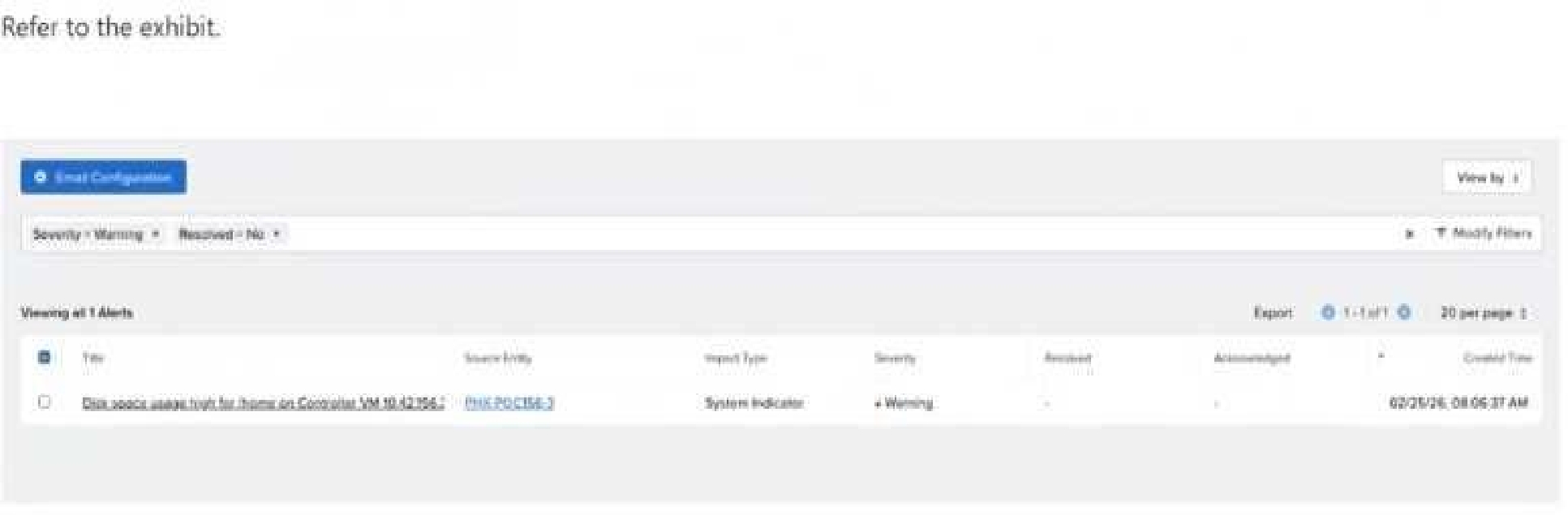
A cluster is showing the alert in the attached image.
What is the recommended method to quickly determine possible causes and corrective actions for
this alert?
Quiz
A.VM Powered Off
B.DNS Entry for VM
C.VM Powered On
D.Empty CD Drive
Nutanix Guest Tools (NGT) is upgraded from within the guest operating system. The VM must be powered on so the upgrade process can run and the guest OS can install the updated tools. NGT also uses the VM’s virtual CD drive to mount the installation media, so that drive must be present and empty.
A. VM Powered Off: Incorrect. The guest OS needs to be running for the upgrade process.
Quiz
Which metric should be checked to identify scheduling issues?
A.CPU Ready
B.Disk capacity
C.Memory usage
D.Snapshot size
CPU Ready measures how long a virtual machine is ready to run but is waiting for the hypervisor to schedule it on a physical CPU. A VM can therefore experience delays even when its reported CPU usage is low: it may not be getting enough time on the host’s CPUs to do work.
A high CPU Ready value can indicate host CPU contention or overcommitment. Disk capacity, memory usage, and snapshot size may affect performance in other ways, but they do not directly identify CPU scheduling delays.
Quiz
A.Configure a replication policy
B.Enable Disaster Recovery in Prism Central
C.Use Nutanix Data Services for Kubernetes
D.Set up Objects replications
Nutanix Data Services for Kubernetes (NDK) provides data protection capabilities for Kubernetes applications that use persistent, volume-based storage. It integrates with Kubernetes and Nutanix storage to manage persistent volumes, including creating snapshots and supporting replication and recovery. This lets an administrator protect the data used by containerized workloads.
Why the other options are less suitable:
A. Configure a replication policy. A replication policy can be part of a storage-protection setup, but this option does not identify the Kubernetes-aware service used to protect containerized workloads and their persistent volumes.
Therefore, NDK is the best choice because it provides protection designed for Kubernetes workloads and their persistent volumes.
Quiz
A.Prism Central
B.Prism Element
C.Foundation Central
D.Witness VM
A 2-node ROBO cluster has no third cluster node to break a tie if the two nodes lose communication with each other. Without a tie-breaker, each node could believe the other has failed and attempt to keep running the cluster independently, creating a split-brain scenario.
The Witness VM acts as an independent quorum vote. It helps determine which node or partition should remain active when the nodes cannot communicate, reducing the risk that both sides operate as separate clusters. It should be placed in a separate failure domain when possible.
Prism Central and Prism Element provide management interfaces, and Foundation Central supports deployment and imaging. They do not provide the quorum function needed to prevent split brain.
Quiz
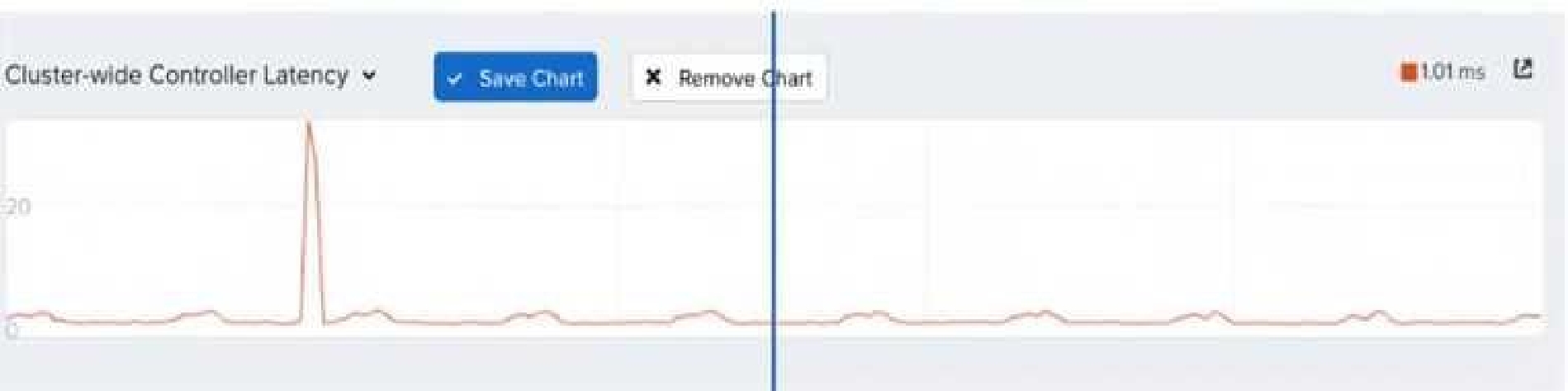
A VM is experiencing poor performance at the storage level.
After reviewing the image, which action should the administrator take?
A.Verify if a Storage Policy is impacting the VM.
B.Migrate VM to another host.
C.Increase CVM memory size.
D.Add additional SSD disks to all the nodes in the cluster.
A Storage Policy can affect how a VM’s data is handled and may impose settings or limits that influence storage performance. The administrator should review the policy assigned to the VM and check for relevant constraints, such as I/O limits or storage-placement settings, before making infrastructure changes.
Why the other options are less appropriate:
The sensible first action is to inspect the VM’s assigned Storage Policy and determine whether its settings are contributing to the performance issue.
NCA: Nutanix Certified Associate v6.5 Practice test unlocks all online simulator questions
Thank you for choosing the free version of the NCA: Nutanix Certified Associate v6.5 practice test! Further deepen your knowledge on Nutanix Simulator; by unlocking the full version of our NCA: Nutanix Certified Associate v6.5 Simulator you will be able to take tests with over 88 constantly updated questions and easily pass your exam. 98% of people pass the exam in the first attempt after preparing with our 88 questions.
BUY NOWWhat to expect from our NCA: Nutanix Certified Associate v6.5 practice tests and how to prepare for any exam?
The NCA: Nutanix Certified Associate v6.5 Simulator Practice Tests are part of the Nutanix Database and are the best way to prepare for any NCA: Nutanix Certified Associate v6.5 exam. The NCA: Nutanix Certified Associate v6.5 practice tests consist of 88 questions and are written by experts to help you and prepare you to pass the exam on the first attempt. The NCA: Nutanix Certified Associate v6.5 database includes questions from previous and other exams, which means you will be able to practice simulating past and future questions. Preparation with NCA: Nutanix Certified Associate v6.5 Simulator will also give you an idea of the time it will take to complete each section of the NCA: Nutanix Certified Associate v6.5 practice test . It is important to note that the NCA: Nutanix Certified Associate v6.5 Simulator does not replace the classic NCA: Nutanix Certified Associate v6.5 study guides; however, the Simulator provides valuable insights into what to expect and how much work needs to be done to prepare for the NCA: Nutanix Certified Associate v6.5 exam.
BUY NOWNCA: Nutanix Certified Associate v6.5 Practice test therefore represents an excellent tool to prepare for the actual exam together with our Nutanix practice test . Our NCA: Nutanix Certified Associate v6.5 Simulator will help you assess your level of preparation and understand your strengths and weaknesses. Below you can read all the quizzes you will find in our NCA: Nutanix Certified Associate v6.5 Simulator and how our unique NCA: Nutanix Certified Associate v6.5 Database made up of real questions:
Info quiz:
- Quiz name:NCA: Nutanix Certified Associate v6.5
- Total number of questions:88
- Number of questions for the test:50
- Pass score:80%
You can prepare for the NCA: Nutanix Certified Associate v6.5 exams with our mobile app. It is very easy to use and even works offline in case of network failure, with all the functions you need to study and practice with our NCA: Nutanix Certified Associate v6.5 Simulator.
Use our Mobile App, available for both Android and iOS devices, with our NCA: Nutanix Certified Associate v6.5 Simulator . You can use it anywhere and always remember that our mobile app is free and available on all stores.
Our Mobile App contains all NCA: Nutanix Certified Associate v6.5 practice tests which consist of 88 questions and also provide study material to pass the final NCA: Nutanix Certified Associate v6.5 exam with guaranteed success. Our NCA: Nutanix Certified Associate v6.5 database contain hundreds of questions and Nutanix Tests related to NCA: Nutanix Certified Associate v6.5 Exam. This way you can practice anywhere you want, even offline without the internet.
BUY NOW