The new flashcard feature is useful to memorize questions.
?Change your study mode
At any time, you can change the study mode, and alternate between the practice mode and the exam mode. In practice mode, you can configure for example the number of questions or tests, and other parameters to help you study.
Randomized | 10 Questions per Test | 20 Minutes | 70% to pass|
To re-configure your study mode again and change - for example - the number of tests, whether you have random questions and all other configuration parameters.
?Simulator Configuration
Auto-scroll: You can use the automatic scrolling of the questionnaire that occurs as soon as you answer one or all of the answers to a question correctly. Auto scrolling is activated if you answer a single answer, or as soon as you answer all the mandatory answers. Learning Mode: During learning mode you can get a real time result for your answer.
Free Test
Question: / 10
20:00Min. left
?Restart the current test
To restart the current test by clearing all your answers and the time used up to now. Warning: all answers will be lost.
Question: / 10
4.8(131 Votes)
Quiz
Question 1/101/10
The Static Assembler is used to address rules assembly issues due to which cause?
Select the answer:Select the answer
1 correct answer
A.
The server is managing a large number of rules caches.
B.
Access groups contain multiple production rulesets.
C.
A new application is migrated to the production system.
D.
The application record lists several branch rulesets.
The Static Assembler is a Pega tool used to address rules assembly issues specifically when the server is managing a large number of rules caches. By pre-assembling rules into a static content, the Static Assembler helps in improving performance in situations where cache management becomes complex due to the volume of rules. It creates a set of static files that represents the assembled rules, which can reduce the overhead on the server during rule assembly and cache management. Reference: Pega official documentation on performance tools and best practices.
Right Answer: A
Quiz
Question 2/102/10
Which two actions do you perform when using the Performance Analyzer (PAL) to ensure that you obtain accurate performance data? (Choose Two)
Select multiple answer: (Choose 2)Select the answer
2 correct answers
A.
Run the process to completion first to perform needed rule assembly and avoid skewed results.
B.
Capture PAL readings after significant changes to a process to identify any performance impact.
C.
Capture a PAL reading for a process with good performance to establish a benchmark for comparison.
D.
Run PAL as an end user to account for any performance differences due to the portal itself.
A: Running the process to completion before capturing PAL readings is important because it ensures that all the necessary rule assemblies have taken place. If you measure performance without doing this, the rule assembly might skew the results by adding additional overhead. B: Capturing PAL readings after significant changes to a process helps in identifying any performance impacts due to those changes. This allows you to compare the performance data before and after changes to assess their impact. Reference: Pega official documentation on Performance Analyzer (PAL).
Right Answer: A, B
Quiz
Question 3/103/10
A user reports that an application takes five seconds to complete a step and present the next step in a process. Which tool allows you to gather and analyze performance data for the form submission?
Select the answer:Select the answer
1 correct answer
A.
Performance Profiler
B.
Performance Analyzer (PAL)
C.
Database Trace
D.
Tracer
The Performance Analyzer (PAL) is the correct tool to gather and analyze performance data for the form submission that takes a significant amount of time. PAL tracks the interaction with the Pega Platform and provides metrics related to the performance of activities, rules, and system functions over time, which is essential for identifying the cause of the delay during form submission. Reference: Pega official documentation on PAL.
Right Answer: B
Quiz
Question 4/104/10
Which two statements about guardrails are true? (Choose Two)
Select multiple answer: (Choose 2)Select the answer
2 correct answers
A.
Each rule may have multiple guardrail warnings.
B.
Pega Platform performs guardrail examination when a rule is checked out.
C.
Pega Platform performs guardrail examination when a rule is saved.
D.
A developer receives a guardrail warning for rules checked out by other developers.
A: Each rule in Pega can indeed have multiple guardrail warnings. These warnings indicate the degree to which the rule deviates from Pega's best practices. C: Pega Platform performs a guardrail examination when a rule is saved. This is to ensure that developers are immediately aware of any potential issues that may arise from the rule they are creating or modifying. Reference: Pega official documentation on compliance score and guardrails.
Right Answer: A, C
Quiz
Question 5/105/10
Which three statements about the guardrail score are true? (Choose Three)
Select multiple answer: (Choose 3)Select the answer
3 correct answers
A.
The Application Guardrails landing page counts the number of rules with severe or moderate guardrail warnings.
B.
Guardrail scores do not include Pega Platform core rules.
C.
The Application Guardrails landing page counts the number of rules with no warnings or caution- level guardrail warnings.
D.
A weighted compliance score above 90 signifies that an application is ready for general distribution.
E.
Rules with unjustified warnings are not counted in the compliance score.
A: The Application Guardrails landing page does count the number of rules with severe or moderate warnings, as these can have a significant impact on the application's performance and maintainability. B: Guardrail scores exclude Pega Platform core rules since these are established by Pega and are assumed to be optimized. C: The landing page also counts the number of rules with no warnings or caution-level warnings, which contribute positively to the overall compliance score. Reference: Pega official documentation on the Application Guardrails landing page and guardrail scores.
Right Answer: A, B, C
Quiz
Question 6/106/10
An assignment service-level agreement (SLA) is configured with the following details: ♦ Initial urgency: 20 ♦ Assignment ready: Timed delay of 1 hour ♦ Goal: 5 hours and increase urgency by 10 ♦ Deadline: 8 hours and increase urgency by 20 ♦ Passed deadline: 2 hours, increase urgency by 20, and limit events to 5 Assuming no other urgency adjustments, what is the assignment urgency 16 hours after the case reaches the assignment?
Select the answer:Select the answer
1 correct answer
A.
100
B.
90
C.
130
D.
70
Sixteen hours after the case reaches the assignment, the assignment urgency is calculated as follows: Initial urgency (20) + Urgency after goal (10) + Urgency after deadline (20) + Urgency after passing the deadline (2 hours passed, urgency increases by 20, and this event repeats for the limit of 5 times, so 20x5=100). Adding these together: 20 + 10 + 20 + 100 = 150. However, since none of the options matches this calculation, there might be an error in the given options or a misinterpretation of the question. Based on the provided options, 90 would be the closest, indicating a possible oversight in the question. Reference: Pega official documentation on Service Level Agreements (SLAs) and urgency calculations.
Right Answer: B
Quiz
Question 7/107/10
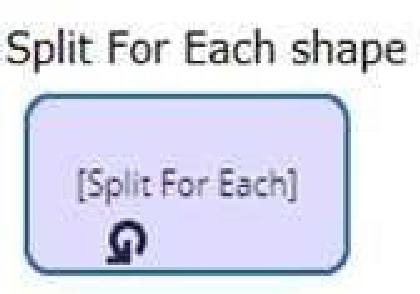
Which two configurations are required when adding a Split for Each shape to your case life cycle? (Choose Two)
Select multiple answer: (Choose 2)Select the answer
2 correct answers
A.
Enter a rule that stores the audit note that you want to include in the subprocess
B.
Define when the parent process resumes processing
C.
Enter the Page List or Page Group property that is the basis of the split
D.
Enable users to get back to the subprocess after the case moves forward
B: When adding a Split For Each shape to your case life cycle, you need to define when the parent process resumes processing. This can be after each iteration or after all iterations complete. C: You also need to specify the Page List or Page Group property that the split will iterate over. This determines the scope of the subprocesses that are to be created. Reference: Pega official documentation on case life cycle design.
Right Answer: B, C
Quiz
Question 8/108/10
You have a requirement to associate users in different units to the same work queue. How do you implement this requirement?
Select the answer:Select the answer
1 correct answer
A.
Associate the users to a common work group. Then associate a work queue to the work group.
B.
Associate the users to a common work group. Then associate the work group to the appropriate units.
C.
Associate the users to a common unit. Then associate a work queue to the common unit.
D.
Associate the users to a common work queue. Then associate the work queue to the appropriate units.
To implement the requirement of associating users in different units to the same work queue, you associate the users to a common work group and then associate a work queue to that work group. This allows users from different units, who are part of the same work group, to access the same work queue. Reference: Pega official documentation on work groups and work queues.
Right Answer: A
Quiz
Question 9/109/10
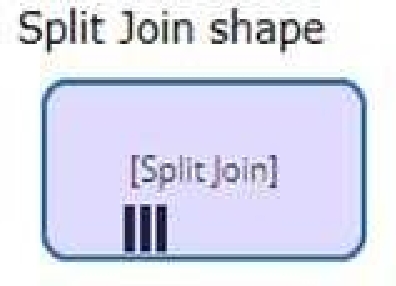
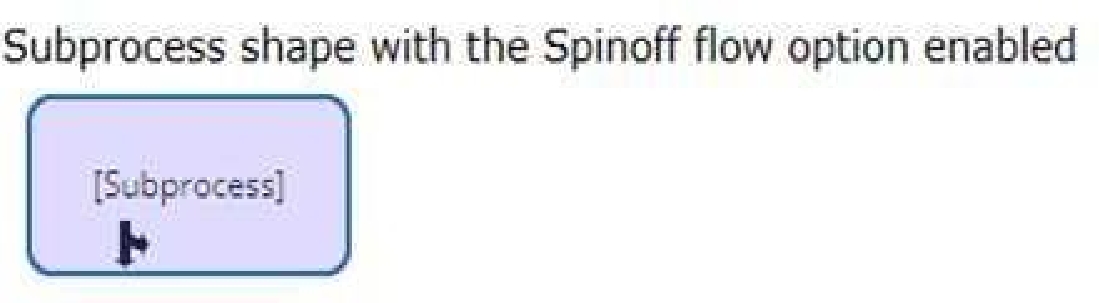
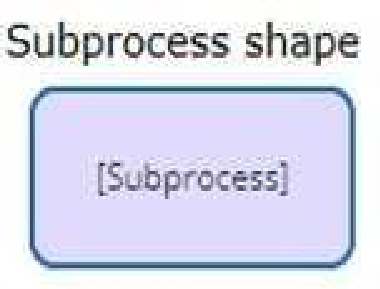
During an Account review case, an accountant wants to evaluate the client's retirement plan. A Retirement planning case is created that runs in parallel with the Account review case. Neither case waits for nor reports to the other. To configure this workflow, which type of parallel processing shape do you use? A)
B)
C)
D)
Select the answer:Select the answer
1 correct answer
A.
Option A
B.
Option B
C.
Option C
D.
Option D
The correct configuration for two parallel cases that run independently is the Subprocess shape with the Spinoff flow option enabled (Option C). This allows the Retirement planning case to proceed in parallel without waiting for, or reporting to, the Account review case. Reference: Pega official documentation on case design and flow shapes.
Right Answer: C
Quiz
Question 10/1010/10
You configure a child case to override the locking strategy of the parent case. The parent case has a time-out value of one hour. Which time-out value option is recommended for the child case?
Select the answer:Select the answer
1 correct answer
A.
Set the Access time-out value equal to the parent case time-out value.
B.
Set the Access time-out value less than the parent case time-out value.
C.
Set the Access time-out value greater than the parent case time-out value.
D.
The Access time-out value on the child case cannot be changed.
The recommended practice is to set the Access time-out value for the child case to be greater than the parent case time-out value. This ensures that the child case does not become inaccessible due to a time-out while the parent case is still active, which could happen if it had the same or a shorter time-out value. Reference: Pega official documentation on locking strategies and time-out values.
PEGACPSSA23V1: Pegasystems Certified Pega Senior System Architect '23 Practice test unlocks all online simulator questions
Thank you for choosing the free version of the PEGACPSSA23V1: Pegasystems Certified Pega Senior System Architect '23 practice test! Further deepen your knowledge on Pegasystems Simulator; by unlocking the full version of our PEGACPSSA23V1: Pegasystems Certified Pega Senior System Architect '23 Simulator you will be able to take tests with over 141 constantly updated questions and easily pass your exam. 98% of people pass the exam in the first attempt after preparing with our 141 questions.
What to expect from our PEGACPSSA23V1: Pegasystems Certified Pega Senior System Architect '23 practice tests and how to prepare for any exam?
The PEGACPSSA23V1: Pegasystems Certified Pega Senior System Architect '23 Simulator Practice Tests are part of the Pegasystems Database and are the best way to prepare for any PEGACPSSA23V1: Pegasystems Certified Pega Senior System Architect '23 exam. The PEGACPSSA23V1: Pegasystems Certified Pega Senior System Architect '23 practice tests consist of 141 questions and are written by experts to help you and prepare you to pass the exam on the first attempt. The PEGACPSSA23V1: Pegasystems Certified Pega Senior System Architect '23 database includes questions from previous and other exams, which means you will be able to practice simulating past and future questions. Preparation with PEGACPSSA23V1: Pegasystems Certified Pega Senior System Architect '23 Simulator will also give you an idea of the time it will take to complete each section of the PEGACPSSA23V1: Pegasystems Certified Pega Senior System Architect '23 practice test . It is important to note that the PEGACPSSA23V1: Pegasystems Certified Pega Senior System Architect '23 Simulator does not replace the classic PEGACPSSA23V1: Pegasystems Certified Pega Senior System Architect '23 study guides; however, the Simulator provides valuable insights into what to expect and how much work needs to be done to prepare for the PEGACPSSA23V1: Pegasystems Certified Pega Senior System Architect '23 exam.
PEGACPSSA23V1: Pegasystems Certified Pega Senior System Architect '23 Practice test therefore represents an excellent tool to prepare for the actual exam together with our Pegasystems practice test . Our PEGACPSSA23V1: Pegasystems Certified Pega Senior System Architect '23 Simulator will help you assess your level of preparation and understand your strengths and weaknesses. Below you can read all the quizzes you will find in our PEGACPSSA23V1: Pegasystems Certified Pega Senior System Architect '23 Simulator and how our unique PEGACPSSA23V1: Pegasystems Certified Pega Senior System Architect '23 Database made up of real questions:
Info quiz:
Quiz name:PEGACPSSA23V1: Pegasystems Certified Pega Senior System Architect '23
Total number of questions:141
Number of questions for the test:50
Pass score:80%
You can prepare for the PEGACPSSA23V1: Pegasystems Certified Pega Senior System Architect '23 exams with our mobile app. It is very easy to use and even works offline in case of network failure, with all the functions you need to study and practice with our PEGACPSSA23V1: Pegasystems Certified Pega Senior System Architect '23 Simulator.
Use our Mobile App, available for both Android and iOS devices, with our PEGACPSSA23V1: Pegasystems Certified Pega Senior System Architect '23 Simulator . You can use it anywhere and always remember that our mobile app is free and available on all stores.
Our Mobile App contains all PEGACPSSA23V1: Pegasystems Certified Pega Senior System Architect '23 practice tests which consist of 141 questions and also provide study material to pass the final PEGACPSSA23V1: Pegasystems Certified Pega Senior System Architect '23 exam with guaranteed success.
Our PEGACPSSA23V1: Pegasystems Certified Pega Senior System Architect '23 database contain hundreds of questions and Pegasystems Tests related to PEGACPSSA23V1: Pegasystems Certified Pega Senior System Architect '23 Exam. This way you can practice anywhere you want, even offline without the internet.