The new flashcard feature is useful to memorize questions.
?Change your study mode
At any time, you can change the study mode, and alternate between the practice mode and the exam mode. In practice mode, you can configure for example the number of questions or tests, and other parameters to help you study.
Randomized | 10 Questions per Test | 20 Minutes | 70% to pass|
To re-configure your study mode again and change - for example - the number of tests, whether you have random questions and all other configuration parameters.
?Simulator Configuration
Auto-scroll: You can use the automatic scrolling of the questionnaire that occurs as soon as you answer one or all of the answers to a question correctly. Auto scrolling is activated if you answer a single answer, or as soon as you answer all the mandatory answers. Learning Mode: During learning mode you can get a real time result for your answer.
Free Test
Question: / 10
20:00Min. left
?Restart the current test
To restart the current test by clearing all your answers and the time used up to now. Warning: all answers will be lost.
Question: / 10
5.0(990 Votes)
Quiz
Question 1/101/10
What criterion can you use to select fitting mapping proposals? Please choose the correct answer. Choose one:
Select the answer:Select the answer
1 correct answer
A.
Qualified variations
B.
Confidence score
C.
Constraints
The correct answer is C. Constraints. When selecting among mapping proposals, a common criterion is whether the proposal satisfies the required constraints. Constraints can include rules about structure, compatibility, semantics, or domain-specific requirements. A mapping proposal that violates these constraints should be rejected, while one that satisfies them is considered a fitting proposal. Why the other options are not correct: A. Qualified variations This is too vague to serve as a standard selection criterion. Variations may be considered, but they are not the main rule for choosing a mapping proposal. B. Confidence score A confidence score can help rank proposals, but it is not as direct or definitive as constraints when determining whether a proposal is suitable. C. Constraints This is the best answer because constraints provide the actual conditions used to filter and select valid mapping proposals. So the correct choice is C. Constraints.
Right Answer: C
Quiz
Question 2/102/10
You are implementing an iFlow and need an adapter that is not available in the Adapter Type selection dialog. Which of the following options can you use to find additional adapters? There are 2 correct answers to this question. Choose:
Select multiple answer: (Choose 2)Select the answer
2 correct answers
A.
SAP API Business Hub
B.
SAP Discovery Center
C.
SAP Tutorial Navigator
D.
Discover function in SAP Cloud Integration
The correct answers are A. SAP API Business Hub and D. Discover function in SAP Cloud Integration. When you are creating an iFlow in SAP Cloud Integration and need an adapter that is not shown in the Adapter Type selection dialog, you can look for additional adapters in SAP’s integration discovery resources. A. SAP API Business Hub This is a central place where SAP provides APIs, integration content, and related resources. It can help you discover available integrations and adapters, including those not immediately visible in the iFlow adapter selection list. D. Discover function in SAP Cloud Integration The Discover function inside SAP Cloud Integration is directly used to search for available integration content and related artifacts. It is the most relevant option for finding additional adapters and prepackaged content within the integration environment. Why the other options are not correct: B. SAP Discovery Center This focuses more on SAP BTP services, missions, and guidance for using cloud services. It is not the primary place for finding adapters for iFlow development. C. SAP Tutorial Navigator This provides learning tutorials and guided exercises. It is useful for training, but not for discovering adapters. So the two correct answers are A and D.
Right Answer: A, D
Quiz
Question 3/103/10
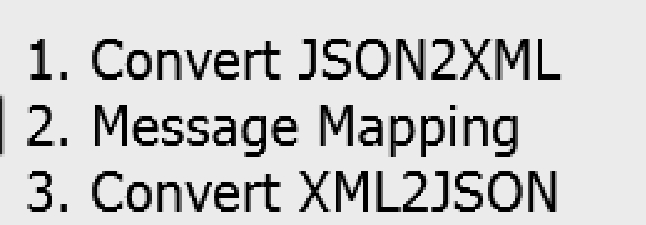
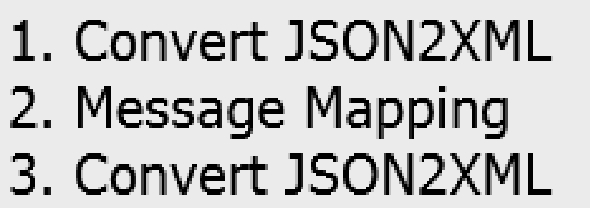
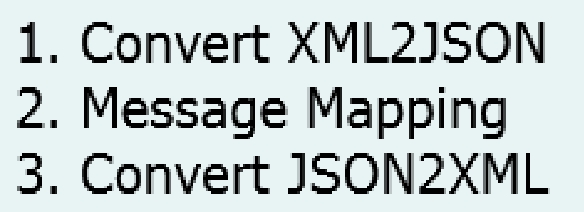
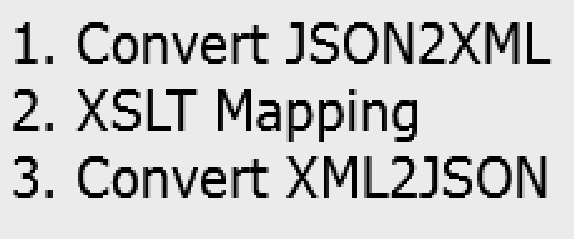
Your iflow receives a JSON inbound message. The outbound message should also be JSON, but structurally different from the inbound message. What steps can you perform? There are 2 correct answers to this question. Choose:
A)
B)
C)
D)
Select multiple answer: (Choose 2)Select the answer
2 correct answers
A.
Option A
B.
Option B
C.
Option C
D.
Option D
The correct answers are A and D. Explanation The question asks how to transform an inbound JSON message into a structurally different outbound JSON message in an iFlow. In SAP Integration Suite / Cloud Integration, this is typically done by mapping or transformation steps that reshape the payload. What is possible You can: - Read the inbound JSON payload - Transform it into a different JSON structure - Use mapping steps such as Message Mapping or Groovy/script-based transformation - Produce a new JSON output with a different hierarchy, field names, or structure Why A and D are correct Although the images are not visible here, the correct options A and D correspond to steps that can be used to change the structure of the JSON message. These are valid transformation approaches in an iFlow. Why the other options are incorrect The remaining options likely represent steps that do not actually restructure the JSON payload, such as: - Only passing the message through without transformation - Using a step that is not meant for JSON-to-JSON structural mapping - Converting formats without changing the JSON structure appropriately Key point If the outbound JSON must be structurally different from the inbound JSON, you need a transformation step, not just a transport or format-preserving step. So the correct answer is: A and D
Right Answer: A, D
Quiz
Question 4/104/10
What do you need to specify in the connection when you add an API provider in SAP Open Connectors? Please choose the correct answer. Response:
Select the answer:Select the answer
1 correct answer
A.
API key
B.
Policy template
C.
Organization secret and user secret
The correct answer is C. Organization secret and user secret. When you add an API provider in SAP Open Connectors, the connection needs credentials that identify both the organization and the user. These secrets are used to authenticate the connection securely and allow SAP Open Connectors to access the API provider on behalf of the correct tenant and user context. Why the other options are not correct: A. API key This is sometimes used by APIs, but in SAP Open Connectors the required connection details for adding an API provider are specifically the organization secret and user secret, not just a single API key. B. Policy template A policy template is related to how requests are managed or transformed, but it is not the credential required when creating the connection. So, the correct choice is: C. Organization secret and user secret If you want, I can also explain what organization secret and user secret mean in SAP Open Connectors.
Right Answer: C
Quiz
Question 5/105/10
You develop an app using the SAP Cloud Application Programming Model (CAP). What do you use to define the data model? Please choose the correct answer. Choose one:
Select the answer:Select the answer
1 correct answer
A.
Core Data Services (CDS)
B.
SAP Cloud SDK
C.
SAP Cloud Platform SDK
The correct answer is A. Core Data Services (CDS). In SAP Cloud Application Programming Model (CAP), the data model is defined using Core Data Services, commonly called CDS. CDS is the modeling language used to describe entities, relationships, and types in a concise and structured way. In CAP, you typically write CDS files to define your business objects and persistence model, and then CAP uses that model to generate and expose services. Why the other options are incorrect: B. SAP Cloud SDK The SAP Cloud SDK is used to develop extensions and integrations with SAP systems and services. It helps with calling APIs, authentication, resilience, and connectivity, but it is not used to define the CAP data model. C. SAP Cloud Platform SDK This SDK is for building applications, especially mobile or JavaScript-based solutions on SAP Cloud Platform, but it is not the modeling language used in CAP for defining the data model. In short, CAP uses CDS to define the data model, so A is correct.
Right Answer: A
Quiz
Question 6/106/10
In SAP Cloud Integration, what converter options are available to convert a message from one format to another in one step? There are 2 correct answers to this question. Choose:
Select multiple answer: (Choose 2)Select the answer
2 correct answers
A.
JSON -> XML
B.
XML -> EDI
C.
CSV -> JSON
D.
EDI -> CSV
In SAP Cloud Integration, a message converter is used to transform a payload from one data format into another within a single step in an integration flow. The two correct options are: A. JSON -> XML B. XML -> EDI Why these are correct: - JSON -> XML SAP Cloud Integration provides built-in conversion support to transform JSON payloads into XML. This is a common converter option because many integration scenarios require JSON data from APIs to be converted into XML for downstream processing or mapping. - XML -> EDI SAP Cloud Integration also supports converting XML into EDI format. This is useful in B2B integration scenarios where business documents are often prepared in XML first and then converted into an EDI-standard message. Why the other options are not correct: - C. CSV -> JSON This is not one of the standard one-step converter options listed in this context. - D. EDI -> CSV This is also not a standard direct converter option in this context. Summary: The correct answers are A and B because SAP Cloud Integration supports direct one-step conversion for JSON to XML and XML to EDI.
Right Answer: A, B
Quiz
Question 7/107/10
You are using the HTTP adapter to connect to a third-party cloud software. Which operations are supported? There are 2 correct answers to this question. Choose:
Select multiple answer: (Choose 2)Select the answer
2 correct answers
A.
HEAD
B.
OPTIONS
C.
TRACE
D.
PURGE
The correct answers are A. HEAD and C. TRACE. When using an HTTP adapter to connect to a third-party cloud software, only standard HTTP methods that are supported by the adapter can be used. In this question, the two supported operations are: - HEAD - TRACE Why these are correct: - HEAD is a standard HTTP method used to request only the headers of a response, without the response body. - TRACE is a standard HTTP method used for diagnostics, because it returns the received request so the client can see what intermediaries have added or changed. Why the others are incorrect: - OPTIONS is a standard HTTP method, but in this context it is not one of the supported operations expected by the question. - PURGE is not a standard HTTP method in the HTTP adapter context. It is typically associated with cache invalidation in some proxy or caching systems, not general HTTP adapter operations. So the two correct answers are: - A. HEAD - C. TRACE If you want, I can also explain how to quickly eliminate wrong choices in questions like this.
Right Answer: A, C
Quiz
Question 8/108/10
What features can you use in SAP Cloud Integration, DataStoreOperations? There are 2 correct answers to this question. Choose:
Select multiple answer: (Choose 2)Select the answer
2 correct answers
A.
Delete
B.
Get
C.
Put
D.
Post
In SAP Cloud Integration, the DataStoreOperations feature is used to work with data stored in the Data Store. The available operations include retrieving data and deleting data, which correspond to the following options: A. Delete B. Get Why these are correct: - Get: Used to read or retrieve data from the Data Store. - Delete: Used to remove data from the Data Store. Why the other options are incorrect: - Put: This is not one of the standard DataStoreOperations features in this context. - Post: This is not used as a DataStoreOperations feature. So the correct answers are A and B.
Right Answer: A, B
Quiz
Question 9/109/10
What are some benefits of value externalization in iFlows? There are 2 correct answers to this question. Choose:
Select multiple answer: (Choose 2)Select the answer
2 correct answers
A.
Separation of business logic from iFlows
B.
Faster run time of iFlows
C.
Less memory consumption of iFlows
D.
Simplified portability of iFlows between different tenants
The correct answers are A and C: A. Separation of business logic from iFlows C. Less memory consumption of iFlows Value externalization means storing configurable values outside the integration flow itself, instead of hardcoding them directly in the iFlow. This has several advantages: A. Separation of business logic from iFlows This is correct because externalizing values helps keep the iFlow focused on processing logic while configuration values are maintained separately. That makes the integration easier to design, read, and maintain. If a value changes, you do not need to modify the core flow logic. C. Less memory consumption of iFlows This is also correct because externalized values reduce the need to embed repeated or static configuration data inside the flow definition. In practice, this can help keep the iFlow lighter and more efficient in terms of resource usage. Why the other options are incorrect: B. Faster run time of iFlows This is not generally a benefit of value externalization. Externalization is mainly about maintainability and configuration management, not performance improvement. D. Simplified portability of iFlows between different tenants This is not the primary benefit. Externalized values can make deployment and configuration easier, but portability between tenants is not the direct or guaranteed advantage described here. In summary, value externalization mainly improves maintainability and efficiency by separating configuration from logic and reducing unnecessary content inside the iFlow.
Right Answer: A, C
Quiz
Question 10/1010/10
What happens to the log level of an iFlow when this iFlow is deleted from the system? Please choose the correct answer. Choose one:
Select the answer:Select the answer
1 correct answer
A.
The log level is kept.
B.
The log level is set to None.
C.
The log level is set to the default value.
D.
The log level is removed.
The correct answer is D. The log level is removed. In the system, the log level setting is tied to the iFlow configuration. When an iFlow is deleted, its associated logging configuration does not remain active as a retained setting. Since the iFlow no longer exists, the log level entry for that iFlow is also deleted from the system. Why the other options are incorrect: A. The log level is kept. This is incorrect because deleting the iFlow removes its associated configuration, including logging settings. B. The log level is set to None. This suggests the setting still exists but is empty. In this case, the log level is not merely cleared; it is removed along with the iFlow. C. The log level is set to the default value. This is incorrect because deletion does not reset the setting to a default. There is no iFlow left to apply a default log level to. D. The log level is removed. This is correct because once the iFlow is deleted, its log level configuration is also deleted from the system. In short, deleting the iFlow also deletes its log level configuration.
C_CPI_14: SAP Certified Development Associate - SAP Integration Suite Practice test unlocks all online simulator questions
Thank you for choosing the free version of the C_CPI_14: SAP Certified Development Associate - SAP Integration Suite practice test! Further deepen your knowledge on SAP Simulator; by unlocking the full version of our C_CPI_14: SAP Certified Development Associate - SAP Integration Suite Simulator you will be able to take tests with over 198 constantly updated questions and easily pass your exam. 98% of people pass the exam in the first attempt after preparing with our 198 questions.
What to expect from our C_CPI_14: SAP Certified Development Associate - SAP Integration Suite practice tests and how to prepare for any exam?
The C_CPI_14: SAP Certified Development Associate - SAP Integration Suite Simulator Practice Tests are part of the SAP Database and are the best way to prepare for any C_CPI_14: SAP Certified Development Associate - SAP Integration Suite exam. The C_CPI_14: SAP Certified Development Associate - SAP Integration Suite practice tests consist of 198 questions and are written by experts to help you and prepare you to pass the exam on the first attempt. The C_CPI_14: SAP Certified Development Associate - SAP Integration Suite database includes questions from previous and other exams, which means you will be able to practice simulating past and future questions. Preparation with C_CPI_14: SAP Certified Development Associate - SAP Integration Suite Simulator will also give you an idea of the time it will take to complete each section of the C_CPI_14: SAP Certified Development Associate - SAP Integration Suite practice test . It is important to note that the C_CPI_14: SAP Certified Development Associate - SAP Integration Suite Simulator does not replace the classic C_CPI_14: SAP Certified Development Associate - SAP Integration Suite study guides; however, the Simulator provides valuable insights into what to expect and how much work needs to be done to prepare for the C_CPI_14: SAP Certified Development Associate - SAP Integration Suite exam.
C_CPI_14: SAP Certified Development Associate - SAP Integration Suite Practice test therefore represents an excellent tool to prepare for the actual exam together with our SAP practice test . Our C_CPI_14: SAP Certified Development Associate - SAP Integration Suite Simulator will help you assess your level of preparation and understand your strengths and weaknesses. Below you can read all the quizzes you will find in our C_CPI_14: SAP Certified Development Associate - SAP Integration Suite Simulator and how our unique C_CPI_14: SAP Certified Development Associate - SAP Integration Suite Database made up of real questions:
Info quiz:
Quiz name:C_CPI_14: SAP Certified Development Associate - SAP Integration Suite
Total number of questions:198
Number of questions for the test:50
Pass score:80%
You can prepare for the C_CPI_14: SAP Certified Development Associate - SAP Integration Suite exams with our mobile app. It is very easy to use and even works offline in case of network failure, with all the functions you need to study and practice with our C_CPI_14: SAP Certified Development Associate - SAP Integration Suite Simulator.
Use our Mobile App, available for both Android and iOS devices, with our C_CPI_14: SAP Certified Development Associate - SAP Integration Suite Simulator . You can use it anywhere and always remember that our mobile app is free and available on all stores.
Our Mobile App contains all C_CPI_14: SAP Certified Development Associate - SAP Integration Suite practice tests which consist of 198 questions and also provide study material to pass the final C_CPI_14: SAP Certified Development Associate - SAP Integration Suite exam with guaranteed success.
Our C_CPI_14: SAP Certified Development Associate - SAP Integration Suite database contain hundreds of questions and SAP Tests related to C_CPI_14: SAP Certified Development Associate - SAP Integration Suite Exam. This way you can practice anywhere you want, even offline without the internet.