20:00

Quiz InsuranceSuite-Developer: Guidewire Associate Certification - InsuranceSuite Developer - Proctored

Free Test
/ 10

Quiz

1/10
Which statement is true about the Project Release branch for an implementation using Git?
OPTIONS :
Select the answer
1 correct answer
A.
It stores the current production code and is updated whenever the production system is updated
B.
It is used by the implementation team to develop code for a specific release
C.
It is used by the implementation team to stabilize the code for a specific release
D.
It contains product releases from Guidewire Answer : C EXPLANATION : In the Guidewire Cloud Platform (GWCP) development lifecycle, effective source control management is essential for maintaining a stable path to production. Guidewire recommends a specific branching strategy tailored for InsuranceSuite implementations using Git (typically hosted in Bitbucket). The Project Release branch (often named release/*) serves a very specific purpose: stabilization. According to the " Developing with Guidewire Cloud " course, the standard workflow involves developers working on feature branches and merging them into a develop or integration branch. Once a set of features is deemed complete for a specific deployment cycle, a Release branch is created. The primary goal of this branch is to isolate the release-ready code from the ongoing, potentially volatile development occurring in the main integration branch. On the Release branch, the team performs final GUnit testing, regression testing, and bug fixes specifically identified during the QA phase for that version. No new features should be introduced here. This isolation ensures that the " Candidate for Production " is stable and that any fixes applied are strictly for high- priority issues. Option A refers to the master or main branch, which holds the current production state. Option B describes the function of feature or development branches. Option D is incorrect because product releases from Guidewire are provided as base code updates, which are typically merged into the customer ' s repository rather than existing as a " Project Release " branch. By focusing on stabilization, the Release branch minimizes the risk of introducing " noise " or untested features into the final production deployment.

Quiz

2/10
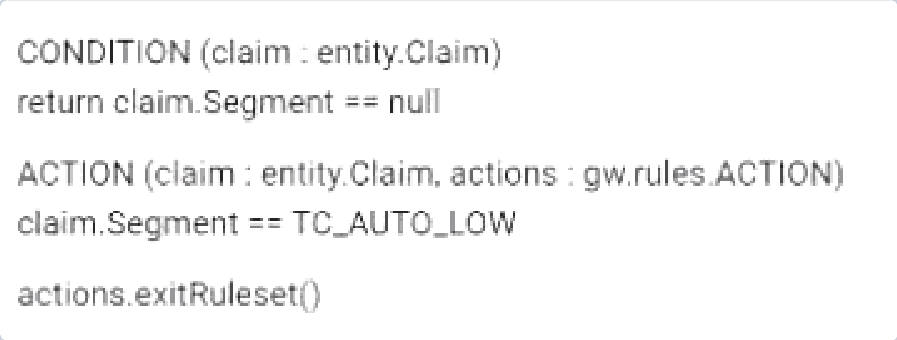
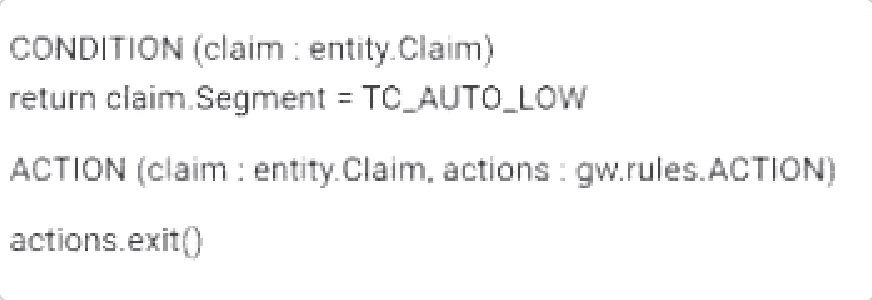
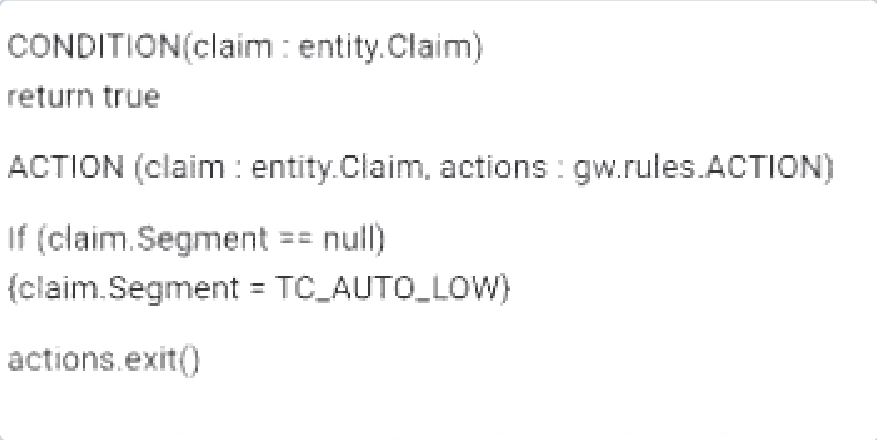
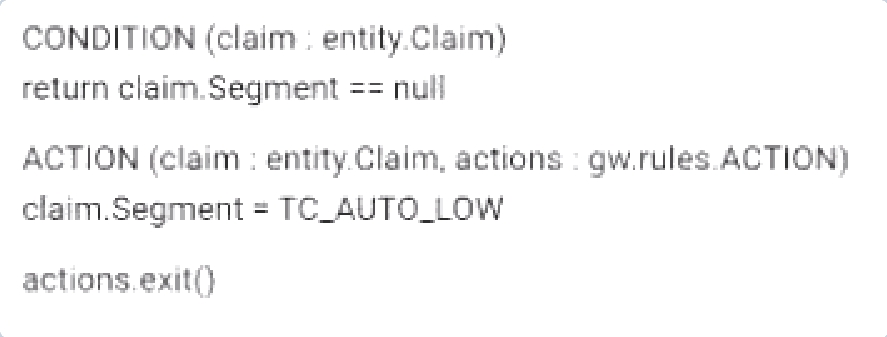
Which rule is written in the correct form for a rule which sets the claim segment and leaves
the ruleset?


A)

Certification Exam InsuranceSuite-Developer: Guidewire Associate Certification - InsuranceSuite Developer - Proctored Guidewire Guidewire-InsuranceSuite-Developer 1-2531053539


B)

Certification Exam InsuranceSuite-Developer: Guidewire Associate Certification - InsuranceSuite Developer - Proctored Guidewire Guidewire-InsuranceSuite-Developer 2-2146544018


C)

Certification Exam InsuranceSuite-Developer: Guidewire Associate Certification - InsuranceSuite Developer - Proctored Guidewire Guidewire-InsuranceSuite-Developer 3-3959380274

D)
Certification Exam InsuranceSuite-Developer: Guidewire Associate Certification - InsuranceSuite Developer - Proctored Guidewire Guidewire-InsuranceSuite-Developer 4-4108265543


OPTIONS :
Select the answer
1 correct answer
A.
Option A
B.
Option B
C.
Option C
D.
Option D Answer : A EXPLANATION : In the Guidewire Gosu Rules engine, managing the logic flow within a ruleset is a fundamental skill for any developer. A ruleset is essentially a collection of " If-Then " statements that the application evaluates sequentially. When a business requirement dictates that an action should be taken—such as categorizing a claim by setting its Segment property—and then no further rules in that specific set should be processed, the developer must use the actions utility object. The correct method to terminate the current ruleset execution is actions.exit(). As shown in Option A, the logic must be ordered procedurally: first, the state of the entity is modified (claim.Segment = TC_AUTO_LOW), and then the exit() command is called to stop the engine from evaluating subsequent rules. Using the typecode constant (TC_AUTO_LOW) is the best practice for assignment, as it provides compile-time checking, whereas using a hardcoded string (Option B) is error-prone and discouraged in Guidewire development. Furthermore, the placement of the exit command is critical. In Option C, the actions.exit() is placed before the assignment; this results in the rule terminating immediately, and the claim segment is never actually updated. Option D is incorrect because actions.stop() is not the standard method for exiting a ruleset in the Gosu rule architecture. By following the pattern in Option A, developers ensure that once a " mutually exclusive " business condition is met and handled, the system efficiently moves to the next ruleset or stage in the claim lifecycle, preventing redundant processing or accidental overwrites of the segment value by lower-priority rules.

Quiz

3/10
An insurer wants to add a new typecode for an alternate address to a base
typelist EmployeeAddress that has not been extended.
OPTIONS :
Select the answer
1 correct answer
A.
Following best practices, which step must a developer take to performthis task?
B.
Create an EmployeeAddress_Ext.tti file and add a new typecodealternate
C.
Open the EmployeeAddress.tti and add a new typecode alternate
D.
Create an EmployeeAddress.ttx file and add a new typecodealternate_Ext
E.
Create an EmployeeAddress.tix file and add a new typecodealternate_Ext Answer : D EXPLANATION : In the Guidewire InsuranceSuite framework, maintaining the integrity of the base configuration is paramount for ensuring a smooth upgrade path. This is achieved through a strict " extension- only " philosophy for out-of-the-box (OOTB) components. When a developer needs to modify a base typelist—like EmployeeAddress—they must understand the distinction between .tti (Typelist Interface) files and .ttx (Typelist Extension) files. A .tti file defines the original structure and initial typecodes of a typelist. These files are considered " base " and should never be edited directly (making Option C incorrect). If a developer were to modify the base .tti, those changes would be overwritten during the next platform update. To safely add a new typecode to an existing base typelist, Guidewire requires the creation of a .ttx file with the exact same name as the base typelist (e.g., EmployeeAddress.ttx). This extension file tells the Guidewire metadata engine to merge the new entries with the existing ones at runtime. Furthermore, Guidewire best practices for metadata extensions require specific naming conventions to prevent future " namespace collisions. " While the .ttx file itself adopts the base name, the new typecode added within that file should be suffixed with _Ext (e.g., alternate_Ext). This ensures that if Guidewire later releases a product update that adds an " alternate " code to the base EmployeeAddress typelist, the customer ' s custom code remains unique and does not conflict with the new base code. Option B is incorrect because you do not create a new .tti with an _Ext suffix for an existing list. Option E is incorrect because .tix is not a valid Guidewire metadata file extension; the correct extension is .ttx. Therefore, Option D is the only choice that follows the correct file creation and naming convention protocols required by the Guidewire development lifecycle.

Quiz

4/10
Which of the following represents logging best practices? Select Two
OPTIONS :
Select the answer
1 correct answer
A.
Mask personally identifiable information (PII) before including it in a log message.
B.
Set the logging level to " info " in the production environment.
C.
Set the logging level to " debug " in the production environment when diagnosing a production issue.
D.
Log all information that is necessary to diagnose the transaction.
E.
Log every transaction to ensure a complete audit trail. Answer : A, D EXPLANATION : Effective logging in Guidewire InsuranceSuite is a balance between providing enough information for troubleshooting and maintaining system security and performance. Two of the most critical best practices involve Data Privacy and Diagnostic Context. First, Masking PII (Option A) is a non-negotiable requirement for modern insurance applications, especially those running on the Guidewire Cloud Platform. Personally Identifiable Information, such as social security numbers, credit card details, or even specific personal names and addresses, must never appear as clear text in the application logs. Logs are often aggregated into secondary systems (like Datadog or CloudWatch) and viewed by a wide range of support personnel. If PII is not masked or removed before logging, the company risks failing compliance audits (GDPR, HIPAA, etc.) and exposing sensitive data. Second, developers should strive to log all information necessary to diagnose the transaction (Option D). This means providing context, such as a PublicID, a specific TransactionID, or the state of an object at the time of an error. Without this context, log entries like " Error processing claim " are useless for troubleshooting. The goal is to provide enough detail so that a developer can understand the failure path without needing to step through the code in a debugger. Other options are incorrect because they represent poor operational or performance choices. Setting the level to " debug " in production (Option C) can lead to severe performance degradation due to high I/O. While " info " (Option B) is a common default, it is not a " best practice " in the same functional sense as security and diagnosis. Finally, " logging every transaction " (Option E) is not the purpose of application logs; audit trails should be handled via the system ' s built-in History or Event Messaging tables, not the text-based log files, to avoid overwhelming the storage and performance of the application.

Quiz

5/10
A developer needs to create a new entity for renters that contains a field for the
employment status. EmploymentStatusType is an existing typelist. How can the entity and
new field be created to fulfill the requirement and follow best practices?
OPTIONS :
Select the answer
1 correct answer
A.
Add Renter.etx under Metadata - > Entity with a column EmploymentStatus.Ext
B.
Add Renter.etl under Extensions - > Entity with a column EmploymentStatus.Ext
C.
Create EmploymentStatusType.ttx under Extensions - > Typelist with a type code Renter
D.
Create Renter_Ext.eti under Extensions - > Entity with a typekey EmploymentStatus Answer : D EXPLANATION : When extending the Guidewire Data Model with a brand-new concept—in this case, a " Renter " —developers must adhere to specific naming and architectural standards. Because the " Renter " entity does not exist in the base product, it must be created as a new entity definition. According to Guidewire best practices for new entities, the file must be created with the .eti (Entity Interface) extension and placed in the Extensions - > Entity folder. Furthermore, to ensure " Upgrade-Safety " and avoid collisions with future Guidewire product updates, the entity name must include the _Ext suffix. Therefore, the file should be named Renter_Ext.eti (Option D). Within this new entity, the developer needs to reference the existing EmploymentStatusType typelist. In Guidewire, a field that links to a typelist is defined as a typekey. Since the field name itself is specific to this new custom entity, the field name EmploymentStatus is appropriate. It is important to note that while some older practices suggested suffixing the column name with _Ext, the primary mandatory best practice for cloud-ready development focuses on the Entity name and Typelist name suffixes. Other options are incorrect for the following reasons: Option A: Uses .etx, which is for extending an existing base entity, not creating a new one.Option B: Uses a .etl extension, which is not a valid Guidewire metadata extension for entity definition.Option C: Suggests modifying the typelist logic (adding a code " Renter " ) which does not address the need to create a new " Renter " entity with an employment field. Option D represents the most complete and architecturally sound approach to meeting the business requirement.

Quiz

6/10
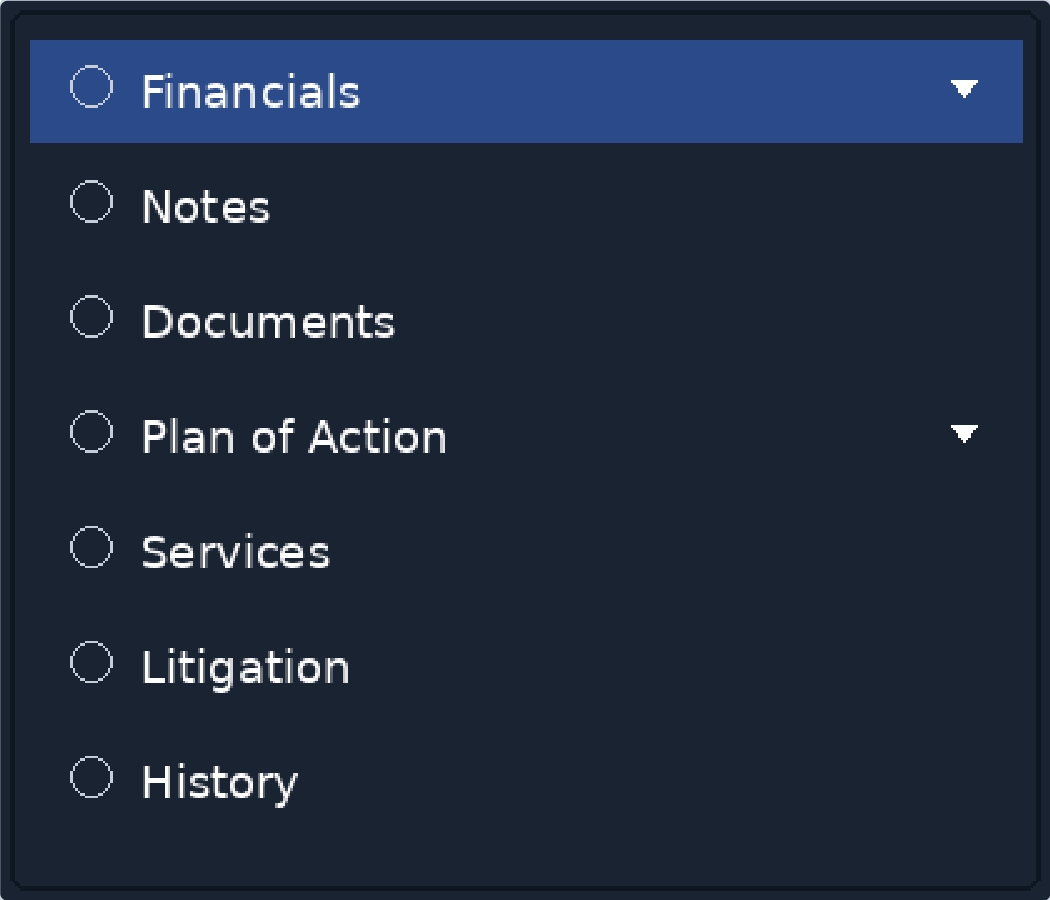
The following screenshot displays a segment of the menu items in the sidebar on a


Guidewire application:

Certification Exam InsuranceSuite-Developer: Guidewire Associate Certification - InsuranceSuite Developer - Proctored Guidewire Guidewire-InsuranceSuite-Developer 5-247590149

[Financials, Notes, Documents, Plan of Action, Services, Litigation, History]. The business
analysts have uncovered a requirement that the Documents, History, Litigation, and Notes
pages should be grouped under a single heading, to be called Legal Records. What is the
best practice for accomplishing this?
OPTIONS :
Select the answer
1 correct answer
A.
Place the views associated with those four pages onto a single screen named Legal Records, and place that screen on the sidebar, removing the individual pages from the sidebar
B.
Create a location group named Legal Records, containing those four items, and add it to the sidebar, removing the individual pages from the sidebar
C.
Click the gear icon in the UI, select user settings, select Sidebar, set preferences for the four pages according to the desired view
D.
Rearrange the order of the sidebar so that the four pages are all together, set the indent property for all four pages, and insert a label above them, which reads Legal Records Answer : B EXPLANATION : In the Guidewire InsuranceSuite UI architecture, the organization of navigation elements is governed by the hierarchy of PCF Locations. A location represents a destination in the application, such as a Page, a Worksheet, or a Wizard. When requirements call for grouping multiple related pages into a logical, hierarchical structure within the sidebar or a tab set, the standard architectural component used is the Location Group. A Location Group acts as a container for other locations (Pages, Forwards, or even nested Location Groups). According to PCF Architecture best practices, creating a Location Group named " Legal Records " and nesting the Documents, History, Litigation, and Notes pages within it allows the UI engine to render them as sub-items under a single, expandable heading. This maintains a clean and organized sidebar, which is critical for usability as the complexity of an application grows. Once the Location Group is defined and added to the Sidebar PCF, the individual page references are removed from the top-level sidebar configuration to prevent redundancy. In contrast, Option A is incorrect because a " Screen " is a container for UI widgets (like DetailViews and ListViews) within a page, not a navigation location itself. Option C refers to user preferences, which do not change the underlying application configuration or satisfy structural business requirements. Option D describes a manual styling approach that does not leverage the built-in navigation framework; using indents and labels manually is not upgrade- safe and fails to provide the true modal navigation behavior (such as showing the group as " active " when any child page is selected) provided by a proper Location Group. Therefore, using a Location Group is the only verified best practice for grouping sidebar navigation items. ==========

Quiz

7/10
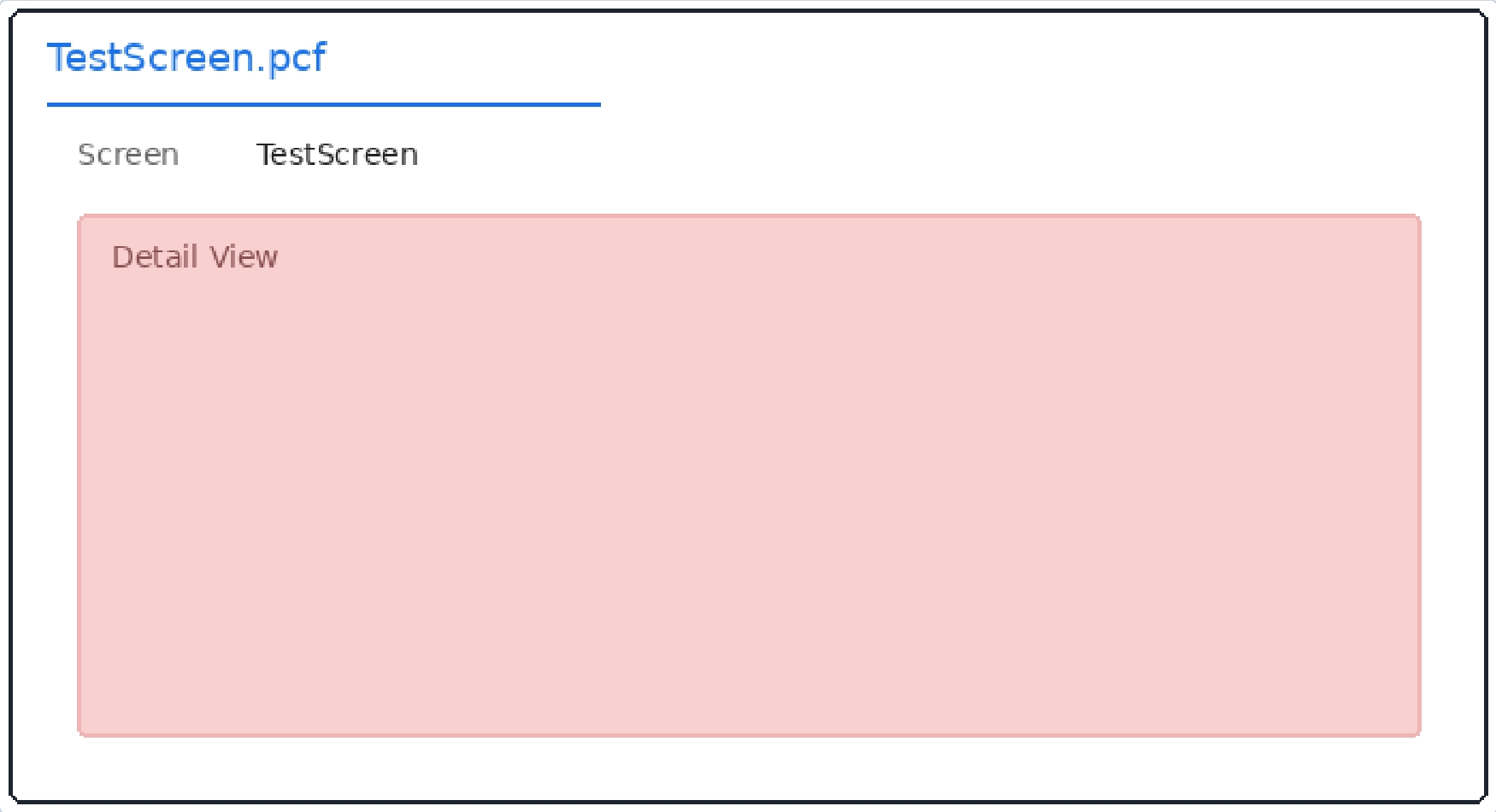
Given the following screen showing a DetailView in Guidewire Studio highlighted in red:

Certification Exam InsuranceSuite-Developer: Guidewire Associate Certification - InsuranceSuite Developer - Proctored Guidewire Guidewire-InsuranceSuite-Developer 6-1550341366

Which single item added directly to the detail view will correct the error shown, with no
further errors?
OPTIONS :
Select the answer
1 correct answer
A.
Add a row iterator to the detail view
B.
Add a toolbar to the detail view
C.
Add a list view to the detail view
D.
Add an input column to the detail view Answer : D EXPLANATION : In Guidewire InsuranceSuite PCF (Page Configuration File) Configuration, the hierarchy and structural requirements of container widgets are strictly enforced by the Studio compiler and visual editor. A DetailView (DV) is a specific type of container designed to display and edit individual fields (atomic widgets) in a column-based layout. When a developer adds a DetailView to a PCF, Studio will initially display it in red, indicating a validation error. This occurs because, according to the PCF Architecture standards, a DetailView is not a direct container for input widgets like TextInput or RangeInput. Instead, it requires a layout-specific child element to define how those widgets are organized. The mandatory child for a standard DetailView is the InputColumn. An InputColumn provides the necessary structure to align labels and their corresponding input widgets. Without at least one InputColumn defined directly under the DetailView, the DV is considered incomplete and structurally invalid. Adding an InputColumn (Option D) satisfies the minimum container requirement, effectively clearing the validation error and allowing the developer to then place field-level widgets within that column. Regarding the other options: A RowIterator (Option A) is a component specifically used within a ListView to iterate over a collection of data and is not a direct child of a DetailView. While a ListView (Option C) can be displayed within a DV, it must be wrapped in a ListViewInput or placed inside an InputSet, and simply adding a " list view " does not satisfy the core structural requirement for an input-based DV layout as directly as an InputColumn. A Toolbar (Option B) is typically associated with a Screen, PanelRef, or ListView, rather than being a structural correction for a DetailView. Therefore, the InputColumn is the fundamental architectural element required to make the DV valid. ==========

Quiz

8/10
An analyst is examining the process for promoting a verified build from the development
environment to production. Which statements accurately describe key steps in the flow of
code changes between physical star systems in GWCP, according to the training? (Choose
2)
OPTIONS :
Select the answer
1 correct answer
A.
Production database backups are not required when promoting builds.
B.
A build must be deployed to every planet in the dev star system before promotion is allowed.
C.
Builds are promoted sequentially from dev to pre-production and then to production physical star systems.
D.
Code is directly committed from dev to production repositories.
E.
The Build Promotion app in Guidewire Home is used to manage the promotion process. Answer : C, E EXPLANATION : The Guidewire Cloud Platform (GWCP) enforces a rigorous and standardized path for code promotion to ensure maximum stability in production environments. This process follows the Astronomy Metaphor where code moves between logical partitions. Statement C is a fundamental truth of the cloud delivery model: Sequential Promotion. Code cannot " skip " environments. A build must first be verified in the Development Star System (on a Dev planet). Once verified, that same immutable build (Docker image) is promoted to the Pre- Production Star System for User Acceptance Testing (UAT) and Performance testing. Only after passing the " Quality Gates " in Pre-Prod can the build be promoted to the Production Star System. This sequence ensures that the exact same code being deployed to production has been thoroughly vetted in lower environments. Statement E identifies the tool used for this management: the Build Promotion app located in Guidewire Home. This application provides a centralized interface for authorized users to select a verified build from a lower " Orbit " and promote it to a higher one. This tool abstracts the underlying complexity of the CI/CD pipeline and ensures that the promotion follows all security and compliance protocols. Option D is incorrect because code is never " committed " directly to production; rather, a pre- compiled build image is promoted. Option B is incorrect as not every dev planet needs a deployment—only the specific verified " golden " build needs to move forward. Adhering to this sequential, tool-managed process is a key requirement of the Guidewire Cloud Standards.

Quiz

9/10
Succeed Insurance would like a list of all Notes related to all Policies for an Account. Which
approach follows best practices for retrieving this data more efficiently?
OPTIONS :
Select the answer
1 correct answer
A.
Code snippetvar policyNotes = Query.make(Note).compare(Note#Policy, Relop.Equals, policy).compare(Note#Account, Relop.Equals, account).select()
B.
Code snippetvar policyNotes = account.Policies*.Notes.toList()
C.
Code snippetvar policyNotes : ArrayList < Note > for(policy in account.Policies) {for (note in policy.Notes) {policyNotes.add(note)}}
D.
Code snippetvar policyNotes = account.Policies*.Notes*.DisplayName Answer : B EXPLANATION : In Guidewire InsuranceSuite, developers frequently need to " reach across " one-to-many relationships to collect data from nested arrays. In this scenario, the goal is to retrieve a flattened list of all Note entities associated with all Policy objects linked to a specific Account. According to Advanced Gosu best practices, the most efficient and idiomatic way to handle this is by using the Expansion Operator (*). As shown in Option B, the syntax account.Policies*.Notes performs what is known as " collection flattening. " When the expansion operator is applied to the Policies array, Gosu understands that it should look at every policy in that collection and access the Notes array for each. It then automatically flattens these multiple sub-collections into a single, comprehensive list of Note objects. Calling .toList() at the end ensures the result is captured in a standard, manipulatable collection format. This approach is vastly superior to nested for loops (Option C). Manual iteration through nested arrays is a primary cause of the " N+1 " query problem and " Bundle Bloat. " In nested loops, the system may perform a separate database fetch for every policy and then another for every note, loading every single entity into the current transaction bundle, which consumes excessive memory and CPU time. The expansion operator, however, is highly optimized within the Gosu Runtime to handle these traversals more gracefully. Option D is incorrect because it uses a second expansion operator to retrieve the DisplayName property, resulting in a list of Strings rather than a list of Note entities. Option A, while using the Query API, is logically disconnected from the root account object already in memory and represents a more complex search-based approach rather than a relationship-based retrieval. Therefore, the expansion operator is the verified standard for efficient, readable data collection in Gosu. ==========

Quiz

10/10
An insurer wants to add a new typecode for a loan account to a base typelist,
BankAccountType, that has not been extended. Which step must a developer take to
perform this task following best practices?
OPTIONS :
Select the answer
1 correct answer
A.
Create a BankAccountType.ttx file and add a new typecode LoanAccount_Ext.
B.
Create a BankAccountType.ttx file and add a new typecode LoanAccount.
C.
Open the BankAccountType.tti and add a new typecode LoanAccount.
D.
Create a BankAccountType_Ext.tti file and add a new typecode LoanAccount. Answer : A EXPLANATION : The Guidewire Data Model uses a strict separation between base application code and customer extensions. Base typelists are defined in .tti (Typelist Internal) files, which are strictly off-limits for modification by developers (ruling out Option C). To extend a base typelist, the developer must use a Typelist Extension file, which always uses the .ttx suffix. The name of the .ttx file must match the name of the base typelist exactly (e.g., BankAccountType.ttx). Adding _Ext to the filename (Option D) is incorrect, as the system would not recognize it as an extension of the base list. Regarding the code itself, Guidewire best practices for InsuranceSuite Developer projects recommend adding a customer-specific suffix, such as _Ext, to any new typecodes added to a base typelist. This ensures that if a future Guidewire update introduces a " LoanAccount " code to the base product, the customer ' s custom code (LoanAccount_Ext) will not collide with it. Collisions can cause significant issues during upgrades, including database constraint violations and broken logic. By following the pattern in Option A, the developer ensures that the configuration is upgrade-safe, follows the SurePath methodology, and correctly integrates with the application ' s Open Type System.
Looking for more questions?Buy now

InsuranceSuite-Developer: Guidewire Associate Certification - InsuranceSuite Developer - Proctored Practice test unlocks all online simulator questions

Thank you for choosing the free version of the InsuranceSuite-Developer: Guidewire Associate Certification - InsuranceSuite Developer - Proctored practice test! Further deepen your knowledge on Guidewire Simulator; by unlocking the full version of our InsuranceSuite-Developer: Guidewire Associate Certification - InsuranceSuite Developer - Proctored Simulator you will be able to take tests with over 175 constantly updated questions and easily pass your exam. 98% of people pass the exam in the first attempt after preparing with our 175 questions.

BUY NOW

What to expect from our InsuranceSuite-Developer: Guidewire Associate Certification - InsuranceSuite Developer - Proctored practice tests and how to prepare for any exam?

The InsuranceSuite-Developer: Guidewire Associate Certification - InsuranceSuite Developer - Proctored Simulator Practice Tests are part of the Guidewire Database and are the best way to prepare for any InsuranceSuite-Developer: Guidewire Associate Certification - InsuranceSuite Developer - Proctored exam. The InsuranceSuite-Developer: Guidewire Associate Certification - InsuranceSuite Developer - Proctored practice tests consist of 175 questions and are written by experts to help you and prepare you to pass the exam on the first attempt. The InsuranceSuite-Developer: Guidewire Associate Certification - InsuranceSuite Developer - Proctored database includes questions from previous and other exams, which means you will be able to practice simulating past and future questions. Preparation with InsuranceSuite-Developer: Guidewire Associate Certification - InsuranceSuite Developer - Proctored Simulator will also give you an idea of the time it will take to complete each section of the InsuranceSuite-Developer: Guidewire Associate Certification - InsuranceSuite Developer - Proctored practice test . It is important to note that the InsuranceSuite-Developer: Guidewire Associate Certification - InsuranceSuite Developer - Proctored Simulator does not replace the classic InsuranceSuite-Developer: Guidewire Associate Certification - InsuranceSuite Developer - Proctored study guides; however, the Simulator provides valuable insights into what to expect and how much work needs to be done to prepare for the InsuranceSuite-Developer: Guidewire Associate Certification - InsuranceSuite Developer - Proctored exam.

BUY NOW

InsuranceSuite-Developer: Guidewire Associate Certification - InsuranceSuite Developer - Proctored Practice test therefore represents an excellent tool to prepare for the actual exam together with our Guidewire practice test . Our InsuranceSuite-Developer: Guidewire Associate Certification - InsuranceSuite Developer - Proctored Simulator will help you assess your level of preparation and understand your strengths and weaknesses. Below you can read all the quizzes you will find in our InsuranceSuite-Developer: Guidewire Associate Certification - InsuranceSuite Developer - Proctored Simulator and how our unique InsuranceSuite-Developer: Guidewire Associate Certification - InsuranceSuite Developer - Proctored Database made up of real questions:

Info quiz:

  • Quiz name:InsuranceSuite-Developer: Guidewire Associate Certification - InsuranceSuite Developer - Proctored
  • Total number of questions:175
  • Number of questions for the test:50
  • Pass score:80%

You can prepare for the InsuranceSuite-Developer: Guidewire Associate Certification - InsuranceSuite Developer - Proctored exams with our mobile app. It is very easy to use and even works offline in case of network failure, with all the functions you need to study and practice with our InsuranceSuite-Developer: Guidewire Associate Certification - InsuranceSuite Developer - Proctored Simulator.

Use our Mobile App, available for both Android and iOS devices, with our InsuranceSuite-Developer: Guidewire Associate Certification - InsuranceSuite Developer - Proctored Simulator . You can use it anywhere and always remember that our mobile app is free and available on all stores.

Our Mobile App contains all InsuranceSuite-Developer: Guidewire Associate Certification - InsuranceSuite Developer - Proctored practice tests which consist of 175 questions and also provide study material to pass the final InsuranceSuite-Developer: Guidewire Associate Certification - InsuranceSuite Developer - Proctored exam with guaranteed success. Our InsuranceSuite-Developer: Guidewire Associate Certification - InsuranceSuite Developer - Proctored database contain hundreds of questions and Guidewire Tests related to InsuranceSuite-Developer: Guidewire Associate Certification - InsuranceSuite Developer - Proctored Exam. This way you can practice anywhere you want, even offline without the internet.

BUY NOW