Quiz DP-700: Microsoft Implementing Data Engineering Solutions Using Microsoft Fabric
Quiz
configure workspace settings to support multiple teams working on different projects while maintaining role-
based access control. Users from the marketing team should only see and work with marketing-related
items, while the analytics team should have full workspace visibility. Which two actions should you take to
achieve this configuration?
Quiz
multiple hospital systems throughout the day. The data arrives in batches at irregular intervals (every 2-8
hours), and the organization requires that data be available for analysis within 30 minutes of arrival. You
need to recommend a loading pattern that balances latency requirements with cost efficiency. Which loading
pattern should you implement?
Quiz
process: raw data ingestion from an API, transformation using a Spark notebook, and loading into a
warehouse table. During a recent run, the pipeline failed at the transformation stage with a Spark execution
error. You need to diagnose the issue efficiently. Which two actions would provide the most relevant
diagnostic information?
Quiz
stages: raw ingestion (kept for 6 months), enriched datasets (kept for 24 months), and published reports
(kept indefinitely). You need to ensure that old intermediate datasets are removed to control storage costs
while preserving historical reports and their underlying data relationships. Which approach should you use to
implement this lifecycle policy?
Quiz
Over the past week, you've noticed that query performance has degraded gradually: queries that previously
completed in 2 seconds now take 8-12 seconds. No schema changes have occurred, and data volume has
grown only 5%. You need to identify the root cause and optimize performance. Which investigation approach
is most appropriate?
Quiz
the raw events (temperature, pressure, timestamps) into business metrics (hourly averages, anomaly flags)
for real-time dashboards. Events arrive at approximately 10,000 messages per second. You need to
recommend a streaming data ingestion and transformation architecture. Which solution addresses the
requirements for high-volume streaming data transformation?
Quiz
What should you do?
Quiz
What should you recommend for each layer? To answer, select the appropriate options in the answer area.
NOTE: Each correct selection is worth one point.
QUESTION IMAGE:
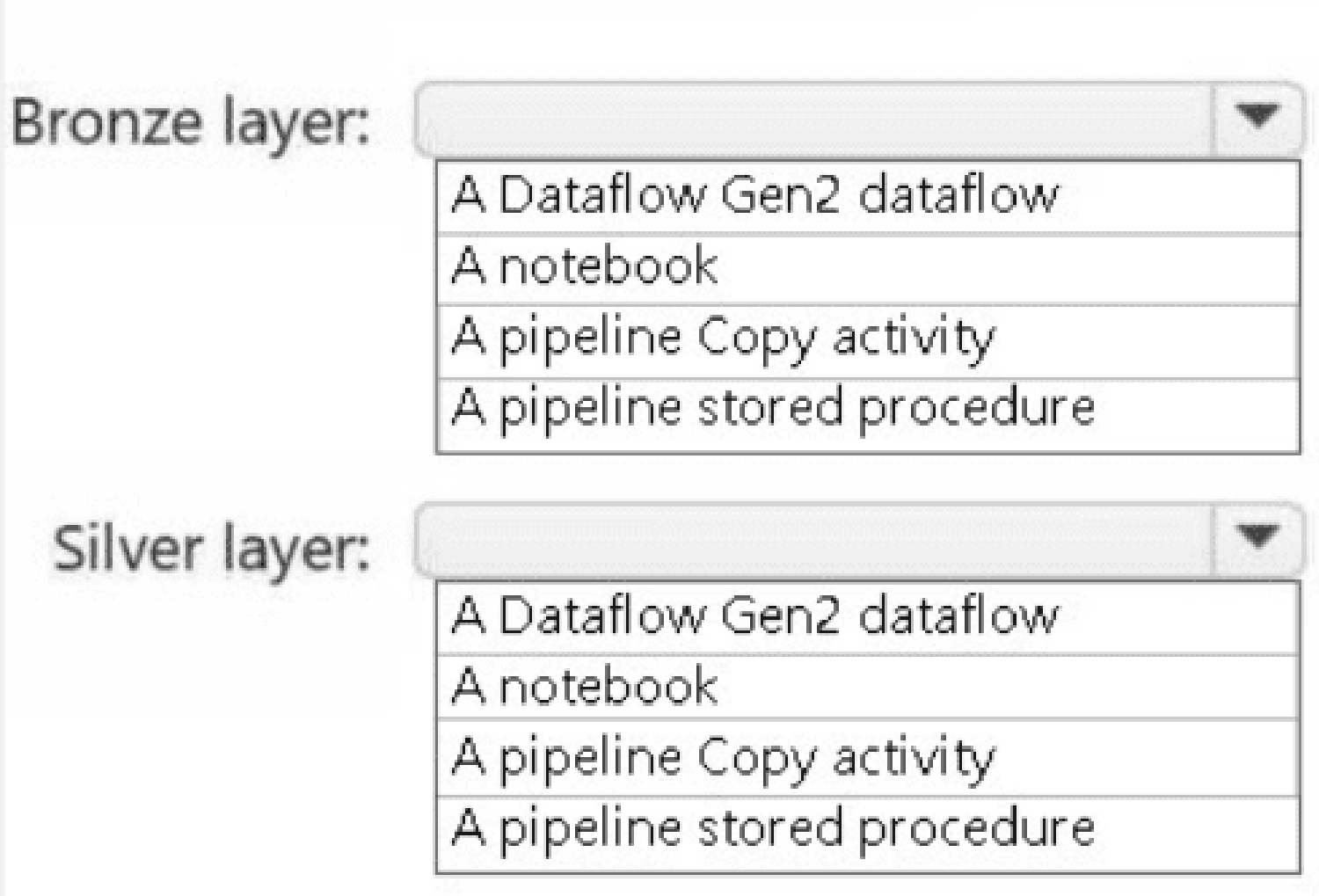
ANSWER: CORRECT AREA HIGHLIGHTED
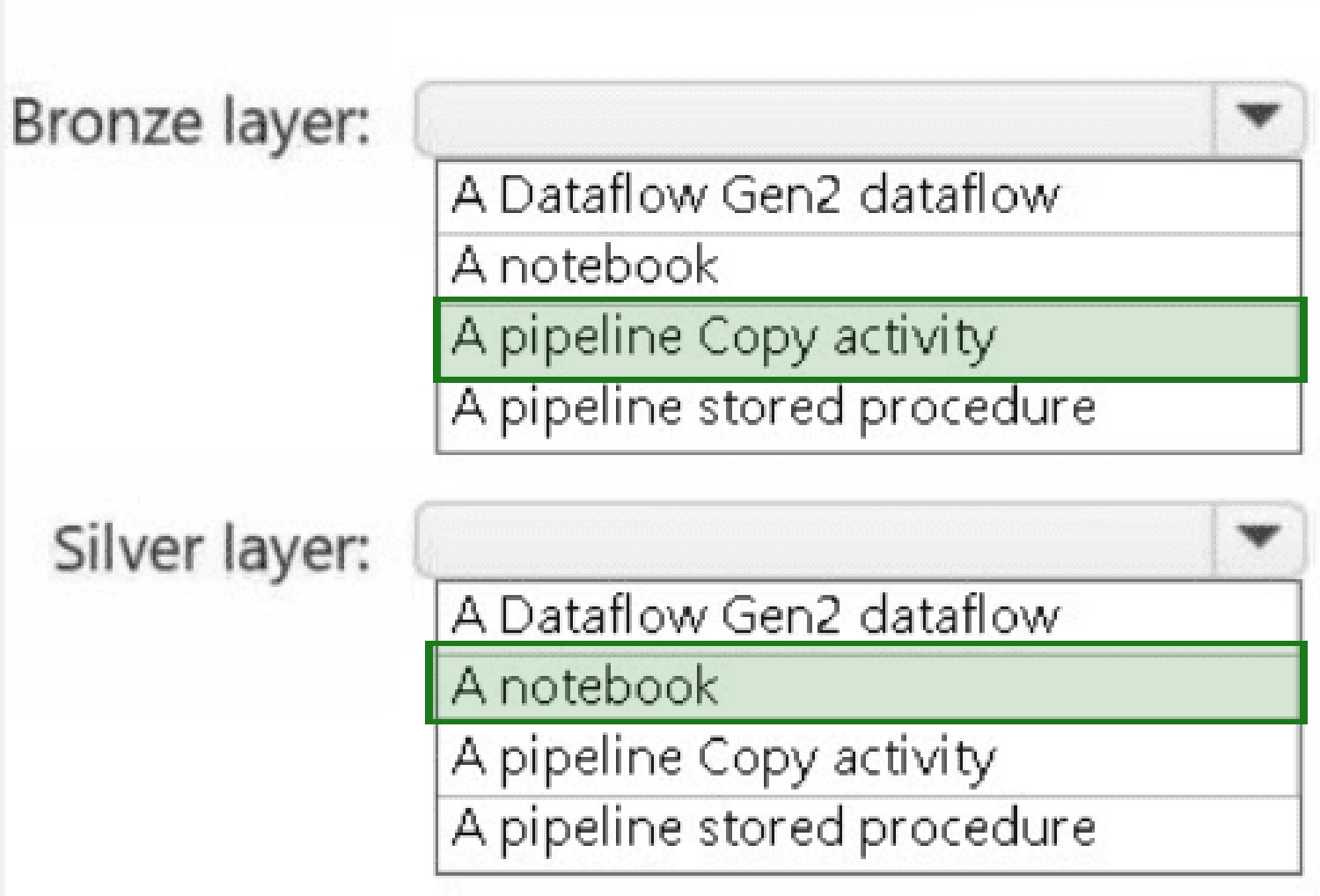
- Bronze: Ingest the POS1 data in its original form. This preserves the source data and provides a reliable starting point for later processing.
- Silver: Clean and transform the Bronze data. Typical work includes correcting data types, handling duplicates or invalid records, and standardizing values.
- Gold: Prepare curated, business-ready data for reporting and analysis. This may involve joining tables, calculating measures, or creating aggregates.
The layers form a progression: raw data in Bronze, validated and refined data in Silver, and consumption-ready data in Gold. Keeping these stages separate makes the data easier to trace, validate, and reuse.
Quiz
What should you do?
Quiz
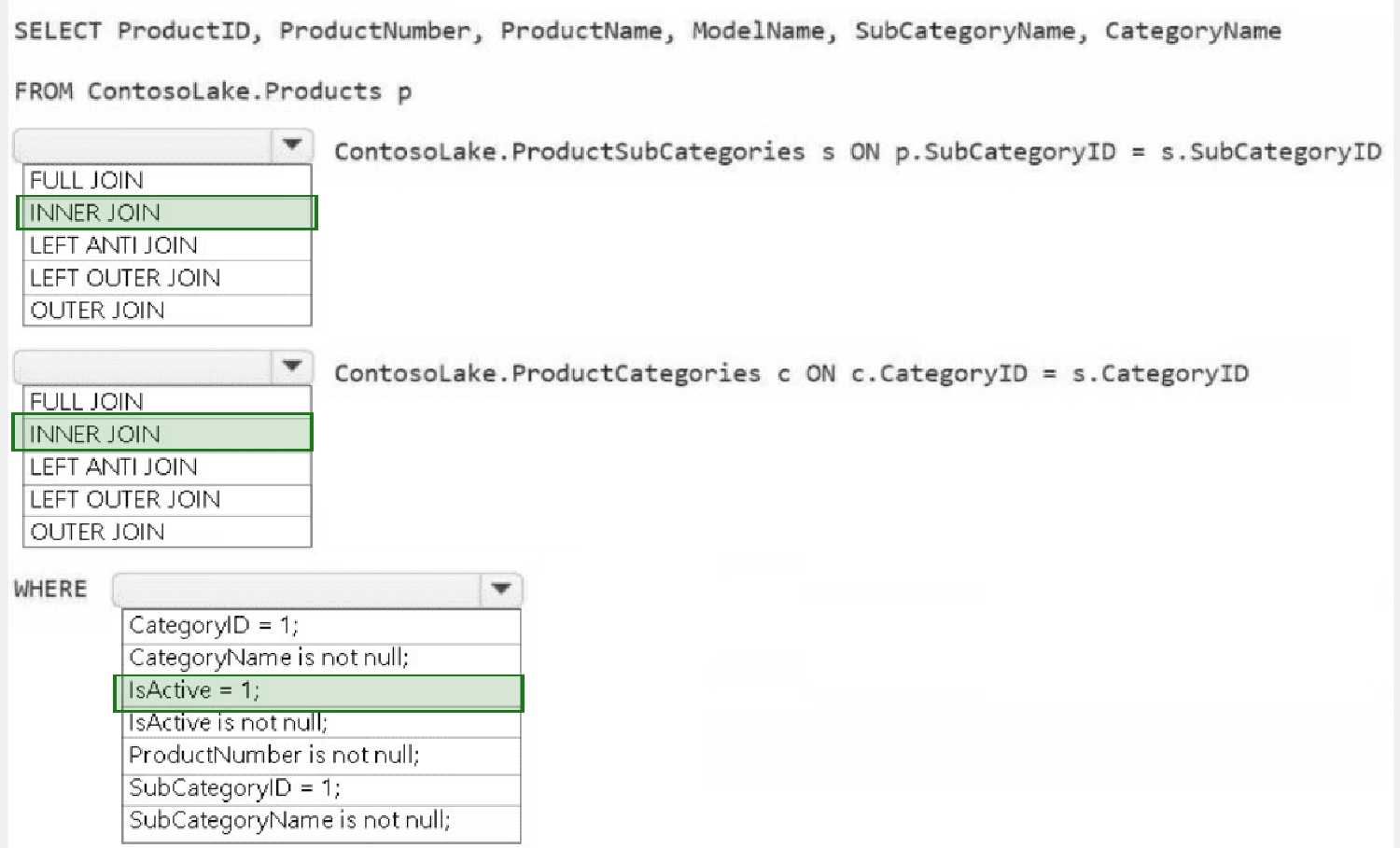
How should you complete the Apache Spark SQL code? To answer, select the appropriate options in the
answer area.
NOTE: Each correct selection is worth one point.
QUESTION IMAGE:
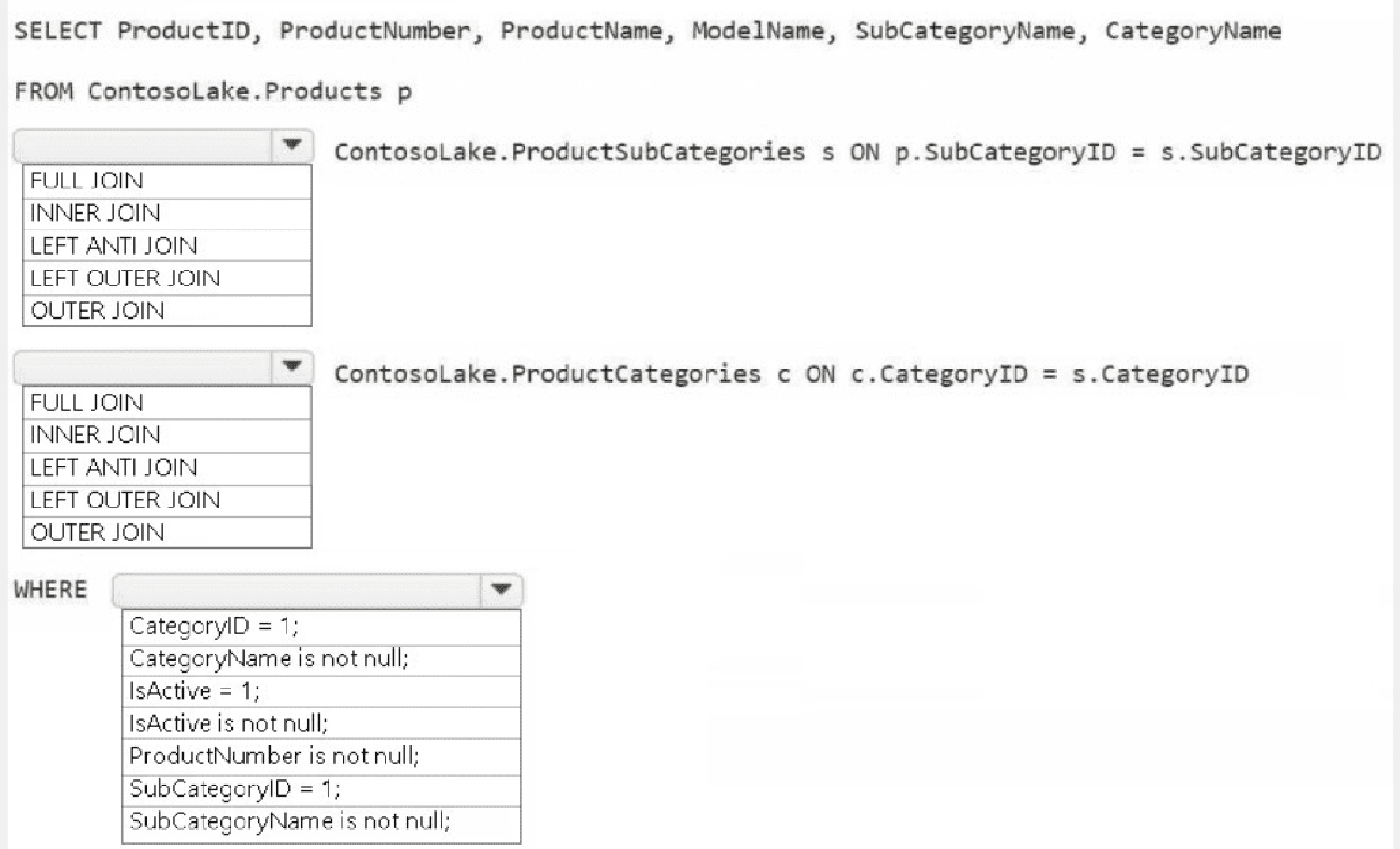
ANSWER: CORRECT AREA HIGHLIGHTED
Please paste the Spark SQL code and the selectable options, or upload the images directly. Then I can explain the correct selections and why the alternatives are incorrect.
DP-700: Microsoft Implementing Data Engineering Solutions Using Microsoft Fabric Practice test unlocks all online simulator questions
Thank you for choosing the free version of the DP-700: Microsoft Implementing Data Engineering Solutions Using Microsoft Fabric practice test! Further deepen your knowledge on Microsoft Simulator; by unlocking the full version of our DP-700: Microsoft Implementing Data Engineering Solutions Using Microsoft Fabric Simulator you will be able to take tests with over 129 constantly updated questions and easily pass your exam. 98% of people pass the exam in the first attempt after preparing with our 129 questions.
BUY NOWWhat to expect from our DP-700: Microsoft Implementing Data Engineering Solutions Using Microsoft Fabric practice tests and how to prepare for any exam?
The DP-700: Microsoft Implementing Data Engineering Solutions Using Microsoft Fabric Simulator Practice Tests are part of the Microsoft Database and are the best way to prepare for any DP-700: Microsoft Implementing Data Engineering Solutions Using Microsoft Fabric exam. The DP-700: Microsoft Implementing Data Engineering Solutions Using Microsoft Fabric practice tests consist of 129 questions and are written by experts to help you and prepare you to pass the exam on the first attempt. The DP-700: Microsoft Implementing Data Engineering Solutions Using Microsoft Fabric database includes questions from previous and other exams, which means you will be able to practice simulating past and future questions. Preparation with DP-700: Microsoft Implementing Data Engineering Solutions Using Microsoft Fabric Simulator will also give you an idea of the time it will take to complete each section of the DP-700: Microsoft Implementing Data Engineering Solutions Using Microsoft Fabric practice test . It is important to note that the DP-700: Microsoft Implementing Data Engineering Solutions Using Microsoft Fabric Simulator does not replace the classic DP-700: Microsoft Implementing Data Engineering Solutions Using Microsoft Fabric study guides; however, the Simulator provides valuable insights into what to expect and how much work needs to be done to prepare for the DP-700: Microsoft Implementing Data Engineering Solutions Using Microsoft Fabric exam.
BUY NOWDP-700: Microsoft Implementing Data Engineering Solutions Using Microsoft Fabric Practice test therefore represents an excellent tool to prepare for the actual exam together with our Microsoft practice test . Our DP-700: Microsoft Implementing Data Engineering Solutions Using Microsoft Fabric Simulator will help you assess your level of preparation and understand your strengths and weaknesses. Below you can read all the quizzes you will find in our DP-700: Microsoft Implementing Data Engineering Solutions Using Microsoft Fabric Simulator and how our unique DP-700: Microsoft Implementing Data Engineering Solutions Using Microsoft Fabric Database made up of real questions:
Info quiz:
- Quiz name:DP-700: Microsoft Implementing Data Engineering Solutions Using Microsoft Fabric
- Total number of questions:129
- Number of questions for the test:50
- Pass score:80%
You can prepare for the DP-700: Microsoft Implementing Data Engineering Solutions Using Microsoft Fabric exams with our mobile app. It is very easy to use and even works offline in case of network failure, with all the functions you need to study and practice with our DP-700: Microsoft Implementing Data Engineering Solutions Using Microsoft Fabric Simulator.
Use our Mobile App, available for both Android and iOS devices, with our DP-700: Microsoft Implementing Data Engineering Solutions Using Microsoft Fabric Simulator . You can use it anywhere and always remember that our mobile app is free and available on all stores.
Our Mobile App contains all DP-700: Microsoft Implementing Data Engineering Solutions Using Microsoft Fabric practice tests which consist of 129 questions and also provide study material to pass the final DP-700: Microsoft Implementing Data Engineering Solutions Using Microsoft Fabric exam with guaranteed success. Our DP-700: Microsoft Implementing Data Engineering Solutions Using Microsoft Fabric database contain hundreds of questions and Microsoft Tests related to DP-700: Microsoft Implementing Data Engineering Solutions Using Microsoft Fabric Exam. This way you can practice anywhere you want, even offline without the internet.
BUY NOW